

Ankerui Catering Oil Fume Online Monitoring Platform Price
Category:
Electrical Engineering/Complete electrical and electrical equipment/Other electrical and electrical equipment
Model:
AcrelCloud-3500
Brand:
Acrel
Retail Price
90,000.00USD
重量
kg
- Product Description
-
Description :
In order to compensate for the current system loopholes in oil detection in the catering industry and facilitate regulatory personnel, the Ankerui Kitchen Fume Detection Cloud Service Platform has emerged. The kitchen oil fume detection and control module communicates and exchanges data information with the cloud service platform based on 2G/4G, and the system software can monitor the startup and operation of the company's food equipment; Complete probability detection, cleanliness efficiency detection, equipment operation stop alarm, pending cleaning alarm, abnormal alarm and other functions; Perform statistical analysis functions such as data analysis and sorting on the collected data; Compared to traditional electrostatic induction monitoring solutions, the goal is more clear. The embedded parts of the business platform and the interaction interfaces with other software systems and machine equipment have good scalability. The composite restaurant oil fume purifier method can fill the gap of the single basic principle oil fume purifier method, greatly improving the cleaning efficiency compared to the technical one. However, it also comes with higher engineering cost and maintenance cost. Among them, the static induction oil fume filter is the key, and the composite oil fume filter composed of additional filtering, centrifugal fan, wet test and other technical components has become a popular choice today due to its cleaning efficiency and small footprint. The development trend and direction of composite restaurant oil fume filters that can be used for scientific research and economic development, have clean efficiency, stable actual cleaning effects, are easy to disassemble and maintain in the middle and later stages. With the rapid development trend of the tertiary industry in China, kitchen fume pollution has become an increasingly concerning problem for urban residents. However, there are some large, medium, and small catering establishments that lack awareness of protection. In order to reduce environmental protection investment or pursue convenience, they immediately exhaust kitchen fumes that have not been carefully considered into the air. The immediate adverse effect is to destroy the natural environment of nearby residents. The kitchen fumes of the head chef in the catering industry will be immediately discharged into the air, which will not only cause secondary pollution or cross type environmental pollution, but also continue to accumulate on the walls of big cities. The image and appearance of the city will be seriously endangered, and even endanger the natural environment and the environmental hygiene and civilization behavior demonstration urban planning and construction of all big cities in China.
Overseas Cooking Kitchen Oil Fume Environmental Pollution and Operation Standards
The pollution of cooking oil fume environment in overseas kitchens is relatively low compared to that in Chinese culinary culture kitchens, and is not particularly serious. Ultimately, there is a significant correlation between the dietary structure and cooking methods of the two. The key to cooking at home overseas is to maintain the nutritional content and original ecology of vegetables and fruits. The ingredients are often eaten raw or processed into semi-finished products. Basic cooking methods such as steaming, boiling, frying, and deep frying are used, and the water temperature is only around 130 ℃, so it is not easy to produce
There is a large amount of kitchen fumes, and the pollution level in the restaurant kitchen environment is low. The catering industry in overseas capitalist countries generally operates on a large scale, with the installation of kitchen fume solution equipment as the foundation. The most commonly used method is to convert kitchen fume into a safe condition through harsh incineration or catalytic reaction ignition, remove environmental pollution and odors, and then discharge it into the air. Moreover, China has a significant degree of control over kitchen oil fume emissions, and the corresponding inspection methods and national industry standards are also relatively complete.
The environmental pollution problem of cooking kitchen lampblack is also serious in Taiwan, China, China, and the cooking kitchen lampblack control specifications have not been formulated at this stage. The key is to use the opacity and concentration value of particulate air pollutants in the Emission Standards of Air Pollutants from Stationary Sources and the Air Pollution Prevention and Control Law to manage cooking kitchen lampblack pollution. Similar to mainland China, kitchen oil fume pollution is also a significant problem in Hong Kong, China when it comes to food pairing. The Environmental Protection Department of Hong Kong, China has compiled a brochure titled 'Controlling Oil Fumes and Cooking Odors in Restaurants and Catering Industry'. Relatively speaking, compared to China, the kitchen fume pollution in the catering industry is not particularly serious abroad, so there is no national industry standard for cooking kitchen fume pollution. Only some states and counties have formulated industry standards within their own regions. The Longzhou Bay Air Index Control Zone in California, USA has established testing standards for fine particulate matter and volatile organic compounds in kitchen fumes in the UK, as well as industry standards for controlling kitchen fume emissions in the catering industry in the UK. Maricopa County has also developed similar regulations for manipulating kitchen fume emissions in the catering industry, following the practices of Longzhou Bay in California, USA.
Ankerui Catering Oil Fume Online Monitoring Platform Price 1. Introduction to Catering Oil Fume Monitoring Cloud Platform
1. Function
Cooking fumes are one of the main sources of volatile organic compounds (VOCs) and PM10 in the atmosphere. In recent years, with the strengthening of environmental protection governance, various levels have continuously strengthened the full coverage installation of oil fume purifiers by catering operators, but there are still some problems and loopholes in supervision.
(1) Poor proactive environmental awareness: Most small and medium-sized catering owners believe that holding certificates from the industry and commerce, food and medicine departments is enough to operate legally, ignoring environmental impact assessment approval, resulting in the installation of kitchen fume purification facilities without standardized requirements;
(2) Due to the direct impact of the power of oil fume purification facilities on the purchase and installation cost and oil fume purification effect, despite the installation of purification equipment, complaints about poor purification effect and oil fume disturbance to residents still occur from time to time;
(3) Difficulty in self-regulation of businesses: During the inspection process, although catering owners installed oil fume purification equipment, they did not consciously maintain and use it, and the effect of regular cleaning was not significant;
(4) Difficulty in supervision: There are a huge number of catering enterprises, and it is impossible to achieve full coverage through human supervision. Some monitoring projects require multiple sampling by testing companies and equipment, and require a long time for analysis. The cost and difficulty of supervision are high.
In order to make up for the loopholes in the existing catering industry's e-liquid monitoring and facilitate the supervision of regulatory authorities, the Ankerui oil fume monitoring cloud platform has emerged. The oil fume monitoring module communicates and exchanges data with the cloud platform through 2G/4G, and the system can monitor the startup and operation status of enterprise catering equipment; Implement functions such as startup rate monitoring, purification efficiency monitoring, facility shutdown alarm, pending cleaning alarm, abnormal alarm, etc; Perform statistical analysis, ranking, and other statistical functions on collected data; Compared to traditional electrostatic monitoring methods, it is safer and more effective.
2. Application location

2、 Structure of Catering Oil Fume Monitoring Cloud Platform
The platform collects data on the operating status of catering fume treatment equipment and the concentration of fume emissions, automatically alerts and warns enterprises with excessive emissions and abnormal situations. Regulatory authorities can quickly handle the situation, urge catering enterprises to rectify their equipment, and regularly clean and maintain them to achieve emission reduction, environmental protection, and non disturbance to the public.
Install monitoring terminals on site to monitor the working status of the oil fume purifier in real time, including the current of equipment operation. At the same time, compare and analyze the particulate matter concentration at the exhaust outlet. Once the emissions exceed the standard, the system will issue abnormal signals.
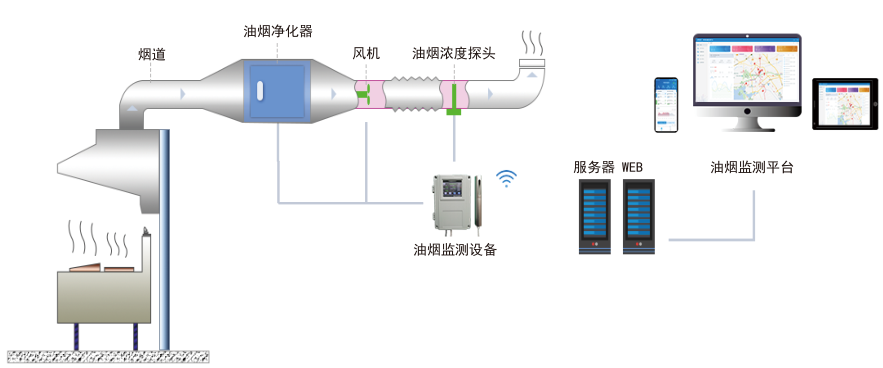
Oil fume monitoring equipment is used to monitor data such as oil fume, particulate matter, NmHc, etc
Purifier and fan work together to purify oil fumes, while monitoring the current of the purification equipment
The device uploads the collected data to a remote cloud server via 4G network

Structure diagram of oil fume monitoring cloud platform
3、 Hardware parameters of catering fume monitoring cloud platform
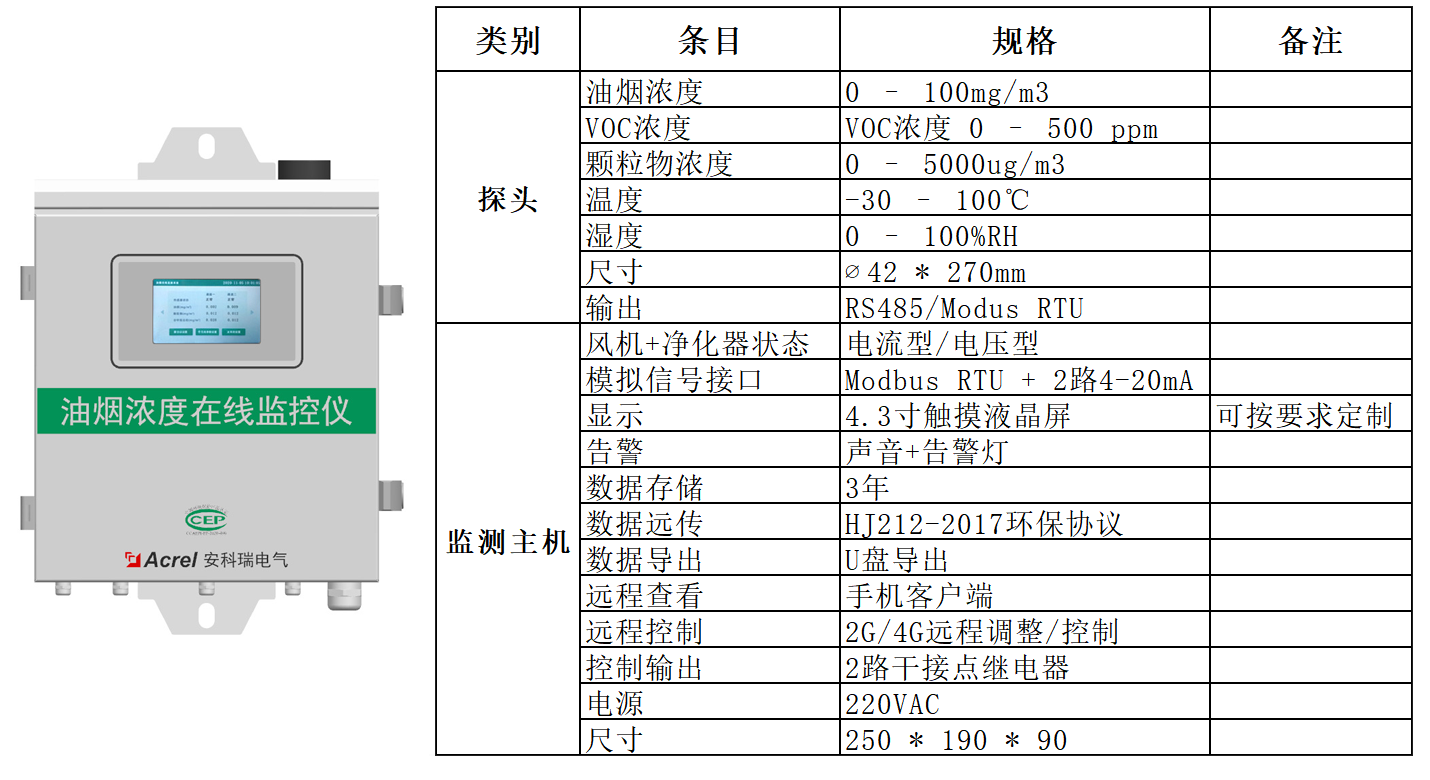
4、 Main functions of the catering fume monitoring cloud platform
online monitoring
Monitoring of oil fume emission data, including the collection and monitoring of oil fume emission concentration, particulate matter, NmHc and other numerical values; Simultaneously monitor the start stop status and operational data of the monitoring fan and purifier.
Alarm data monitoring
The system generates corresponding emission exceeding alarms based on the collected oil fume values; Analyze the operation data of the purifier and upload the corresponding alarm events such as operation, shutdown, and malfunction of the purification equipment.
data analysis
Run time analysis, offline analysis; Alarm proportion and ranking analysis; Historical data statistics, enterprise analysis reports, etc.
hidden danger management
The system analyzes the collected alarm data, generates corresponding hazard records, distributes and handles hazards, promptly handles alarms, and forms a closed loop.
Basic data maintenance
Personal information, permission maintenance, enterprise information entry, corresponding measurement point information entry, etc.
data service
Data collection, SMS reminders, data storage and parsing.
Equipment cleaning and maintenance
Develop a maintenance plan for cleaning/replacing the filter element of the oil fume monitoring equipment. After the set deadline is exceeded, the system will generate corresponding alarms to remind users to replace or clean the collection filter element.
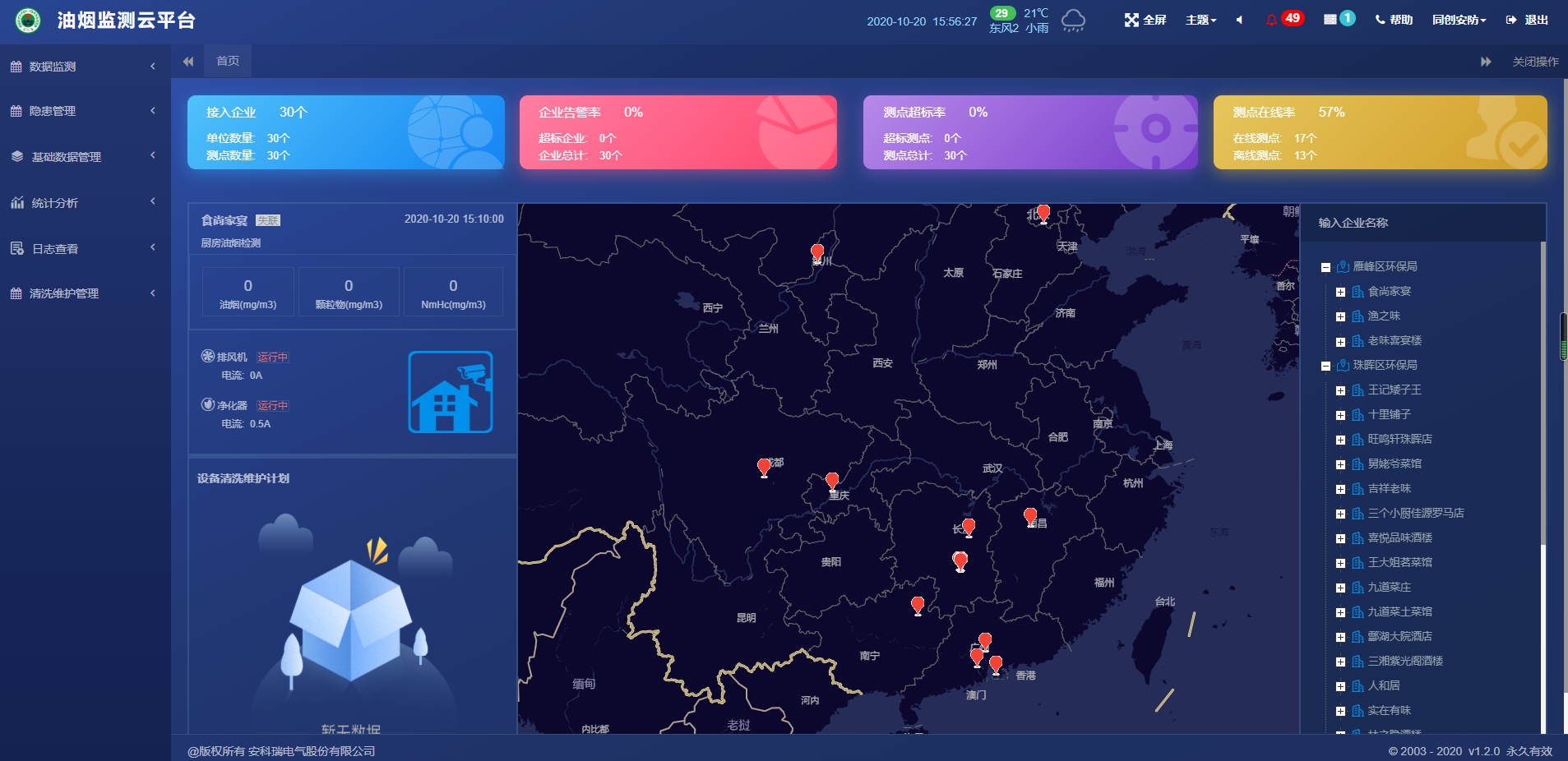
(1) Home Page
Access to enterprises;
Display the number of connected enterprises and the number of monitoring points.
AQI weather;
Real time AQI weather conditions.
Alarm rate, exceedance rate, online rate;
Display the number of alarm companies, alarm rates, including statistics on exceeding standards and online rates.
(2) Large screen display
This page displays all basic information of the cloud platform system on a large screen through a warehouse format, mainly including project overview, enterprise hazard ranking, alarm information list, monitoring points and alarm statistics, monitoring point geographic location, work order task statistics, etc.
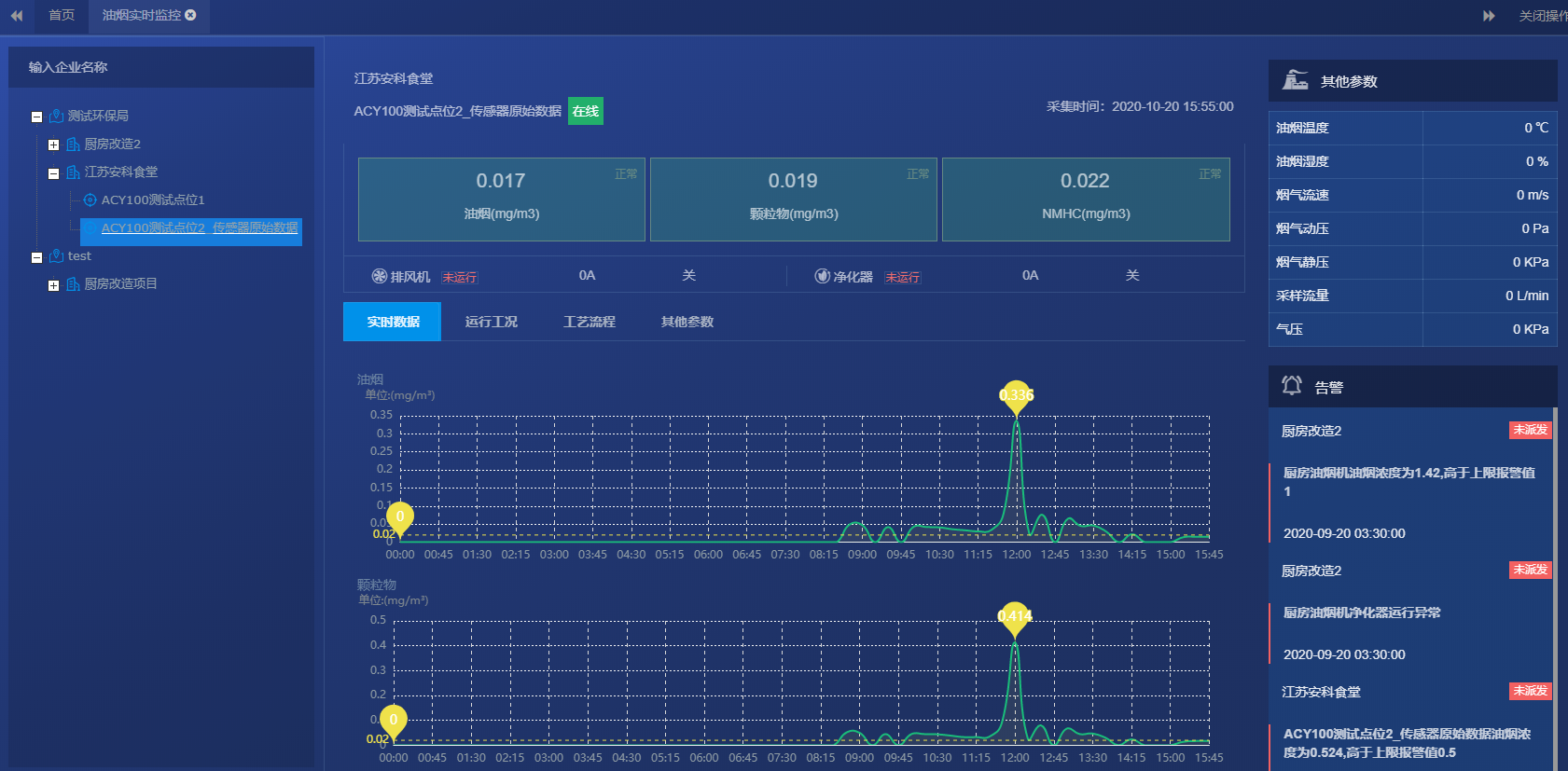
(3) Real time monitoring
The system can filter monitoring points, click on each monitoring point information, and you can see real-time data and 24-hour data change curves. And you can see the historical alarm information of the monitoring nodes.
Real time monitoring data includes information on the operating current, oil fume concentration, particulate matter concentration, and NMHC concentration of oil fume purifiers and fans.
(4) Hazard management
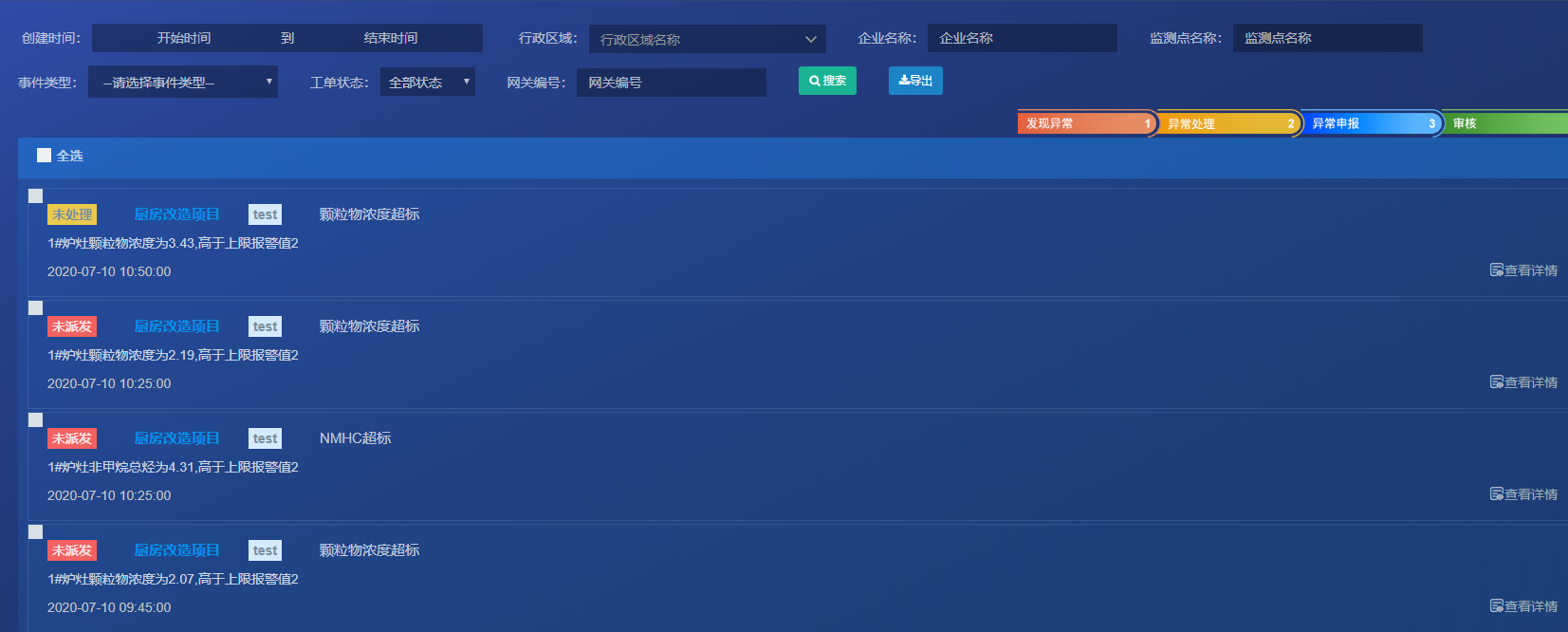
4.1 The backend generates corresponding alarm information during hazard inspections based on the concentration threshold and threshold time set by the measuring point, and provides bell and voice prompts on the homepage
4.2 Enterprise users confirm hidden dangers, identify the recipients of work orders, work order deadlines, and work order task descriptions
4.3 The operation and maintenance personnel confirm the content of the work order and handle the hidden dangers, fill in the details of the handling results, upload on-site pictures and other attachments, or conduct secondary distribution
4.4 Relevant enterprise users can confirm the processing progress of corresponding hazard information on the "Hazard Record" page, including whether it has been processed and distributed.

(5) Statistical analysis
5.1 Analysis of Exceeding Standards
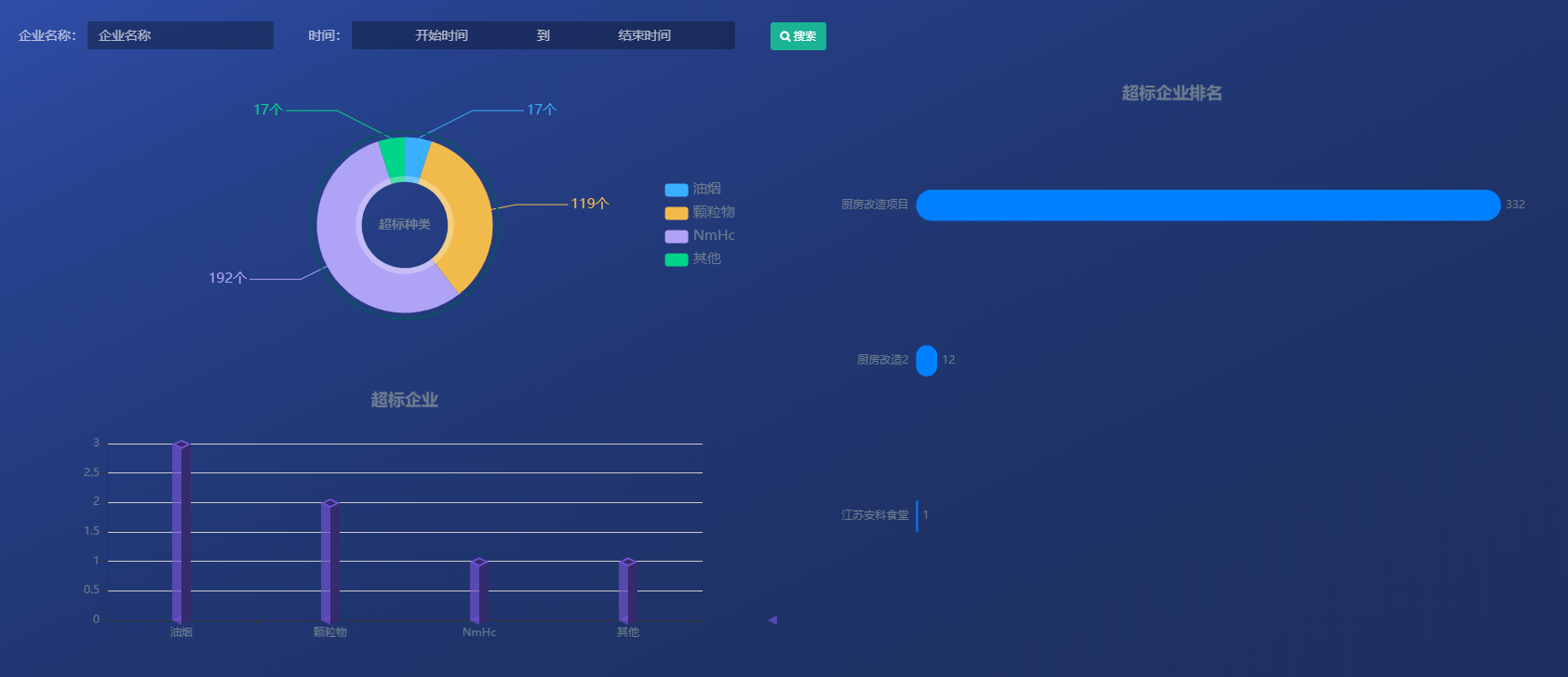
Perform correlation analysis on the collected data of oil fume, particulate matter, and NMHC, display a pie chart of the types and enterprises that exceed the standard, and rank the alarm enterprises. Based on the ranking, analyze and evaluate the data and operational status of relevant enterprises.
5.2 User Analysis Report
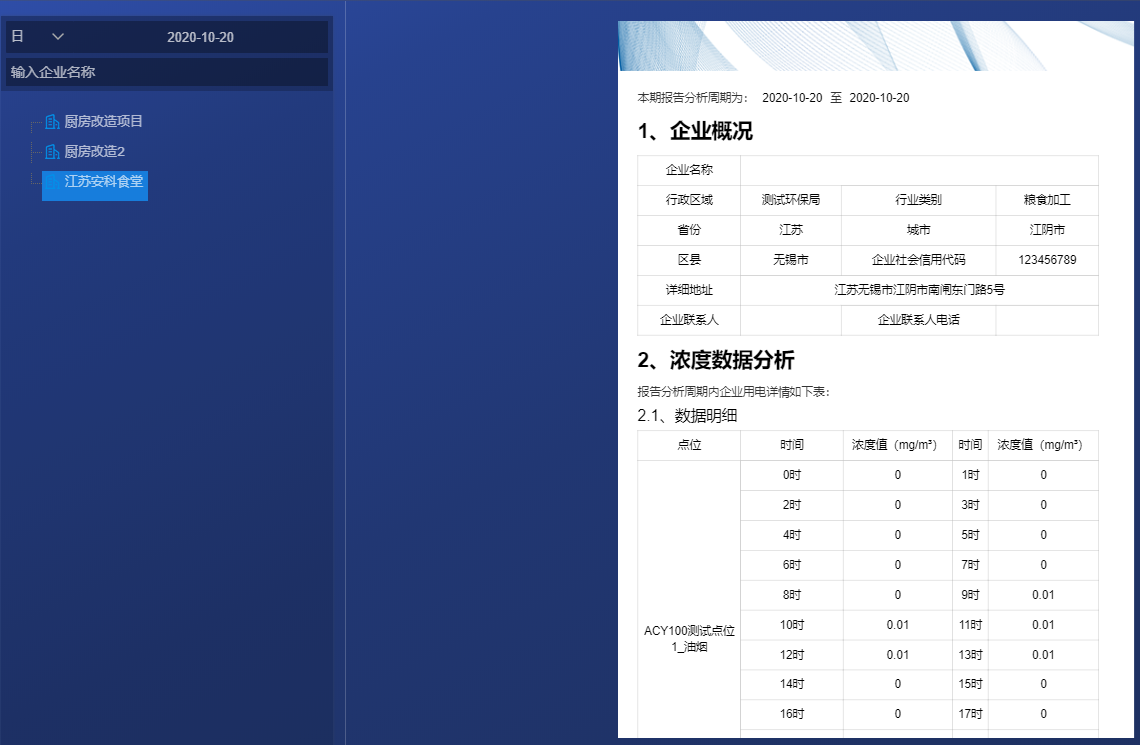
The user analysis report module summarizes the current alarms of the enterprise and supports exporting templates in Word. The specific template content can be customized according to customer needs.
5.3 Analysis of Online Duration
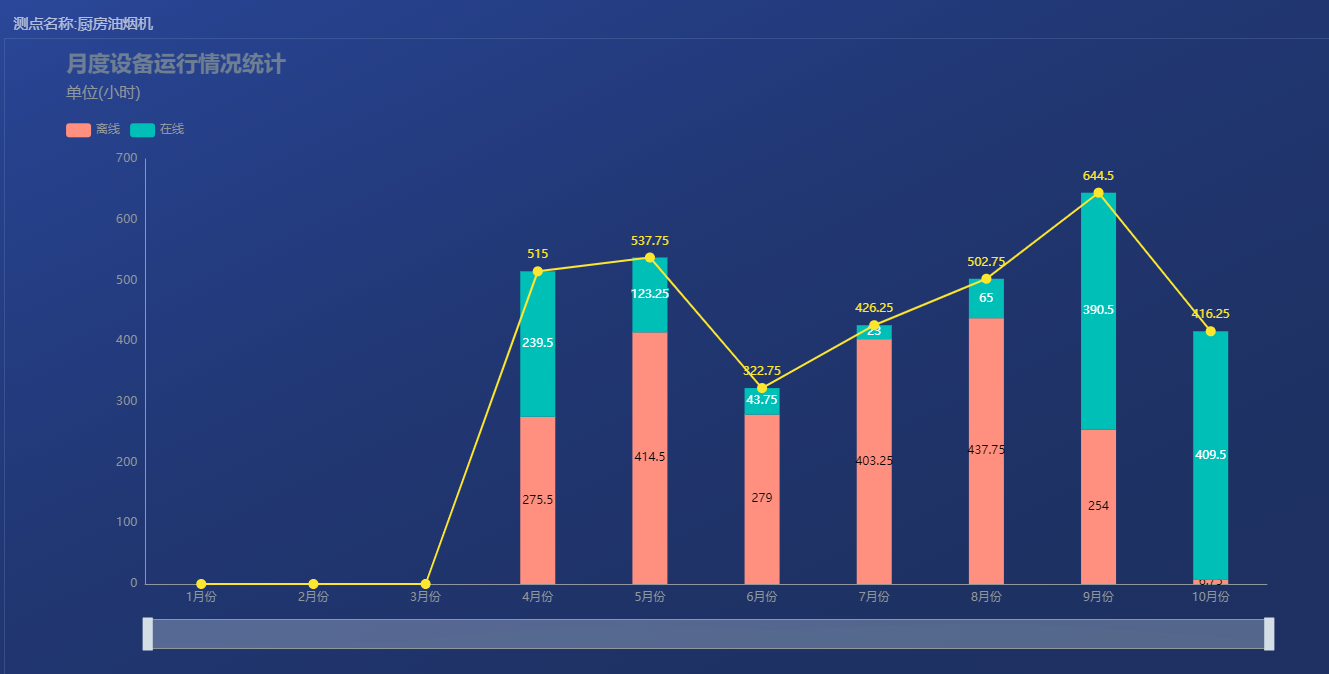
The enterprise online duration report module summarizes the current online and offline duration of monitoring instruments, as well as the online and offline time of fans and purifiers, and displays them in the form of line charts and radar charts.
(6) Equipment cleaning and maintenance
Set up a regular cleaning and replacement plan for enterprise detectors, including the installation time of maintenance monitoring points, the previous cleaning time, the next maintenance cycle, corresponding responsible persons, and other information.
5、 User experience of catering fume monitoring cloud platform
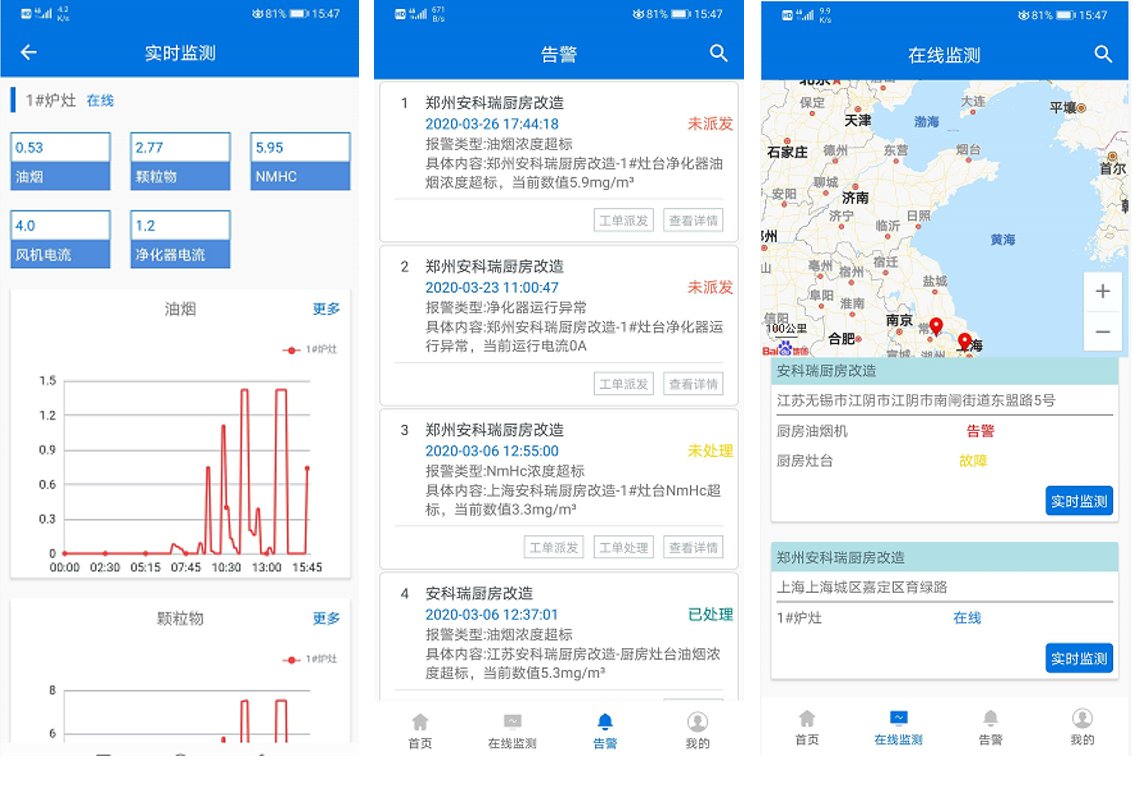
mobile app

The APP includes all the above functions, which can be downloaded by scanning the QR code above. After downloading, enter "acroly 123456" in the three columns to experience it.
WeChat Mini Program
The mini program includes some of the above functions, which can be accessed by scanning the QR code above. After downloading, enter "acroly 123456" in the three columns to experience it.

6、 Configuration of Catering Oil Fume Monitoring Cloud Platform
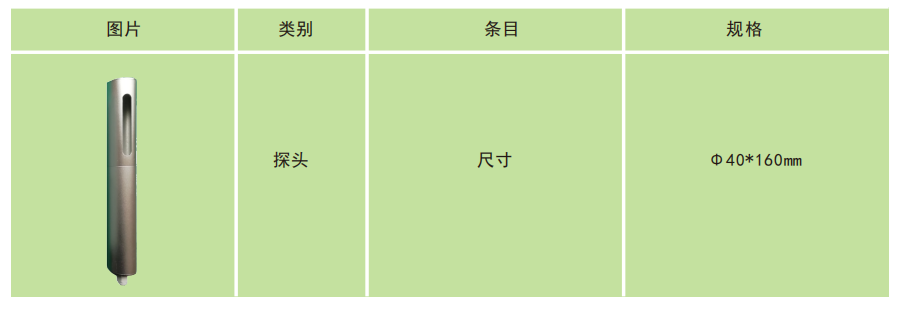
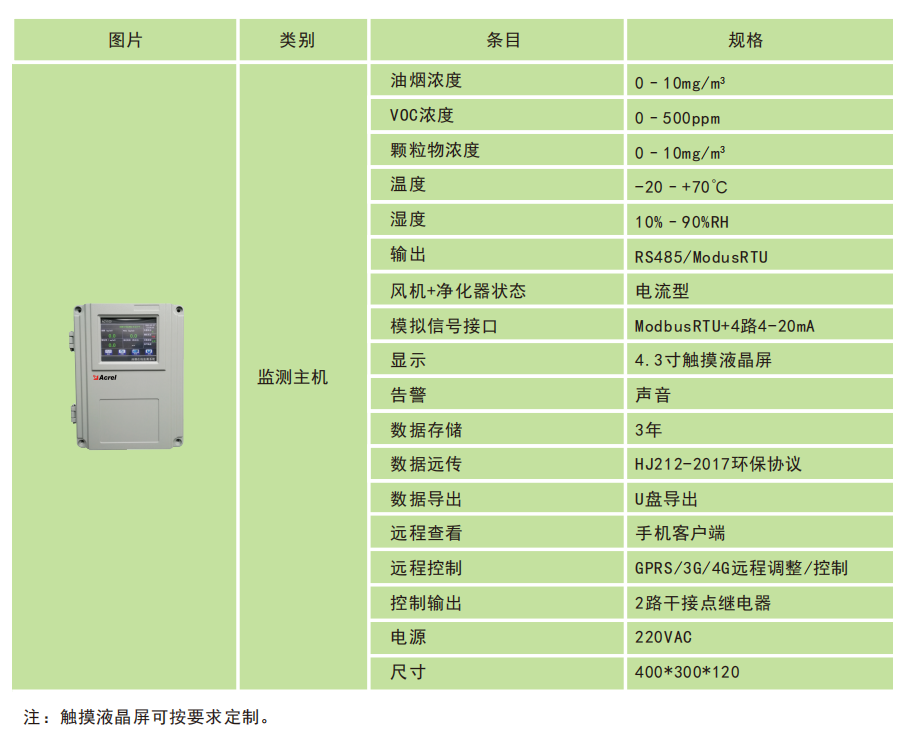
7、 Business Model of Catering Oil Fume Monitoring Cloud Platform
(1) Data hosting method
Ankrui guides users to complete the installation of oil fume monitoring equipment. Users upload data to Ankrui's oil fume monitoring operation cloud platform, entrust Ankrui to manage it, and charge storage fees according to regulations/agreements.
(2) User built platform
The platform is built in the user monitoring room (or location), and hardware customers can purchase or apply for Alibaba Cloud servers according to our recommended equipment configuration standards. Ankrui completes the platform construction and training of the operation management team for clients.
The hazards of kitchen fumes in the catering industry to the air environment
One of the key sources of PM2.5 environmental pollution is kitchen fume pollution. According to the detailed information of PM2.5 emissions in China, Shanghai's cleaning, restaurant, and civilian building coatings account for 5% of the total consumption, while Hong Kong's catering industry's PM2.5 emissions account for 1.07% of its total consumption. The key to cooking methods is to use frying and stir frying in areas where kitchen oil fume pollution is significantly higher than in other regions across the country. According to data information, the environmental pollution of PM2.5 in China increased from 10% to 14% from 2012 to 2017. In addition, one of the key sources of volatile air pollutants is kitchen fumes. According to statistics, restaurant kitchen fumes contain over 80 types of air pollutants, among which unsaturated hydrocarbons, benzene derivatives, and benzene have strong carcinogenic effects. These chemicals pose a great threat to health.
The sales market for oil fume purifiers and equipment is not standardized
During the entire process of kitchen oil fume pollution control, the supervisory agency found that although some restaurants' machinery and equipment contained testing and compliance reports provided by the organization, the model specifications and exhaust air volume on the factory nameplate of the oil fume purifier were mostly inconsistent. Even a large number of factory nameplates for oil fume purifiers have been removed. The catering owner stated that there was no factory nameplate during installation regarding this matter. The reason for such a situation may be that different types of smoke and dust purification machines and equipment that cooperate with each other have the same testing report. All products of the same type are subject to quality inspection reports, resulting in the inability to ensure the quality of smoke and dust purification equipment.
Ankerui Catering Oil Fume Online Monitoring Platform Price
AfterSalesService :
Key words:- Ankerui Oil Fume Online Monitoring Platform