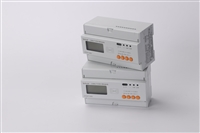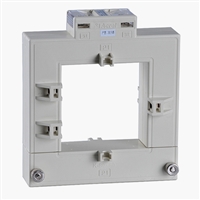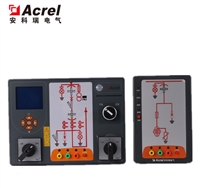


Online temperature measurement and monitoring system for switchgear
Category:
Electrical Engineering/Electrical Instruments /Other electrical instruments and meters
Model:
ARTM
Brand:
Acrel
Retail Price
1,000.00USD
重量
kg
- Product Description
-
Description :
Wireless temperature measurement system architecture
The wireless temperature measurement and monitoring system for this power distribution project mainly consists of data acquisition, data transmission, and main station monitoring. Each circuit breaker handcart contact of the medium voltage switchgear needs to be equipped with a wireless temperature measurement device. The temperature of the nodes in each cabinet is converged to the backend system through a 485 communication port. The contact temperature collection of this system consists of wireless temperature sensors, transceivers, and temperature measurement terminals. The wireless temperature sensors are directly installed at the heating nodes in the distribution cabinet, and the temperature measurement data is sent to the transceiver through wireless RF technology. The transceiver then sends the data to the temperature measurement terminal for display, and the temperature measurement terminal can transmit it to the monitoring main network. The wireless temperature measurement terminal of this project adopts the ASD320-P6 intelligent control wireless temperature measurement integrated device, the wireless temperature measurement sensor adopts the ATE200, and the transceiver adopts the ATC100. The entire system consists of a 10kV switch station wireless temperature measurement subsystem, a 1 # substation wireless temperature measurement subsystem, a 1 # substation wireless temperature measurement subsystem, and a main station.
There are a total of 11 temperature centralized display devices and 28 temperature and humidity control devices in the on-site generator switchgear, knife switch room, and substation. It is divided into 7 serial ports and connected to the monitoring host in the control room through 4 optical fibers.
2.1 Station Control Management
The station control management is the direct window for human-machine interaction for the management personnel of the power monitoring system. In the Qifeng Power Plant project, it mainly refers to the monitoring host placed in the centralized control room.
2.2 Network Communication Layer
The communication layer mainly consists of one serial server, Ethernet devices, and a bus network. The main function of the serial server is to monitor the on-site temperature centralized display device and temperature and humidity control device; The main function of Ethernet devices and bus networks is to achieve data exchange between substations and main stations, making the management of the distribution system centralized, informationized, and intelligent, greatly improving the safety, reliability, and stability of the distribution system, and achieving the goal of unmanned operation.
2.3 On site equipment layer
The on-site equipment layer is the data acquisition terminal, mainly composed of temperature centralized display device and temperature and humidity control device. Intelligent devices are connected to the serial server through shielded twisted pair RS485 interface and Modbus RTU communication protocol bus type connection. They reach the monitoring host in the control room through the serial server for networking and remote control.
2.4 Bus type connection diagram
The on-site devices are connected through shielded twisted pair cables (RVSP2 * 1.0) in a hand-in-hand manner for communication. Each bus is connected to about 20 intelligent devices, and different types of intelligent devices are connected to different buses. The data is then uploaded to the serial server and transmitted to the monitoring host in the control room.
In the application of power generation and distribution facilities today, the safe operation of large factory buildings and power plants is crucial. The application of temperature centralized monitoring system in factories can achieve real-time monitoring of the temperature of all power supply and distribution circuits in the power plant. The system can analyze and process the collected data, display the temperature data of each power supply and distribution circuit in real time, pop up alarm dialog boxes and voice prompts for temperature exceeding limits, and generate various energy reports, analysis curves, etc., which facilitate the analysis and research of temperature over a period of time. The system operates safely, reliably, and stably, providing a real and reliable basis for solving the safe operation of power generation and distribution in large factory buildings.
The electrical contact online temperature measurement device is suitable for temperature monitoring of cable joints, circuit breaker contacts, knife switch, high-voltage cable intermediate heads, dry-type transformers, low-voltage high current and other equipment in high and low voltage switchgear. It prevents excessive contact resistance caused by oxidation, looseness, dust and other factors during operation, which can cause heating and become a safety hazard, improve equipment safety guarantee, timely, continuously and accurately reflect equipment operation status, and reduce equipment accident rate.
Explanation: Acrel-2000T/B can not only connect multiple ATC transceivers through RS485 to receive all types of sensors for centralized display, but also communicate with wireless temperature measurement related local display devices in the distribution room for centralized display. At the same time, it can also connect to intelligent control, microcomputer protection, power instruments and other power monitoring equipment in the distribution room for monitoring.
The wireless temperature measurement system for high-power rectifiers completely solves the problems mentioned in the previous section: (1) the temperature sensor has a temperature guide plate extending from the bottom that is directly attached to the temperature measurement point, with accurate measurement and temperature error within 0-1 ℃; (2) The alarm temperature of the rectifier bridge arm can be set to two levels of limits; (3) Real time monitoring of rectifier bridge arm temperature has been achieved; (4) The temperature signal adopts a linear wireless propagation method, with complete isolation between each temperature measurement point and between displays, without damaging the insulation and structure of the rectifier; (5) The temperature signal is transmitted in a straight line and will not interfere with electronic devices such as comprehensive protection devices; (6) Reduced the labor intensity of operators and ensured their personal safety.
The temperature online monitoring system installed on high-power rectifiers mainly completes the following technical tasks. (1) Visual management of rectifier operating temperature has been achieved: real-time monitoring of the operating temperature of rectifier bridge arms, valve side busbars, and DC positive and negative busbars, and issuing alarm signals when the monitoring point temperature or temperature rise is abnormal. (2) Improved the reliability of rectifier operation: Real time monitoring of rectifier operating temperature enhances the management level of rectifier operation by operators, avoiding breakdown accidents caused by excessive component junction temperature due to high bridge arm operating temperature. (3) The benign operation of the rectifier has been achieved: the automatic monitoring and alarm system for the operating temperature of the rectifier bridge arm has established two-level alarm and temperature rise rate alarm functions at monitoring points, ensuring that operational faults of the rectifier can be detected in a timely manner and reducing the probability of unit tripping due to faults. (4) Improved the management level of rectifier operation and maintenance: The automatic monitoring and alarm system for the operating temperature of the rectifier bridge arm has established a database for the operating temperature of the rectifier bridge arm, valve side busbar, and DC busbar, and generated relevant trend curve graphs, allowing operation and maintenance personnel to grasp the changing trend of the rectifier operating temperature at any time, providing reliable data for rectifier maintenance and reducing the labor intensity and unsafe factors of manual inspection. (5) Wireless transmission of data collection has been achieved: wireless data transmission technology is used between the temperature measurement point and the on-site receiving host, and the data display has the advantages of real-time, stability, accuracy, etc. The data collection accuracy is 100%, and it has no impact on the insulation performance of the rectifier. Therefore, the application of high-power rectifier temperature online monitoring system has solved the safety hazards in rectifier operation and filled the gap in automatic monitoring of rectifier operating temperature in the domestic aluminum industry.
ARTM series electrical contact online temperature measurement device
Product Introduction: Online Temperature Monitoring System for Switchgear
Function:
ARTM Pn wireless temperature measurement device: The ARTM Pn wireless temperature measurement device can be installed separately in high-voltage cabinets and low-voltage drawer cabinets. Each device can receive data from 18 sensors, and sensor models can be selected as ATE100, ATE200, or ATE300. The device is equipped with a 485 interface, which can upload the collected temperature data to the monitoring center.
ARTM8 Temperature Inspection Instrument: The ARTM series temperature inspection and control instrument is suitable for measuring and controlling one or multiple temperatures, mainly used for temperature inspection, measurement and control in thermal power plants, hydropower stations and other occasions. Measure the temperature of Pt100 in 8 channels, and any channel can also be shielded. Each channel temperature measurement corresponds to 2 alarm segments, and the relay output can be set to any alarm direction and value.
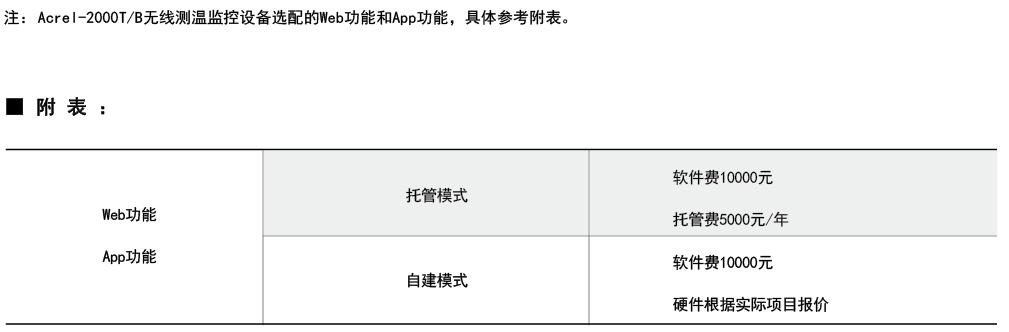
Wireless temperature measurement centralized collection touch screen: The wireless temperature measurement touch screen can be embedded and installed in high-voltage cabinets and low-voltage drawer cabinets. Each device can receive data from 240 sensors and can be optionally used with ATE100, ATE200, and ATE300 sensors. The device is equipped with a 485 interface and an optional Ethernet port, which can upload the collected temperature data to the monitoring center.
Application scope:
Suitable for temperature monitoring of cable joints, circuit breaker contacts, knife switch switches, high-voltage cable intermediate heads, dry-type transformers, low-voltage high current equipment, etc. inside high and low voltage switchgear.
Ordering Example:
Technical requirements: Passive wireless temperature measurement with 6-point circuit breaker contacts and 3-point busbar in one high-voltage cabinet
Auxiliary power supply: AC/DC 220V
Display mode: standalone wireless temperature display
In summary, the confirmed model is: wireless temperature measurement device: ARTM-P9-300, 1 unit; Wireless temperature sensor: ATE300, 9 pieces
Ordering Example:
Technical requirements: Wireless temperature measurement for 6-point circuit breaker contacts and 3-point busbar in 10 high-voltage cabinets
Wireless sensor requirements: battery powered, wireless
Display mode: centralized wireless temperature display
In summary, the confirmed model is: Wireless temperature measurement centralized touch screen: AARTM-7062HT-4 (HI), 1 unit; Wireless temperature sensors: ATE200,90 pieces; Wireless temperature measurement transceiver: ATC200,10
Ordering Example:
Technical requirements: Wireless temperature measurement for 6-point circuit breaker contacts and 3-point busbar in 10 high-voltage cabinets
Wireless sensor requirements: Passive wireless
Display mode: centralized wireless temperature display
In summary, the confirmed model is: wireless temperature measurement centralized touch screen: ARTM-7062HT-4 (HI), 1 unit; Wireless temperature sensors: ATE300, 90 pieces; Wireless temperature measurement transceiver: ATC400, 1 unit; Power module: ARTM-KDYA-DG30-24K, 1 unit.
2 Technical parameters
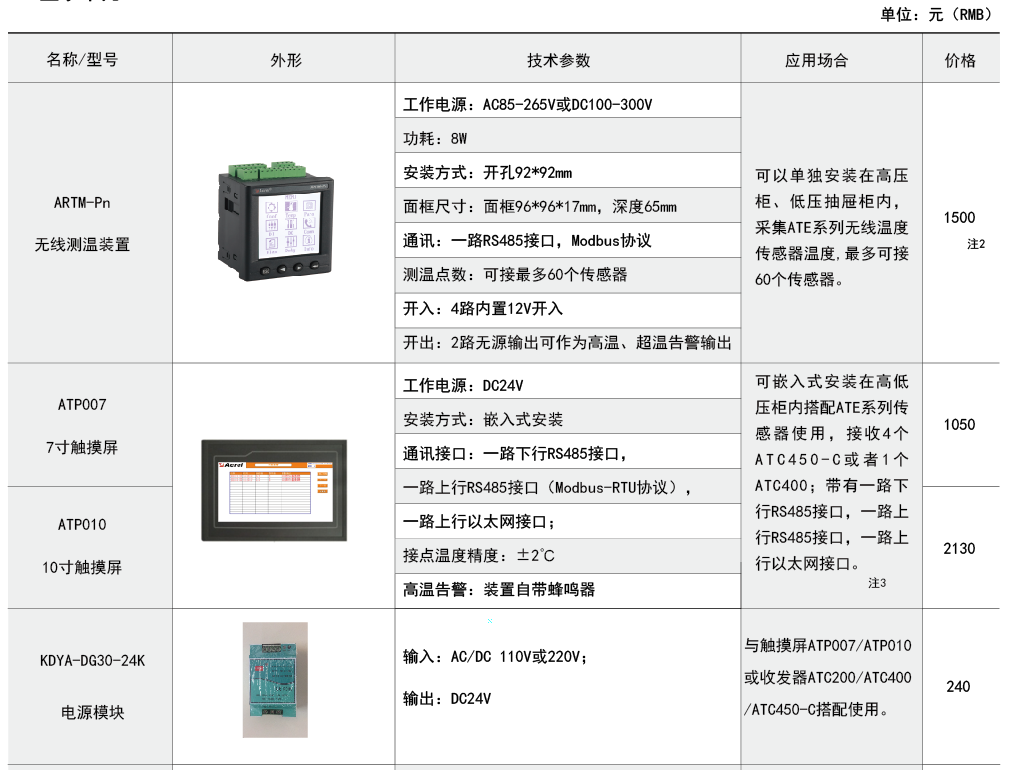
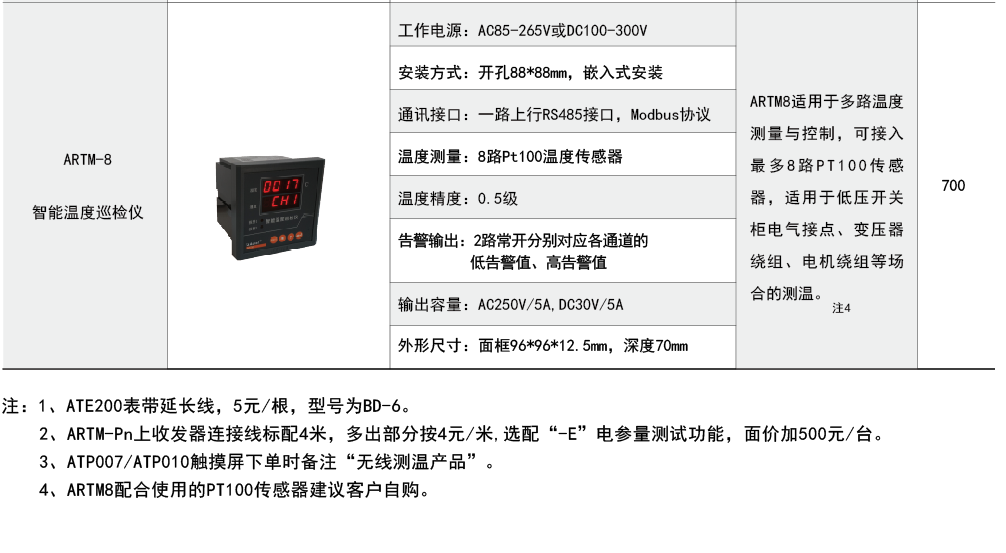
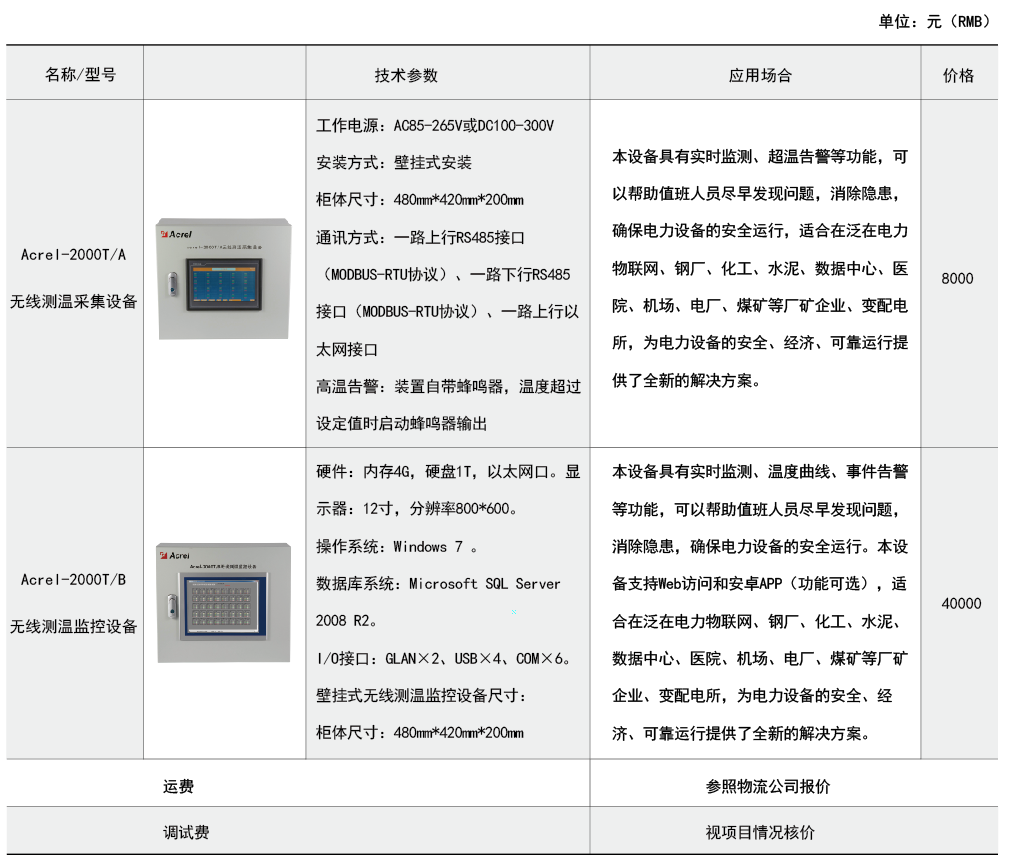
3 External dimensions
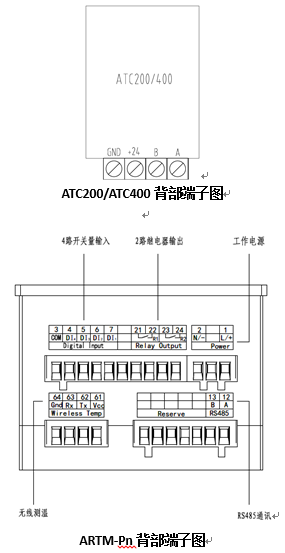

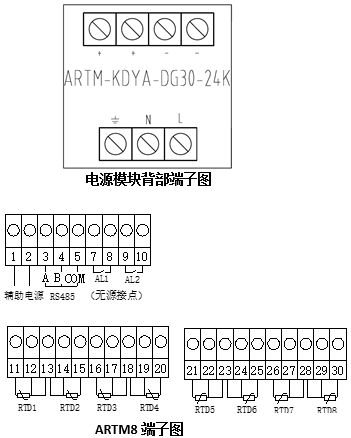
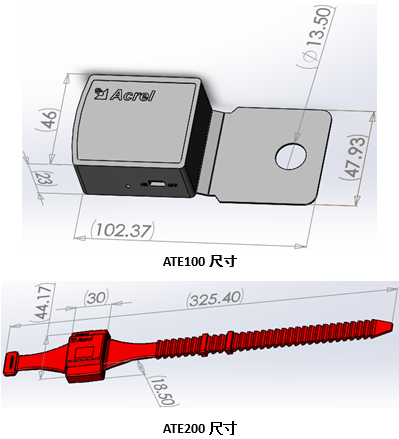
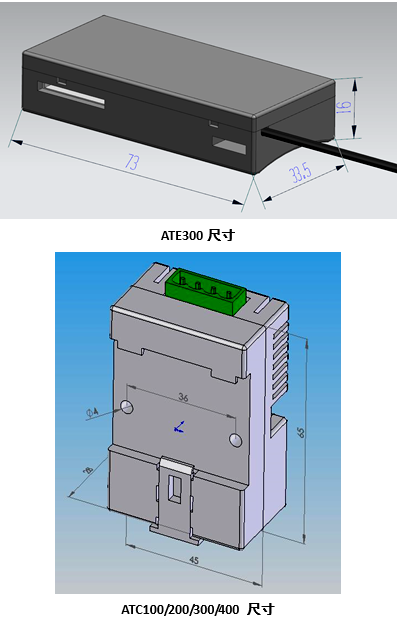
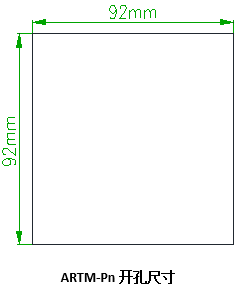
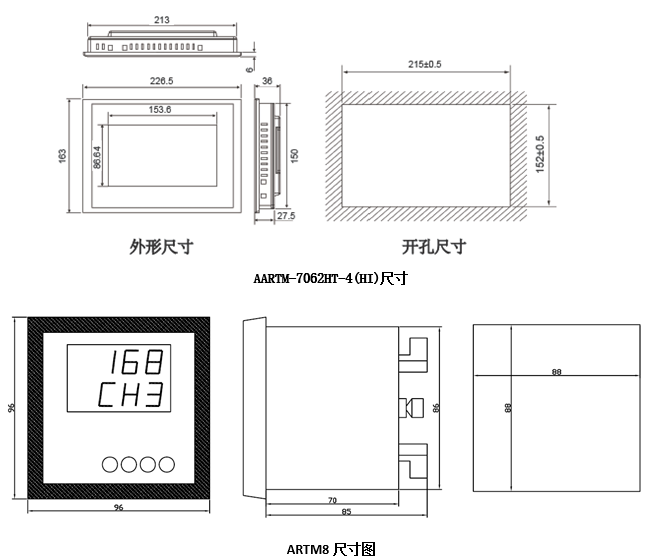
Case Study of Wireless Temperature Measurement Product Requirements
A certain polymer synthesis company adheres to technological innovation and has acquired a large number of independent intellectual property rights in the fields of new environmental protection, new materials, and new energy. It has broken multiple foreign technological monopolies in new environmentally friendly refrigerants, fluorine silicon high-tech materials, ion membranes, etc., and achieved domestic substitution. It is a supplier to well-known domestic enterprises such as Gree, Midea, Haier, Hisense, Daikin, Sanjiang, Changhong, etc. At present, the company firmly grasps the major opportunities of structural reform and the transformation of old and new driving forces in the province, focusing on the main line of technological innovation, and striving to create new engines of "two replacements" and "intelligent manufacturing". Under the new normal of the economy, the company is revitalized and its operating efficiency continues to rise.
The entire factory's 10KV power distribution system adopts single busbar segmentation, with two incoming lines serving as backup for each other; Each incoming line capacity is designed according to a capacity of 12500KVA, which can meet the production and operation needs of the entire plant area. Two incoming lines and three circuit breakers on the busbar can only be closed, and the busbar is equipped with a backup automatic switching device. The motor circuit requires separate control, and double small busbars are required for the cabinet top small busbar combination, control busbar, and device power supply. The 0.4KV system uses transformers to operate in separate columns, with a busbar cabinet in the middle and anti parallel interlocking. The busbar is equipped with a backup automatic switching device. The main power supply for the secondary load of the process load is from each bus section, and the backup power supply is from the box transformer in the factory area. UPS、DCS、 The main power supply for the control room is from the 1 # transformer busbar section, and the backup power supply is from the emergency busbar section (the emergency busbar section is equipped with a dual power conversion switch, the main power supply is from the 2 # transformer busbar section, and the backup power supply is from the 630A circuit breaker of the factory box transformer). UPS (10KVA) uninterruptible power supply is installed in the control room, and the cabinet is made by the DC screen manufacturer and installed inside. The cabinet size is the same as the DC screen. The UPS outgoing switches are all 220V, 16A switches, with no less than 6 circuits.
For the application of the power distribution project in a polymer synthesis factory, wireless temperature measurement products need to be configured for the electrical connection points and high current circuits in the distribution circuit. In addition, the project requires a single cabinet local display and RS485 interface for wireless temperature measurement. Therefore, ARTM Pn is used for both high and low voltage distribution rooms; CT induction temperature sensors are required to be installed in high and low voltage distribution rooms. Considering the small size of the low voltage cabinet, ATE400 CT induction power sensors are selected.
A Brief Discussion on the Application of Wireless Temperature Measurement Technology in Substations: With the increasing number of unmanned substations, the data collected by traditional substation integrated automation systems can no longer meet the requirements. For example, the commonly used small car style switchgear uses plug connections between its circuit breakers and switchgear. Long term high current, contact aging, and other factors can easily cause the contact resistance to increase, resulting in excessive temperature rise of the contacts and heating of the connection points, forming a vicious cycle: temperature rise, expansion, contraction, oxidation, increased resistance, re heating, and even burning, leading to accidents. By constructing an online monitoring system for the operating temperature of substations, operators can quickly understand the operation status of equipment, promptly deal with potential accidents, and prevent them in advance.
At present, there are few instruments specifically used for measuring the heating of high-voltage busbars, high-voltage switches, and electrical contacts. There are two methods for temperature monitoring: one is to apply a layer of luminescent material on the surface of the high-voltage electrical contact, and roughly determine the temperature range by observing its color change. This method has low accuracy and poor reliability, and cannot be quantitatively measured. Another method is to use an infrared thermal imager with radiation characteristics, which has high accuracy but requires optical components. It is inconvenient to use in specific situations such as high-voltage switchgear, and the price is high, making it difficult to promote and apply. Both methods require manual inspection and cannot obtain real-time temperature data, thus failing to provide real-time temperature alarm function.
At present, many power companies are promoting fiber optic temperature measurement systems. Although fiber optic can withstand a certain voltage, it can pose safety hazards to electrical systems in situations where the air humidity is relatively high or there is fog, frost, or dew. Relatively speaking, using wireless transmission to measure the temperature of high-pressure environments is more feasible, as the locations to be measured can be distributed according to the actual situation, providing convenience for arbitrarily determining, disassembling, and increasing the number of temperature measurement points.
Online temperature measurement and monitoring system for switchgear
AfterSalesService :
Key words:- Online temperature measurement and monitoring system for switchgear