
Su style voltage tester, Su style telescopic voltage tester, measuring pen, Kelida Su style bar shaped pocket voltage tester
Category:
Electrical Engineering/Electrical Instruments /Measuring pen
Model:
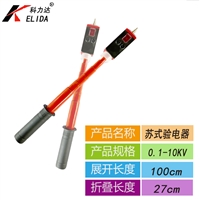
0.4-10KV/0.1-10KV
Brand:
Kelida Electric Appliances
Retail Price
75.00USD
重量
kg
- Product Description
-
Description :
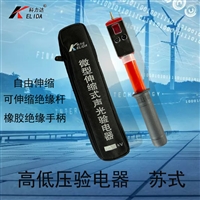
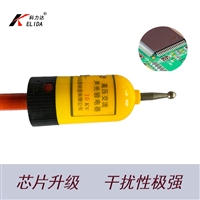
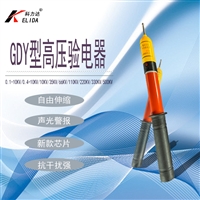
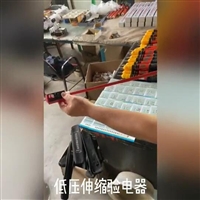
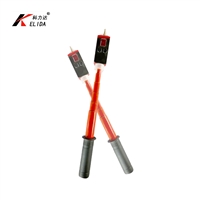
The Su style high and low voltage voltage tester, also known as the High and low voltage scope in English. The Su style high and low voltage acousto-optic tester is an acousto-optic indicator made of electronic integrated circuits, with stable and reliable performance. It has the characteristics of full circuit self checking function and strong anti-interference ability. This product is suitable for electrical testing of AC transmission and distribution lines and equipment. Whether it is day or night, indoor substations or outdoor overhead lines, it can provide you with correct and reliable services. It is an essential safety tool for power systems and electrical departments of industrial and mining enterprises.
Hebei Kelida Electric Appliance Manufacturing Co., Ltd. produces two types of Kelida brand Soviet style voltage testers: 0.1-10kv and 0.4-10kv. Its length is 270mm in a contracted state and 1000mm in a stretched state; its weight is 0.2kg.



Notes:
When using the Su style high and low voltage acousto-optic tester, it is necessary to pay attention to its rated voltage and the voltage level of the tested electrical equipment, otherwise it may endanger the personal safety of the tester or cause misjudgment. During electrical testing, operators should wear insulated gloves and hold the handshake part below the protective ring. They should first inspect the live equipment and gradually move the electrical tester closer to the live equipment until it emits light or sounds to confirm its performance. For electrical testers with self checking systems, they should first press the self checking button to confirm that the electrical tester is intact, and then test the equipment that needs to be tested. During testing, they should gradually move the electrical tester closer to the tested equipment until it touches the conductive part of the equipment. If there is no sound or light indication during this process, it can be determined that the equipment is not charged. Conversely, if the electrical tester suddenly emits light or sounds during the approach process, it is considered that the equipment is charged and the approach can be stopped, ending the electrical testing. The sentence is:. In addition, the windmill type voltage tester is only suitable for use indoors or outdoors in good weather conditions. It is prohibited to use it under environmental conditions such as rain and snow.
(1) When using high and low voltage voltage voltage testers for testing, it is necessary to wear insulated gloves that meet the requirements; It is not allowed to test alone, and someone must be present to supervise; During testing, it is necessary to prevent phase to phase or ground short circuit accidents; The human body should maintain a sufficient safe distance from charged objects, with a safe distance of at least 0.7 meters for 10kV high voltage When used outdoors, the weather must be good, and ordinary insulated poles should not be used in rainy, snowy, foggy, and humid weather to prevent danger.
(2) Before use, the insulation rod should be stretched to the specified length according to the voltage level of the tested equipment (line), and appropriate types of indicators and insulation rods should be selected. The indicators should be inspected, and the high-voltage voltage tester used must be qualified through electrical testing.
(3) For the rotary high-voltage voltage tester, the inspected indicator should be screwed onto the insulating rod and fixed before use. The surface should be wiped clean with a silk cloth, and then rotated to the desired angle for easy observation during use.
(4) For capacitive high-voltage voltage testers, the insulation rod is marked with a red line. The part above the red line indicates the presence of capacitive components and is a live part. This part should maintain a necessary safety distance from adjacent conductors or grounding bodies in accordance with the requirements of the "Safety Work Regulations for Electric Power".
(5) When using, special attention should be paid to not holding the hand beyond the protective ring.
(6) When using a rotary high-voltage voltage tester, the metal contacts of the indicator should gradually approach the tested equipment (or wire). Once the indicator blades start to rotate normally, it indicates that the equipment is powered and should immediately leave the tested equipment. The blades cannot rotate for a long time to ensure the service life of the voltage tester. When there is residual charge voltage on the cable or capacitor, the indicator blade will slowly rotate a few times for a short period of time and then stop rotating on its own, so it can accurately identify whether the equipment is powered off.
(7) The electrical inspection of the line should be carried out phase by phase. When inspecting the circuit breakers, isolating switches or other maintenance equipment used for interconnection, the electrical inspection of each phase on both sides of the incoming and outgoing lines should be carried out separately. When conducting electricity inspection on multi-layer power lines erected on the same tower, the prior low voltage and the posterior high voltage are used, and the prior lower layer and the posterior upper layer are used.
(8) The electrical test on the capacitor bank should be carried out after it has been discharged.
(9) After each use, before shrinking the insulation rod and removing the rotary indicator into the packaging bag, the surface dust should be wiped clean and stored in a dry and ventilated place to prevent moisture. The rotary indicator should be properly stored and not subjected to strong vibration or impact, nor should it be adjusted or disassembled without authorization.
(10) To ensure safe use, the voltage tester should undergo a preventive electrical test every six months.
AfterSalesService :
Key words:- Su style voltage tester
More Products