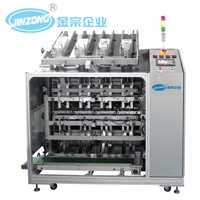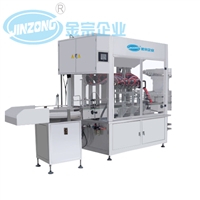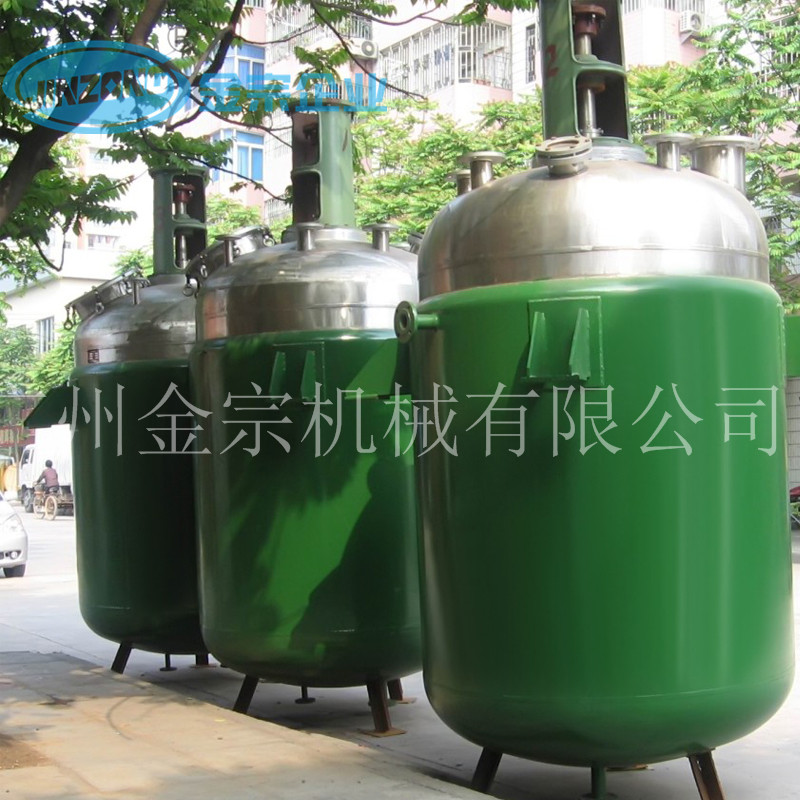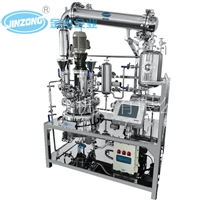
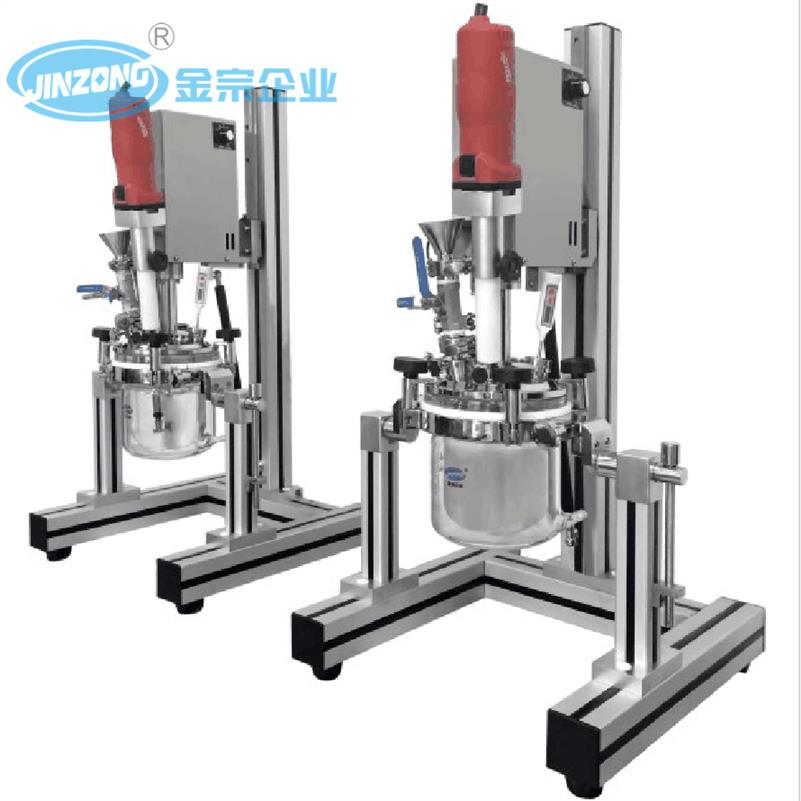

Vacuum emulsifier washing solution production line
Category:
mechanical equipment/Mixing equipment/Emulsifying machine
Model:
Brand:
Jinzong Machinery
Retail Price
50,000.00USD
重量
kg
- Product Description
-
Description :
The principle of emulsifier has the characteristics of stable operation, low noise, convenient cleaning, flexible maneuverability, and continuous use. It is applied to any process that requires stirring, homogenization, crushing, suspension, and dissolution, such as cosmetic emulsions and emulsions. Among them, vacuum homogenizer emulsifier and high shear emulsifier are new emulsifier products with world advanced level that have entered mass production in recent years.
What are the characteristics of a homogenizer emulsifier? It is loved by a large number of consumers for its very stable performance and mature process. Meanwhile, the homogenizer emulsifier is also one of the widely used production equipment. When the homogenizer emulsifier is working, it mainly relies on the reciprocating motion of the plunger. The pump body has a one-way valve seat, the opening and closing of the sealing core, and the adjustment of the inner valve head of the valve body. The very small gap between the valve seat is effectively controlled, forming a very strong high-pressure energy. The material can be homogenized and emulsified under various composite forces such as turbulence, shear, collision, and cavitation in an instant. The design of the homogenizer emulsifier is very innovative and comprehensive, with reliable performance and a wide range of applications. It is mainly an ideal equipment for the very fine processing of various industries such as food and beverage, medicine, and chemical oils and fats.

The principle of intermittent high-speed homogenizer emulsifier: High shear dispersion emulsification is the efficient, fast, and uniform distribution of one or more phases into another continuous phase, and in general, the phases are immiscible with each other. Due to the high tangential velocity generated by the high-speed rotation of the rotor and the strong kinetic energy brought by high-frequency mechanical effects, the material is subjected to strong mechanical and hydraulic shear, centrifugal extrusion, liquid layer friction, impact tearing, and turbulence in the narrow gap between the stator and rotor. As a result, the immiscible solid, liquid, and gas phases are instantly uniformly and finely dispersed and emulsified under the joint action of corresponding mature processes and appropriate additives. After high-frequency cycling, stable high-quality products are finally obtained.
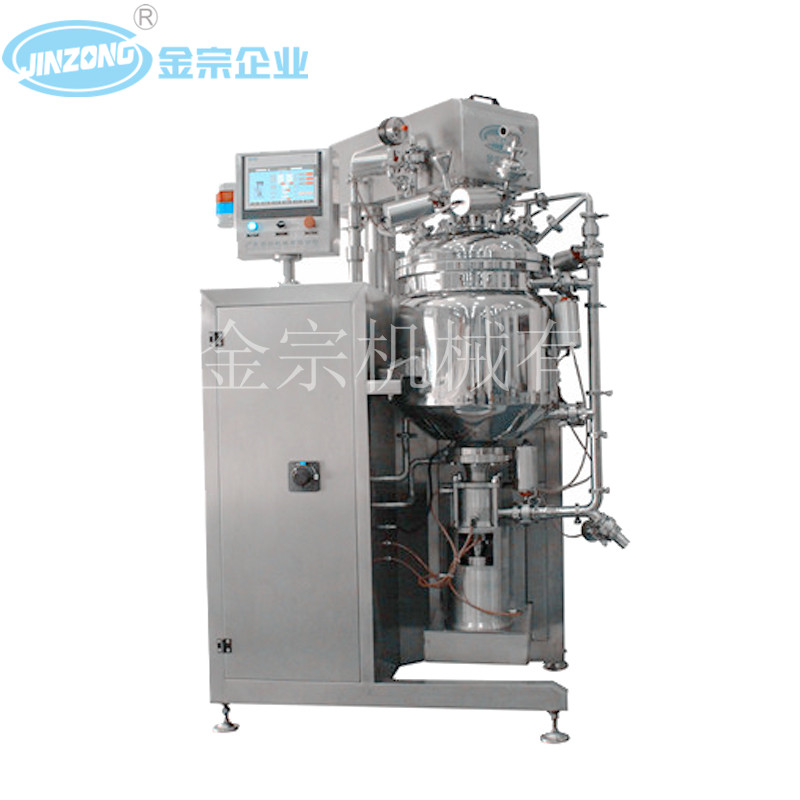
The properties of emulsification: Emulsification is the process of dispersing a liquid in extremely small droplets uniformly in another immiscible liquid. Emulsification is a liquid-liquid interface phenomenon in which two immiscible liquids, such as oil and water, are separated into two layers in a container, with the lower density oil in the upper layer and the higher density water in the lower layer. If appropriate surfactants are added and stirred vigorously, the oil is dispersed in water to form an emulsion, which is called emulsification.
A system formed by dispersing particles (droplets or liquid crystals) in another immiscible liquid is called an emulsion. When forming an emulsion, the interfacial area between the two liquids increases, making the system thermodynamically unstable. In order to stabilize the emulsion, another component, an emulsifier, needs to be added to reduce the interfacial energy of the system. Emulsifier belongs to a type of surfactant, and its typical function is to emulsify. The phase that exists in the form of droplets in an emulsion is called the dispersed phase, also known as the internal phase or discontinuous phase; And the other connected entity is called a dispersed medium, also known as an external phase or continuous phase. Emulsion vacuum emulsifier
AfterSalesService :
Key words:- Vacuum emulsifier