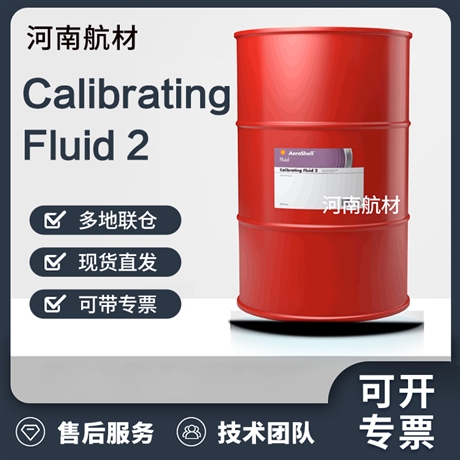




Shell Calibration Fluid 2 replaces ROYCO 950 Calibration Fluid
Category:
energy/Petroleum product additives/Lubricant additives
Model:
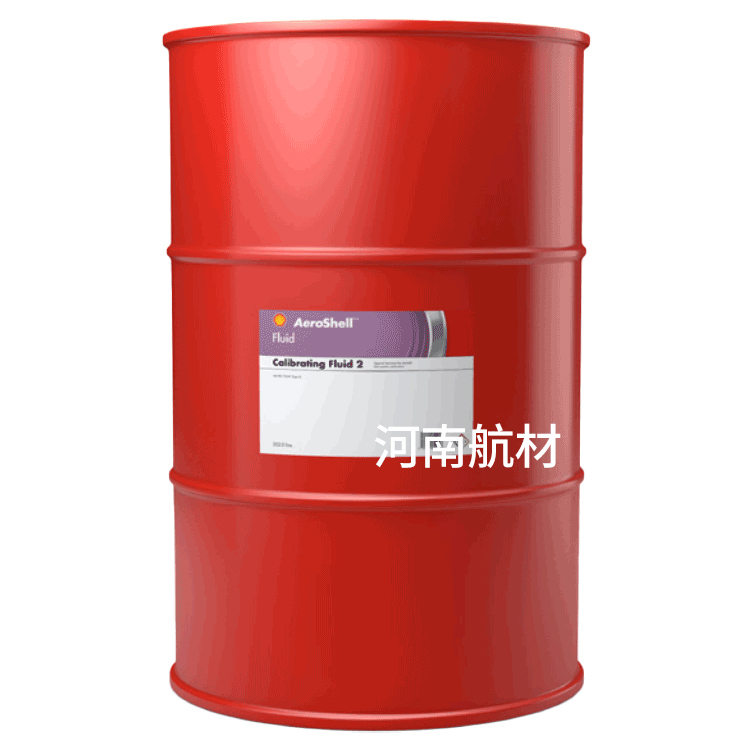
AeroShell Calibrating Fluid 2
Brand:
Shell
model:
AeroShell Calibrating Fluid 2
Usage Classification:
Aviation fuel
execution standard:
MIL-PRF-7024E
Product Specifications:
bucket
manufacturer:
Royal Dutch Shell
Retail Price
23,400.00USD
重量
kg
- Product Description
-
model AeroShell Calibrating Fluid 2
Usage Classification Aviation fuel
execution standard MIL-PRF-7024E
Product Specifications bucket
manufacturer Royal Dutch Shell
Description :
Our company is selling a product - Shell Calibration Solution No.2. We now provide free technical consultation, price quotation, sample application, and MSDS acquisition services. Please feel free to call us for consultation at any time.
AeroShell Calibrating Fluid 2 is a special kerosene used for aircraft fuel system calibration.
AeroShell Calibration Fluid 2 can replace the engine calibration fluid of ROYCO 950.
Execution standard: MIL-PRF-7024E L-type
Appropriate grounding and bonding procedures should be used in all batch transfer operations to avoid static electricity accumulation. Even if properly grounded and overlapped, this material may still accumulate static charges. If sufficient charge accumulates, electrostatic discharge may occur and ignite flammable vapor mixtures in the air. Be careful when handling operations that may cause additional danger due to static electricity accumulation. These operations include but are not limited to: pumping (especially turbulent flow), mixing, filtering, splash loading, cleaning and filling tanks and containers, sampling, load switching, metering, vacuum tanker operation, and mechanical motion. These activities can all lead to electrostatic discharge, such as the formation of sparks. To avoid static discharge, limit the pipeline flow rate during pumping (≤ 1 m/s until the oil injection pipe is submerged twice the diameter below the liquid level, and then ≤ 7 m/s). Avoid splashing oil during loading. Do not use compressed air for oil loading, unloading, or handling operations.



AfterSalesService :
Key words:- Shell Calibration Solution No.2
More Products