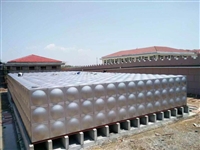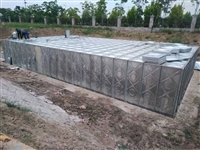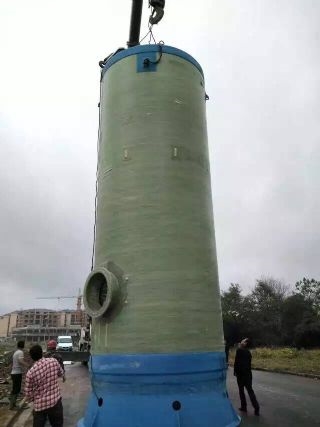

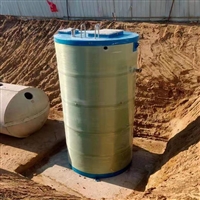
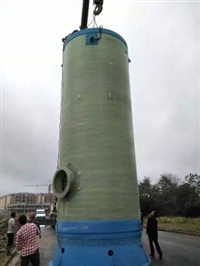
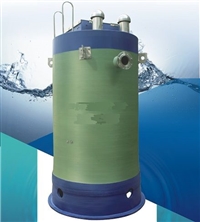
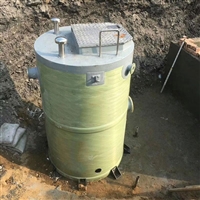
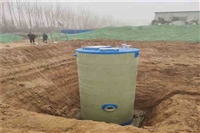
Integrated sewage pump station, fiberglass winding integrated pump station, production sewage lifting integrated pump station
Category:
Environmental Protection/Sewage treatment equipment/Integrated sewage treatment equipment
Model:
JZPPS-3.8-10-30/3
Brand:
Yancheng Jinze Water Supply Equipment Co., Ltd
model:
JZPPS-3.8-10-30/3
pump power:
thirty
Flow meter specifications:
two hundred
Diameter of water outlet pipe:
eight hundred
Inlet pipe diameter:
one thousand
Processing & Customization:
yes
voltage:
three hundred and eighty
power:
thirty thousand
water temperature:
0-60
Device Name:
Integrated sewage pumping station
Overall dimensions:
380*1000
Wastewater treatment capacity:
two hundred
Specifications:
3.8X10m
Is it a cross-border source of goods:
No
manufacturer:
Yancheng Jinze Water Supply Equipment Co., Ltd
Retail Price
38,000.00USD
重量
kg
- Product Description
-
model JZPPS-3.8-10-30/3
pump power thirty
Flow meter specifications two hundred
Diameter of water outlet pipe eight hundred
Inlet pipe diameter one thousand
Processing & Customization yes
voltage three hundred and eighty
power thirty thousand
water temperature 0-60
Device Name Integrated sewage pumping station
Overall dimensions 380*1000
Wastewater treatment capacity two hundred
Specifications 3.8X10m
Is it a cross-border source of goods No
manufacturer Yancheng Jinze Water Supply Equipment Co., Ltd
Description :

Integrated sewage pumping stationConstruction and operation points:
1. Excavation of pump pit
Excavation must be carried out according to the design drawings, and an excavation plan must be formulated. During excavation, close attention should be paid to the safety of the foundation pit. The bottom of the pump pit must be dry and free of water. If there is any, appropriate precipitation measures must be taken. Adopt appropriate foundation pit maintenance methods to avoid pump pit collapse. The bottom of the pit should be excavated flat. If necessary, a layer of stone free gravel should be laid and compacted with a compactor to achieve a compaction degree of 90% according to the compaction test results. After the excavation of the pump pit is completed, it is necessary to confirm that the on-site conditions for the inlet and outlet water pipes, connecting pipes, and cables of the pump station are met before installing the pump station.
2. Installation of cement base plate
The installation of cement base plate must be in a horizontal position, and the anchor bolts installed on the cement base plate should be placed before the pump body. The upper surface of the base plate must be polished smooth. Install the foot screws evenly at different angles within one circle. Less than 4 anchor bolts should be used for installation on the cement base plate, and the anchor screws should be evenly installed. The size of the cement base plate should meet the anti floating requirements of the pump station.
3. Lifting
Use lifting ropes to lift the pump station shaft from a horizontal position to a vertical position. At this stage of work, the hooks on the shell are not allowed to be used. When lifting the container pump station shaft vertically, the weight should be evenly distributed among 4 hooks (2 hooks for small shafts and 4 hooks for large shafts). When lifting, a crossbar can be used to ensure that the lifting rope is vertical. Use lifting ropes or ropes to protect the pump station and pump cover from being pinched;.
4. Install the wellbore
Clean the surface of the cement base plate with a brush to ensure that there is no dirt or debris between the installation surface and the pump installation flange. Lift the pump body with a lifting hook and place it in the middle of the foot screw ring on the cement base plate. When operating, do not touch the pump body with the foot screws, as the foot screws can easily damage the surface of the pump body. Pay attention to confirming the correctness of the inlet and outlet directions of the tank. Check if the pump station is vertical. Install the fixed bracket and tighten the nut.
5. Pipeline interface connection
Before connection, it is necessary to backfill the surface of the connecting pipe with pebbles or sand around the pump station shaft and compact it. The installation at the inlet end should be checked: the pipe and sealing ring must be clean, the inlet pipe should be aligned with the connection, and the connecting foot screws should be tightened. The flange joint should be tightly sealed, aligned with the pipe (without pressure), and symmetrically and evenly fastened.
6. Backfilling
Before backfilling, it is necessary to check that the pump station has not undergone structural damage. The backfill material must be pebbles or sand, with a particle size not exceeding 32mm, to avoid the backfill material particles exceeding the specified size. When filling the pit in winter, it is necessary to check that the backfill materials are melted together, layer by layer, and each layer should not exceed 50 cm. The inlet and outlet pipes in the pit should be compacted. It is strictly prohibited to use equipment such as compactors when backfilling to a depth of 30cm near the pump tank wall. The top components should be installed on the embankment of the pump station, and the top cover of the pump station should be kept above the ground.

AfterSalesService :
Key words:- Integrated sewage pumping station
More Products