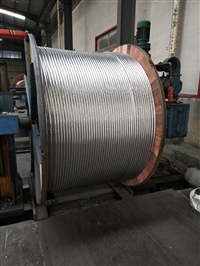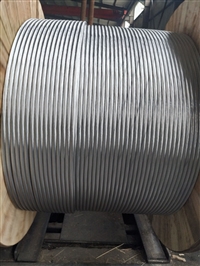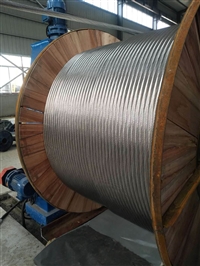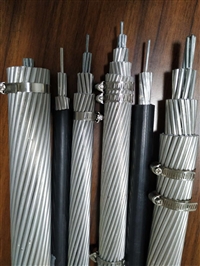


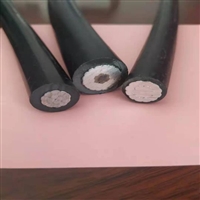
Production and sales of JKLV-1KV-1 * 25 power overhead insulated wire manufacturer
Category:
Electrical Engineering/Wire and cable/Insulated wire
Model:
JKLV-1KV-1*25
Brand:
Zheng Fan
Retail Price
1.86USD
重量
kg
- Product Description
-
Description :
Production and sales of JKLY-1KV-1 * 25 power overhead insulated wire manufacturer
1、 Details of Overhead Insulated Conductors:
1. 1KV overhead insulated conductor: GB12527-90 is equivalent to the International Electrotechnical Commission IEC60502 and IEC227;
2. 10KV overhead insulated conductor: GB14049-93 is equivalent to the International Electrotechnical Commission IEC60502.
2、 Characteristics of using overhead insulated conductors:
1. Rated voltage: 0.6/1KV, 10KV;
2. The long-term allowable working temperature for cables is 70 ℃ for PVC insulation and 90 ℃ for cross-linked polyethylene insulation.
3. During a short circuit (lasting no more than 5 seconds), the high temperature of the cable: PVC insulation is 160 ℃, high-density polyethylene insulation is 150 ℃, and cross-linked polyethylene insulation is
4. The ambient temperature during cable laying shall not be lower than -20 ℃;
5. Allowable bending radius of cable:
(1) Cables with a rated voltage below 1KV: For cables with an outer diameter (D) less than 25mm, it should not be less than 4D, and for cables with an outer diameter (D) of 25mm or more, it should not be less than 6D;
(2) The rated voltage of 10KV cable should not be less than 20 (D+d). In the formula: D-actual outer diameter of the cable, d-actual outer diameter of the cable conductor.

The overhead insulated conductor product is a new series of products for transmitting electrical energy through overhead transmission lines, and is preferred for the construction and renovation of 10kV transmission lines in power grids. It is a series of products suitable for line maintenance and safety. Soft copper wire core products are suitable for transformer down leads.
insulating material
There are two types of insulation protection layers for overhead insulated conductors: thick insulation (3.4mm) and thin insulation (2.5mm). Thick insulation allows frequent contact with trees during operation, while thin insulation only allows short-term contact with trees. The insulation protection layer is divided into cross-linked polyethylene and lightweight polyethylene, with cross-linked polyethylene having better insulation performance.
Specification and model representation method and significance
The representation method is: code - number of rated voltage cores x nominal cross-sectional standard number
For example: JKLYJ-10 1 × 120 GB/T 14049-2008
The meaning is aluminum core cross-linked polyethylene insulated overhead cable, rated voltage 10kV, single core, nominal cross-section 120mm2.
Overhead insulated lines, Aerial Insulation Line, An insulated wire made by twisting single or multiple layers of aluminum wire and extruding an insulation layer outside the wire. This type of wire is erected by a tower at a certain height to transmit power and is suitable for high and low voltage transmission and transformation overhead lines.
For the ground insulation of high-voltage transmission and distribution network overhead lines, air is generally used. In the past, distribution lines (except for 380V below 10kV) generally used bare wires. However, due to the complex distribution environment in urban areas, short-circuit grounding and lightning strikes often occur, resulting in reduced power supply reliability. Therefore, currently, insulated wires (i.e. the outer layer of the wire is wrapped with insulation) are generally used for overhead lines below 10kV, which is called insulated overhead lines.
All aluminum 1kV overhead insulated conductor, specification 10-400mm2, in accordance with standard GB/T12527-2008
Production and sales of JKLV-1KV-1 * 25 power overhead insulated wire manufacturer
It is strictly prohibited to throw cables or cable reels containing cables from a height during transportation, especially at lower temperatures (usually around 5 ℃ or below). Throwing or dropping cables may cause insulation and sheath cracking. Try to avoid storing cables in an exposed manner outdoors as much as possible, and cable reels are not allowed to be laid flat. When lifting the packaging of the JKLYJ overhead line model, it is strictly prohibited to lift several reels at the same time. On vehicles, ships, and other transportation vehicles, cable reels should be secured using appropriate methods to prevent collisions or tipping over, in order to prevent mechanical damage to the cables. Cables must not come into contact with acids, alkalis, and mineral oils, and must be stored separately from these corrosive substances There shall be no harmful gases that damage insulation or corrode metals in the warehouse where cables are stored. During the storage period, the cable should be rolled regularly (once every 3 months in summer, and may be extended at discretion in other seasons). When rolling, roll the storage tray upside down to prevent the bottom from getting damp and rotting. When storing, it is important to regularly pay attention to whether the cable head is intact and undamaged.
AfterSalesService :
Key words:- Overhead insulated conductor
More Products