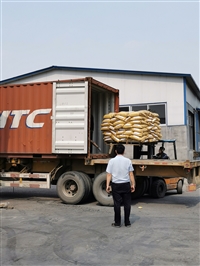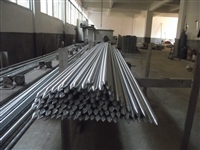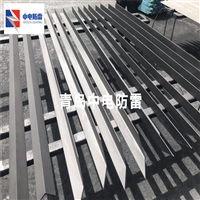


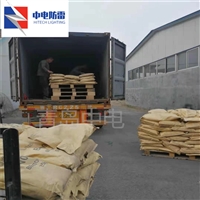
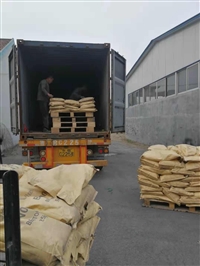


CC-2000B Composite Grounding Resistance Reduction Agent Ionic Release Agent Resistance Reduction Grounding Non metallic Grounding Module
Category:
Security/Lightning protection and lightning protection products/Lightning protection and lightning protection products
Model:
CC-2000B
Brand:
Qingdao Zhongdian
Retail Price
1,200.00USD
重量
kg
- Product Description
-
Description :
Basic knowledge of lightning protection during thunderstorm season
An autumn rain and a cold, with the arrival of autumn, it is also the thunderstorm season in autumn. Now we introduce lightning protection knowledge for everyone to learn and refer to, and improve self-protection ability.
When a cloud layer with a negative charge approaches the ground downwards, protrusions, metals, etc. on the ground will be induced with a positive charge. As the electric field gradually increases, the thundercloud forms a downward leader, and objects on the ground form an upward flashing current. When the two meet, they form a discharge to the ground. This can easily cause lightning disasters. The common shape of lightning is branched, in addition to spherical, sheet-like, and strip-shaped. The forms of lightning include cloud sky lightning, cloud to cloud lightning, and cloud to ground lightning. When lightning strikes between clouds, the friction between them creates thunder.
1、 The main characteristics of lightning
1. High impulse current
2. Short time
3. The gradient of lightning current variation is large
4. High impulse voltage
2、 Damage caused by lightning waves
When lightning approaches overhead pipelines, high-voltage shock waves will invade indoors along the overhead pipelines, causing high current to enter, which may cause equipment damage or personal injury accidents. If there are combustibles nearby, it is easy to cause a fire.
3、 Description of lightning
A large amount of observational and statistical data shows that the frequency of lightning flashes in a region is linearly related to the number of thunderstorm days. In China, lightning activity is generally classified into low thunderstorm areas (<15 days), medium thunderstorm areas (15-40 days), high thunderstorm areas (41-90 days), and strong thunderstorm areas (>90 days) based on the average annual number of thunderstorm days. The lightning activity in our country is active in summer and less in winter. The global distribution is active near the equator, decreasing with increasing latitude and less in the polar regions.
4、 Object of lightning protection
1. Human body lightning protection
When a person is struck by lightning, the current quickly passes through the body, causing paralysis of the respiratory center, cardiac arrest, and varying degrees of burns. In severe cases, brain tissue hypoxia can lead to death.
Cannot stay on the floor of a building. Standing on the rooftop is highly susceptible to lightning strikes. Pay attention to closing doors and windows. It is not advisable to use a showerhead for cooling. If a building is struck by lightning, the huge lightning current may follow the water flow and cause shower victims to be injured or killed by lightning strikes; Do not touch metal pipes such as water pipes, gas pipes, etc; It is not advisable to approach the exterior walls and electrical equipment of buildings.
When thundering, one should stay 1 meter away from power lines and electrical equipment connected to them; It is not advisable to enter low rise buildings (structures) such as sheds and guardrails. Due to the lack of lightning protection facilities and the fact that most of these low rise buildings are located in open fields, the probability of being struck by lightning is particularly high. When a storm is approaching and you are in an open area, hillside, or riverbank, you can choose areas protected by tall objects or overhead power lines, but the location should be at least 2 meters away from power poles or tall objects; It is not advisable to hide under big trees.
If it is absolutely necessary to stay under a big tree, one must maintain a distance of at least 2 meters from the tree trunk and branches, and try to squat down and bring their feet closer together as much as possible;
It is not advisable to hold umbrellas or other objects high in the wilderness. Under near thunderstorm weather conditions, it is not advisable to work on the water surface or at the junction of water and land, as water has a higher conductivity and is more likely to attract lightning than other objects on the ground; It is not advisable to drive a motorcycle or ride a bicycle, as it is safer in a car.
2. Lightning protection for buildings (structures)
(1) Lightning protection in flammable and explosive places
Gas stations, liquefied gas stations, natural gas stations, oil pipelines, oil storage tanks (pools), oil wells and other flammable and explosive places, if lacking necessary lightning protection facilities, will cause significant losses due to lightning disasters. In addition to installing facilities to prevent direct lightning strikes, such places must also install devices to prevent static and electromagnetic induction lightning on gas (oil) tanks (pools), pipelines, equipment, etc., with dedicated personnel to supervise, promptly handle problems, and regularly apply for testing from testing agencies.
(2) Computer and its site lightning protection
Due to the fact that electrostatic induction lightning and electromagnetic induction lightning mainly damage equipment through power supply lines, the lightning protection of computer information systems should first install power surge arresters reasonably, followed by installing lightning arresters for signal lines and feeder lines
(3) Lightning protection for high-voltage equipment
High voltage equipment such as power stations, high-voltage substations, and high-voltage transmission lines in the power system are prone to generating ultra-high voltage during lightning strikes, causing equipment damage. Usually in engineering, one or more levels of defense are adopted based on the importance of the equipment and its ability to withstand high voltage. By using transmission network hardware grounding, parallel capacitors between phase and ground wires, or transformer isolation methods, the amplitude of high-voltage lightning pulses can be reduced to protect the equipment.
5、 Lightning protection method
There are two types of lightning protection methods: conventional and unconventional.
1. Conventional lightning protection
Conventional lightning protection can be divided into direct lightning protection, induced lightning protection, and comprehensive lightning protection. The lightning protection device for preventing direct lightning strikes generally consists of three parts, namely the lightning arrester, the down conductor, and the grounding body; Lightning arresters are divided into lightning rods, lightning conductors, lightning strips, and lightning protection nets.
At present, there is a better solution than lightning rods, which is to use the Skyroof Direct Lightning Protection Device (TM-CPD). TM-CPD breaks the traditional concept of lightning protection and adopts the method of "upper neutralization, lower blocking" to prevent lightning from descending and leading to the protected area, effectively preventing direct and indirect effects of lightning from damaging the protected object. TM-CPD, as a non lightning triggering device, is particularly suitable for application in areas with dense electronic equipment, flammable and explosive places.
The main lightning protection against induced lightning is the lightning arrester. The simultaneous use of multiple lightning protection devices for the same protected object is called comprehensive lightning protection. Lightning protection devices should be regularly inspected to prevent them from failing to provide protection due to poor conductivity or poor grounding of the wires.
2. Unconventional lightning protection
The use of laser beam lightning protection, lightning protection, water column lightning protection, radioactive lightning rods, minesweepers and other lightning protection devices for lightning protection is called unconventional lightning protection devices.
Shelf life and usage recommendations of drag reducing agents
dropResistors are widely used as grounding materials for lightning protection and grounding to reduce grounding resistance. They contain various components such as fine graphite, bentonite, curing agents, lubricants, conductive cement, etc. Therefore, more attention should be paid to safety when using them Qingdao Fanglei Drag Reduction Material Co., Ltd. is a manufacturer of drag reduction series products, which are exported to various parts of the country and have been praised by customers. Regarding the precautions for using drag reduction agents, the following suggestions are given:
1. The shelf life of the drag reducer is about two years. Please use it as soon as it clumps or gets damp The drag reducer that has been soaked in water should be used within two days, and expired drag reducers can be used as general backfill soil.
2. The resistance reducing agent series produced by Qingdao Fanglei Resistance Reducing Materials Co., Ltd. has products suitable for various geological conditions for customers to choose from. During construction, the resistance reducing agent should be selected and used reasonably according to the soil's electrical resistance, climate conditions, and geographical conditions
3. The dosage of drag reducer needs to be controlled properly during use. The larger the dosage, the greater the drag reduction rate. During the construction process, attention should be paid to calculating the dosage of drag reducer used.
AfterSalesService :
Key words:- Physical drag reducer
More Products