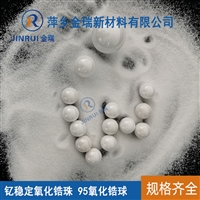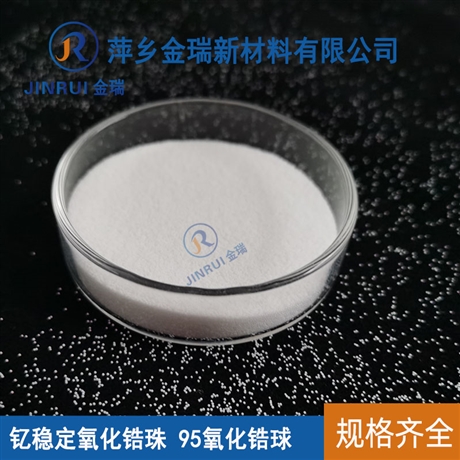



Zirconia Ball Pingxiang Jinrui 95 High Purity Zirconia Ceramic Beads 0.12-0.18
Category:
hardware/abrasive/Artificial abrasive
Model:
JR95
Brand:
Jinrui
model:
JR95
category:
zirconia alumina
material:
zirconium oxide
granularity:
ten
Specifications:
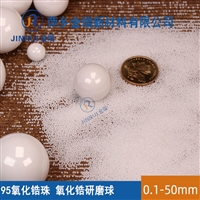
0.1-50mm
Is it imported:
yes
Order Number:
JRTZP
Item Number:
TZP
Scope of Application:
Nano dispersion grinding
Is it a cross-border source of goods:
No
manufacturer:
Pingxiang Jinrui New Materials Co., Ltd
Retail Price
160.00USD
重量
kg
- Product Description
-
model JR95
category zirconia alumina
material zirconium oxide
granularity ten
Specifications 0.1-50mm
Is it imported yes
Order Number JRTZP
Item Number TZP
Scope of Application Nano dispersion grinding
Is it a cross-border source of goods No
manufacturer Pingxiang Jinrui New Materials Co., Ltd
Description :
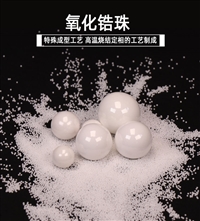
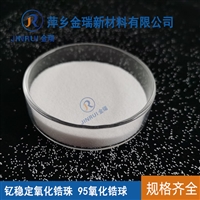
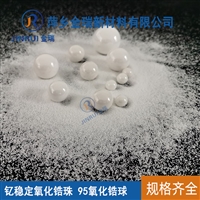
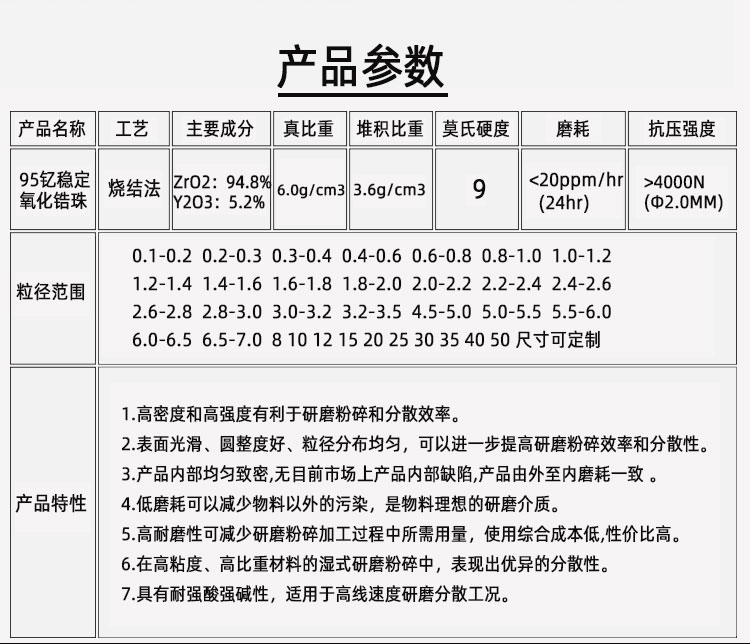
Zirconia beads are generally used for ultrafine grinding and dispersion of materials that require "zero pollution" and high viscosity and hardness. Mainly used in electronic ceramics, magnetic materials, zirconia, silica, zirconium silicate, food, pigments, dyes, inks, and specialty chemical industries.
Zirconia, a substance, began to appear and was extracted from gemstones by a foreigner, and later applied to gas lampshades. Later, this material was applied to refractory materials, coloring, and abrasives. When polishing the workpiece, placing both the workpiece to be ground and high-purity zirconia beads into a rotating or vibrating bucket for grinding together can result in the workpiece being polished or deburred. Due to the excellent grinding performance of zirconia beads, they are widely used in some equipment, such as in the daily necessities industry for grinding purposes. For example, toothpaste is mainly composed of spices, sweeteners, wetting agents, powdered friction agents, and other special ingredients, and has a strong dependence on high-speed dispersers. Mainly used in high-efficiency machinery and equipment for stirring, dispersing, and dissolving solid and liquid materials. It is also widely used in small-scale chemical dispersers to meet the experimental needs of laboratories. It is mainly used in the laboratory disperser to test whether the performance of a small amount of lotion can meet the design requirements, so as to pave the way for mass industrial production.
Method for detecting the wear rate of zirconia beads:
1、 Detection method for wear rate under material grinding conditions
Fill a 1L alumina ceramic jar with 1KG zirconia beads for testing, then add 150g of water, 300g of zirconium silicate (zircon sand), 2g of sodium tripolyphosphate, cover and fix it on a turntable in the rapid grinding machine for continuous grinding for 5 hours. Remove and wash, dry, and weigh. The qualified zirconia balls are required to have a wear rate (Rm) of less than 0.15%/5h or less than 0.03%/h.
2、 Testing method under grinding conditions without material (self grinding)
Fill a 1L alumina ceramic jar with 700g of zirconium beads to be tested, add 300g of water, cover it, and fix it on a turntable in the rapid grinding machine for continuous grinding for 5 hours. Remove and wash, dry, and weigh. The wear rate (Rs) of qualified zirconia beads is required to be less than 0.3%/5h, or less than 0.06%/h.
80 zirconia microbeads have consistent and uniform quality both inside and outside. Currently, many similar products on the market are inconsistent in appearance and inside. When used, there are broken beads, severe wear of zirconia microbeads, irregular sphericity, and a significant decrease in performance. Our company's products have no such problem, and our 80 zirconia microbead products are an ideal choice. Suitable for various high-speed sand mill grinding conditions. Perform ultrafine dispersion and grinding. Application areas such as wear-resistant and corrosion-resistant products: coatings, textiles, pigments, printing and dyeing; High strength and high toughness products: magnetic materials, piezoelectric ceramics, dielectric ceramics; Prevention and control of pollution: pharmaceuticals, food, cosmetics; Ceramics: electronic ceramics, refractory ceramics, structural ceramics, and so on.
Let's take a look at the process advantages of 80 zirconia microbeads together:
1. Reduce viscosity and increase fluidity
Compared with other arc-shaped fillers, zirconium beads are easy to flip like rigid beads between rolling bearings. Zirconia beads have a particularly large specific gravity, are easy to flip, and have high mechanical energy. Therefore, 80 zirconia microbeads reduce the viscosity of the formula, increase fluidity, and improve spray painting performance.
2. Higher charging capacity and cost control
Because compared to other types of fillers, zirconium beads have a smaller area to volume ratio. Can reduce the usage of epoxy resin and increase the usage of fillers. And the smaller volume microspheres fill the gaps between the larger volume microspheres, increasing the solid content and reducing exhaust gas. The zirconia microspheres also reduce costs.
3. Hard and wear-resistant
Zirconium beads have high strength and wear resistance, which makes the paint surface hard and scratch resistant. The long-lasting surface, zirconia microbeads save you the cost and time of maintenance and repainting. If traditional filling materials are used, soft or curved particles will quickly damage or crack the surface layer.
4. Glossiness Cao Vertical
Many raw materials with high glossiness will increase viscosity. However, the application of zirconium degree can significantly reduce smoothness without increasing viscosity.
5. Reasonable natural barrier
Sediments are inseparable, hard, wear-resistant, and malleable particles that make the secret formula very durable and have low infiltration, creating a reasonable natural barrier against harsh weather and chemical erosion.
6. Reliability
Because its composition is malleable porcelain, 80 zirconia microspheres can inhibit the corrosion of various chemicals.
AfterSalesService :
Key words:- Zirconia ceramic beads
More Products