


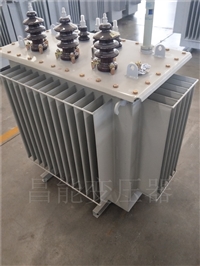


Transformer specifications and models Oil immersed transformers Transformer capacity specifications
Category:
Electrical Engineering/transformer/Dry type transformer
Model:
Brand:
Changneng
brand:
Changneng
model:
S20-250/10kv
type:
oil-immersed
Power phase number:
three-phase
Moisture proof method:
sealed type
cooling method:
Oil type
frequency characteristics:
low frequency
Iron core form:
CD type
external structure:
horizontal
Processing & Customization:
yes
Is it imported:
No
Place of Origin:
Shandong
Retail Price
18,300.00USD
重量
kg
- Product Description
-
brand Changneng
model S20-250/10kv
type oil-immersed
Power phase number three-phase
Moisture proof method sealed type
cooling method Oil type
frequency characteristics low frequency
Iron core form CD type
external structure horizontal
Processing & Customization yes
Is it imported No
Place of Origin Shandong
Description :

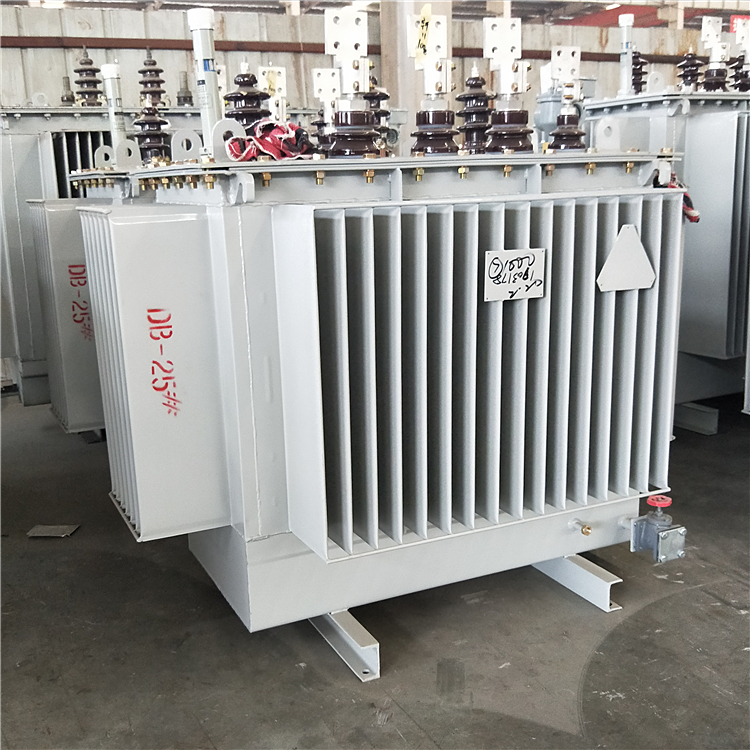


Classification and requirements for oil immersed transformers:
1. The division of transformer edges:
The edges of transformers can be divided into inner and outer edges. The inner edge refers to the edges of various parts inside the oil tank, while the outer edge refers to the edges of the upper part of the bushing facing the ground and between each other. The inner edge can be divided into two parts: the main edge and the longitudinal edge. The main edge is the edge between the winding and the grounding part, as well as between the windings. In oil immersed transformers, the main edge is commonly constructed with an oil paper barrier edge structure.
The main meaning can be divided into graded edge and full edge. Graded edge refers to the main edge level of the transformer winding near the neutral point being lower than the edge level at the end of the winding. On the contrary, if the transformer end is at the same level as the trailing edge, it is called a full edge. Longitudinal edge refers to the edge between different parts of the same winding, such as the edge between turns, turns, and turns of different wires.
2. Requirements for Transformer Edge:
The requirement for the transformer edge is that it should not cause damage to the normal operation of the transformer during its service life. The main requirements are as follows.
(1) Capable of withstanding overvoltage during operation and normal operating voltage.
(2) Capable of withstanding short-circuit current, overcurrent, and normal operating current during operation.
(3) Moisture and aging do not affect the normal operation of the transformer.
3. Transformer edge material:
The main edge materials inside the transformer include transformer oil, edge cardboard, cable paper, telephone paper, and paper.
(1) Transformer oil.
(2) Edge cardboard. Edge cardboard is mainly made by pressing unbleached salt fibers, which have pores between the fibers and therefore have strong breathability, oil absorption, water absorption, etc. If polyurethane fiber paper with high heat resistance is used, its lifespan will be greatly extended. For example, as edge paper tubes, braces, cushion blocks, partitions, corner rings, etc.
(3) Cable paper. As a type of edge paper made from salt pulp, cable paper with models DL2-08 and DL2-12 are used in transformers, with thicknesses of 0.08 and 0.12, respectively. It is mainly used as the edge for wrapping the outer surface of wires and the interlayer edge of coils, as well as the edge for wrapping leads. It is the main edge material for oil immersed transformers.
(4) Phone paper. Made from salt pulp. Use telephone paper model DH-50 in the transformer. Its thickness is (0.5 ± 5%) and it is rolled into a paper roll with a width of (500 ± 10). Mainly used as the edge of coil wires and the end edge of coils.
(5) Paper. It is also a type of edge paper, made from salt pulp and processed into cable paper. It has good electrical performance in oil, manifested by high average breakdown voltage and small tangent value of dielectric loss angle. Paper is mainly used for wrapping transformer output lines and other areas.
AfterSalesService :
Key words:- Transformer specifications and models


