

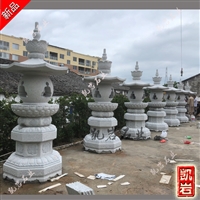
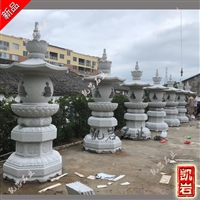


Huian Seven Treasures Tathagata Pagoda Stone Carving Manufacturer Stone Buddha Pagoda Relic Pagoda Stone Carving Customization Manufacturer
Category:
Inventory backlog/Inventory Crafts/stone carving
Model:
Brand:
Kai Rock Industry
Retail Price
15,000.00USD
重量
kg
- Product Description
-
Description :
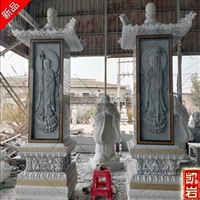
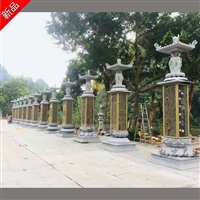
The stone carving of the Seven Treasures Tathagata Pagoda, also known as the Stone Carving Seven Buddha Pagoda, is commonly referred to as the Seven Branches Pagoda in the local area. Its shape consists of seven towers arranged in a row, each named after an ancient Buddha in Buddhism. This type of ancient pagoda is more common in Zhejiang Province, dating back to the Sui and Tang dynasties and flourishing during the Song dynasty. Some temples have seven pagodas that have been destroyed due to their age, with only a few remaining. They are commonly known locally as stone pagodas and five pagodas. However, in terms of form, they are all seven Tathagata pagodas. In contemporary times, seven pagodas are also commonly found in temples in Zhejiang.
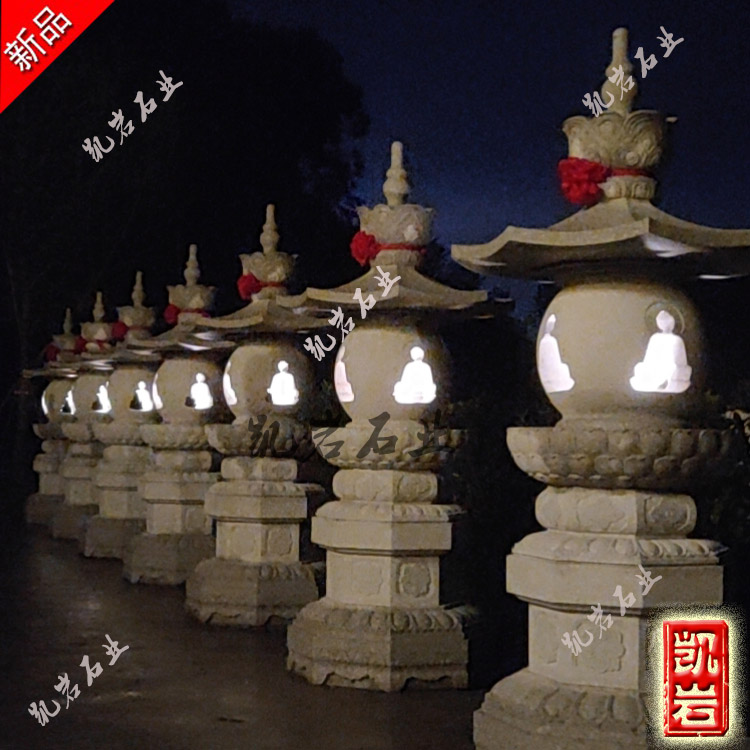
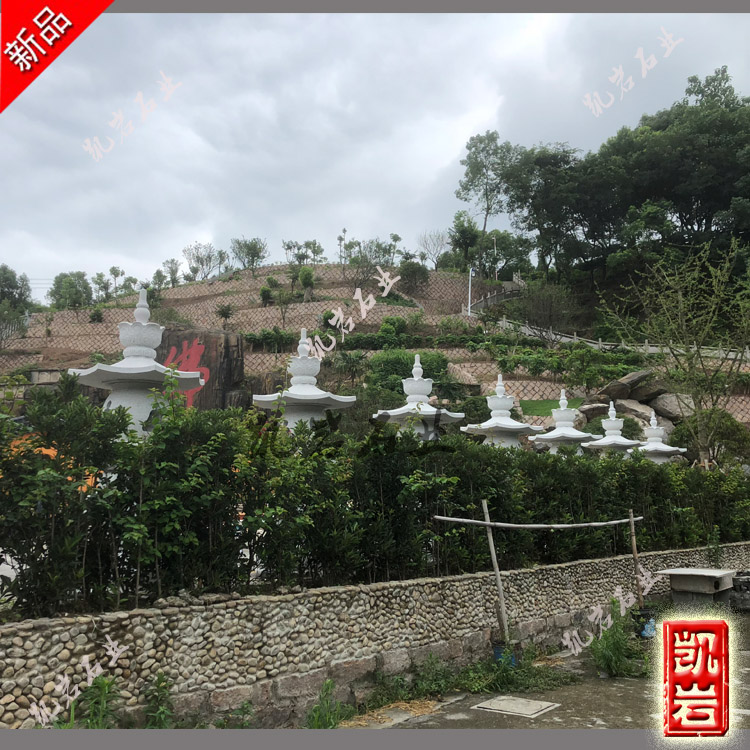
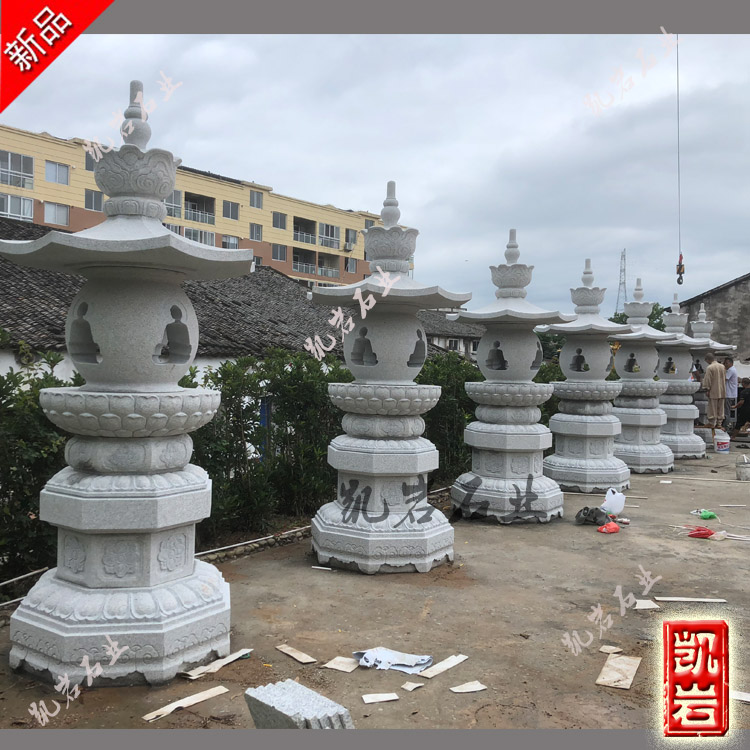
The shape of the Seven Treasure Tathagata Pagoda is usually a fire bag with a hole and corresponding statues of the Seven Treasure Tathagata. The names of the Seven Treasure Tathagata are: Nanwu Duobao Tathagata, Nanwu Baosheng Tathagata, Nanwu Miaoshi Tathagata, Nanwu Guangbo Tathagata, Nanwu Lihao Tathagata, Nanwu Ganlu Wang Tathagata, and Nanwu Amitabha Rulai.
Nowadays, the protection of temple pagodas in society is getting better and better, which enables our country's stone carved pagodas to be better displayed in front of people's eyes. It is a belief and inheritance of Buddhist culture.
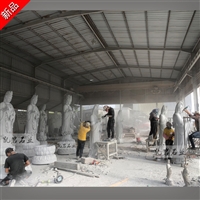
The Stone Pagoda belongs to the Stone Scripture Building series and is a precious treasure for temples to ward off evil spirits. The classic Seven Treasure Tathagata Pagoda, Stone Pagoda, and Pagoda Stone Carvings carved by Quanzhou Kai Rock Industry Co., Ltd. are made of high-quality granite sesame white from Fujian Province. They are all handmade by Huian carving craftsmen, the hometown of Huian stone carving. The general specifications range from 300CM to 600CM high, and can be customized according to requirements. The classic shape is exemplified by the Seven Treasure Tathagata Pagoda at Jingshan Huguo Temple in Wenzhou; The opening of the fire bag contains corresponding statues of the Seven Treasures Tathagata. The names of the Seven Treasures Tathagata are: Nanwu Duobao Tathagata, Nanwu Baosheng Tathagata, Nanwu Miaose Body Tathagata, Nanwu Guangbo Body Tathagata, Nanwu Lihuowei Tathagata, Nanwu Ganlu King Tathagata, and Nanwu Amitabha Tathagata.
The common structure of Buddhist stone pagodas consists of a tower base, tower body, tower brake, brake seat, treasure roof, and phase wheel.
The "tower base" is the pedestal of a temple pagoda, which actually includes two parts: the foundation and the pedestal. The foundation is buried underground, and the pedestal stone is exposed above the ground. The two parts are connected vertically and firmly, serving as the foundation of the pagoda to fix the entire pagoda. The pedestal of early temple pagodas was relatively low, but after the Tang Dynasty, there were significant changes, and the pedestal became more prominent, gradually becoming an indispensable and important component of the pagoda. The pedestal of the Sumeru style Buddhist pagoda appeared around the Liao and Jin dynasties. Later on, a two-story Sumeru pedestal appeared, and the base of the tower grew higher and higher. Especially the Diamond Throne Tower, its tall pedestal has become a distinctive part of the tower.
The 'tower body' refers to the middle section of the Buddhist pagoda, which is the main body of the entire pagoda. Generally speaking, the proportion of the tower body in the entire pagoda. Or in other words, apart from the tower brake and pedestal, they can all be considered as the tower body.
The "Ta Cha" is located at the top of the tower and is mainly composed of a brake seat, a treasure roof, an umbrella cover, a phase wheel, and a tilted moon. Some towers have a brake seat, a crown, a wheel, and an umbrella cover in the tower brake section, but do not have a crescent moon. Some tower brakes include all of these parts. That is to say, the specific construction process of tower brakes varies depending on the needs of the builder or other circumstances. Meanwhile, although the names of these parts are the same, their specific images are slightly different when used on different towers, ranging from large to small, narrow to wide, round to square.
The "brake seat" is the base of the tower brake section, mostly in the shape of a Sumeru seat, and carved with lotus patterns, such as upturned lotus, bent lotus, or upturned lotus. Some directly carve the brake seat into a lotus shape. Of course, there are also some plain brake seats that are not carved, crisp, simple and generous
The "Baoding" refers to the tower top brake part, but the "Baoding" mainly refers to the Baozhu style tower brake, so it is also known as the "Baozhu brake". Baozhu Temple is a relatively simple tower top construction method, and it is also a commonly used method in the late period of Buddhist pagoda architecture. The brake top is decorated in the shape of a precious pearl.
The 'Xianglun' is located in the middle of the tower brake and is the most important component of the brake body of the tower brake. In the physical objects of temple pagodas, Xianglun is a series of rings that are connected and used on the tower as a way of looking up and observing, playing a role in honoring Buddha. The number of wheels on a tower is generally determined by the size and grade of the tower, ranging from three to five circles to up to thirteen circles. The wheel of thirteen circles is called the "Thirteen Heavens".
AfterSalesService :
Key words:- Huian Seven Treasures Tathagata Pagoda Stone Carving Manufacturer
More Products