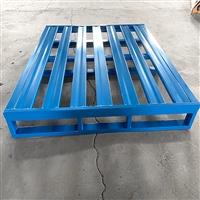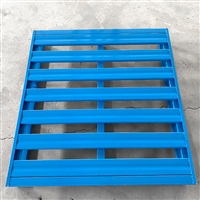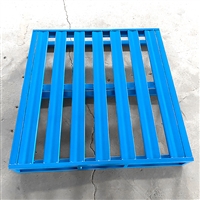


Henan intelligent logistics equipment, warehouse automation, intelligent improvement
Category:
Transportation/Warehousing equipment/Storage shelves
Model:
Customize according to customer's goods type
Brand:
Ding Nuo
Retail Price
1,820.00USD
重量
kg
- Product Description
-
Description :
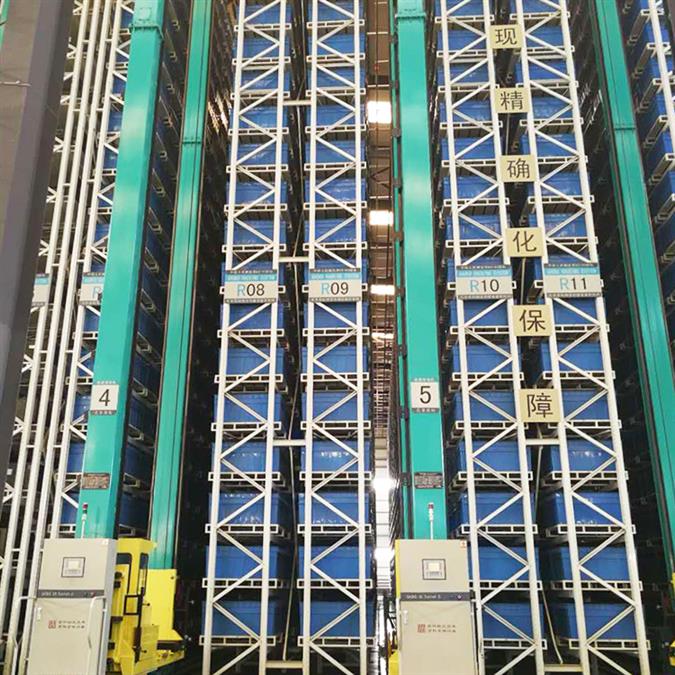
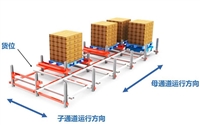
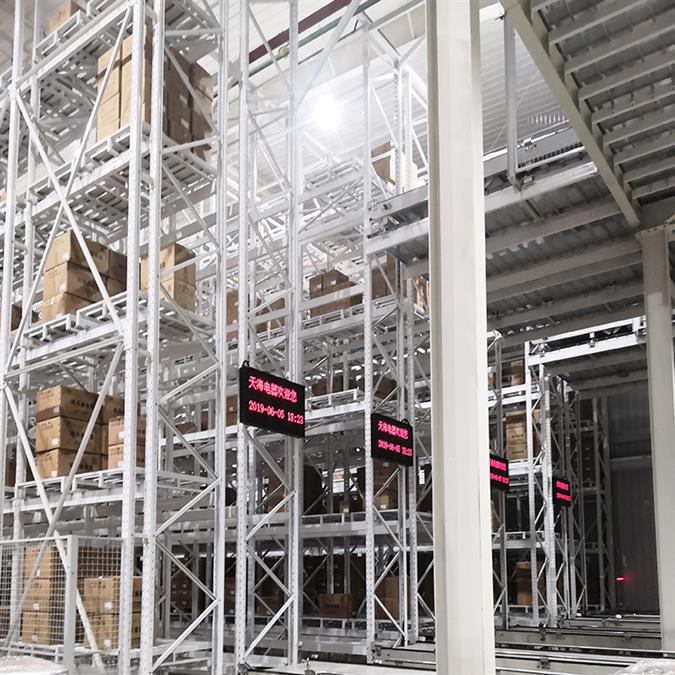
Generally speaking, automated three-dimensional warehouses include: inbound temporary storage area, inspection area, palletizing area, storage area, outbound temporary storage area, pallet temporary storage area, non-conforming product temporary storage area, and miscellaneous area. When planning, it is not necessary to include every area mentioned above in the three-dimensional warehouse. It is possible to reasonably divide each area and add or remove areas according to the user's process characteristics and requirements. At the same time, it is necessary to consider the material flow process reasonably, so that the flow of materials is unobstructed, which will directly affect the ability and efficiency of the automated three-dimensional warehouse.

The advantages of automated three-dimensional warehouses are multifaceted, and for enterprises, they can be reflected in the following aspects:
1. Improve space utilization efficiency
The basic starting point of the early concept of a three-dimensional warehouse was to improve space utilization and fully save limited and valuable land. In some developed countries in the West, the concept of improving space utilization has a broader and deeper meaning, linking land conservation with energy conservation, environmental protection, and other aspects. Some even treat the utilization rate of space as an important indicator of system rationality and progressiveness assessment.
The space utilization rate of the three-dimensional library is closely related to its planning. Generally speaking, the space utilization rate of automated elevated warehouses is 2-5 times that of ordinary flat warehouses. This is quite impressive.
2. Facilitating the formation of advanced logistics systems and improving the production management level of enterprises
Traditional warehouses are simply places for storing goods, and preserving goods is their function, which is a form of 'static storage'. The automated three-dimensional warehouse adopts advanced automated material handling equipment, which not only enables goods to be automatically accessed and stored in the warehouse as needed, but also can be organically connected with production processes outside the warehouse. Through computer management systems and automated material handling equipment, the warehouse becomes an important link in enterprise production logistics. The storage of purchased and self-produced parts in automated warehouses by enterprises is a part of the entire production process. Short term storage is to automatically output the time to the next process for production, thereby forming an automated logistics system. This is a "dynamic storage" and a clear technological trend in the development of automated warehouses today.

Automated stereoscopic libraries are widely used in China.
In the field of industrial production:
1. Pharmaceutical production: Pharmaceutical production is one of the early fields to apply automated stereoscopic warehouses. In 1993, Guangzhou Yangcheng Pharmaceutical Factory built China's earliest automated stereoscopic warehouse for pharmaceutical production. Subsequently, dozens of enterprises including Jilin Aodong, Northeast Pharmaceutical, Yangtze River Pharmaceutical, Shijiazhuang Pharmaceutical, and Shangyao Group successfully applied automated stereoscopic warehouses.
2. Automobile manufacturing: one of the early fields in China to apply automated stereoscopic libraries. China Second Automobile Group is one of the early units to apply automated three-dimensional warehouses. At present, almost all major automobile manufacturing enterprises in China are using automated three-dimensional libraries without exception.
3. Mechanical manufacturing is one of the widely used fields for automated three-dimensional libraries. Such as Sany Heavy Industry.
4. Electronic manufacturing: Lenovo and other electronic companies began adopting automated stereo library systems after 2000.
5. Tobacco manufacturing industry: China commonly adopts automated three-dimensional warehouses. And a large number of imported equipment are used. Typical examples include Honghe, Changsha, etc.
Logistics field:
1. Tobacco distribution: widely adopts automated three-dimensional warehouse system.
2. Medical delivery: In response to GSP certification, a large number of automated stereoscopic warehouses have been applied to the national medical communication field. Such as traditional Chinese medicine and traditional Chinese medicine.
3. Airport freight: an early field to adopt automated three-dimensional warehouses. All major airports adopt a three-dimensional storage system for luggage handling.
4. Subway: With the vigorous rise of subway construction in China, the application of automated three-dimensional warehouses has been widely promoted.
In the field of commodity manufacturing:
1. Clothing: The application of automated three-dimensional warehouses in the clothing industry has been a recent development.
2. Alcohol: such as Yanghe, Niulanshan, etc
3. Milk: It is used in enterprises such as Mengniu and Yili.
4. Chemical industry: one of the early industries to apply automated stereoscopic warehouses.
5. Printing, publishing, and books are also widely used industries.
Application:
One of the common fields for applying automated stereoscopic libraries. Logistics and equipment are particularly common.
Others:
In addition, many fields have applied automated stereoscopic libraries. Such as core storage, tire storage, teaching storage, etc. Due to space limitations, we will not list them one by one.
AfterSalesService :
Key words:- Henan Intelligent Logistics Equipment