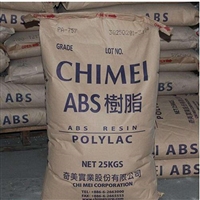
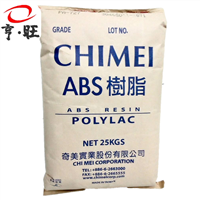


Chi Mei ABS PA-765 Taiwan Chi Mei flame retardant high mobility household appliances and electric tools
Category:
Rubber and plastic/General plastic/ABS
Model:
Brand:
Taiwan Qimei
Retail Price
17.50USD
重量
kg
- Product Description
-
Description :
Qimei ABSPA-765 Taiwan Qimei flame retardant, high mobility computer accessories, electronic product parts, power tool parts, TV housings, office machines, etc
The molding process of ABS
1. Dry
ABS is a water absorbing plastic that can absorb 0.2% -0.35% moisture in 24 hours at room temperature. Although this moisture does not have a significant impact on mechanical properties, if the humidity exceeds 0.2% during injection molding, the surface quality of the plastic will be greatly affected. Therefore, when molding ABS, it must be dried in advance, and the moisture content after drying should be less than 0.2%.
2. Mold temperature:
The mold temperature is generally controlled at 60-90 ℃, but should be set at 60 ℃, with an upper limit for glass fiber reinforced products.
3. Injection pressure:
The injection pressure is generally controlled at 1500 bar, and can be around 750 bar during the holding phase.
4. Nozzle, runner, gate
Due to the higher viscosity of ABS compared to PS, larger circular or trapezoidal gates and runners are used. The suitable runner for cold runner molds should have a diameter of 6-8mm or an equivalent trapezoidal runner. A semi-circular flow channel is not suitable.
ABS is suitable for various molds, including hot runner and non runner molds. If a hot runner mold is used, the diameter of the runner can be between 12-15mm, and the sprue can be needle shaped, film shaped, submerged, or fan-shaped. The mold should be equipped with exhaust holes to avoid burning of materials.
5. Injection speed, injection pressure, back pressure
Generally, ABS products use high-speed and multi-stage injection, but for flame-retardant grades, slow injection is required to avoid decomposition of the injection material. Heat resistant ABS also needs to be injected quickly (to reduce internal stress), with an injection pressure of around 1500 bar and a lower holding pressure. The lower the back pressure control, the better. The commonly used gauge pressure is 5 bar, and 15 bar can be used for back pressure. The screw forward speed should be slow, generally not exceeding 0.55~0.65m/s.
6. Melt temperature
Different grades have different temperatures. For example, ABS/PVC and flame retardant aBS have lower melt temperatures than general aBS. High temperature PC/aBS blends and aBS/SMA blends require higher melt temperatures, and electroplating grade aBS also requires higher melt temperatures.
7. Cylinder dwell time
At a temperature of 265 ℃, the maximum residence time of the material in the barrel should not exceed 5-6 minutes. If the temperature is 280 ℃, the residence time of the material in the barrel should not exceed 2-3 minutes. If there is an accident during the production process, the barrel temperature should be lowered to 120 ℃ first before using the general aBS grade to clean the barrel. Some ABS products have no problem when ejected, but may produce brown or yellow stripes during the storage period, which may be caused by overheating or prolonged residence time of the barrel, leading to component damage.

PA-765 Physical Property Table
Physical properties rated value unit Melt flow rate (200℃ 5kg) five point two g/10min (220℃×10kg) sixty g/10min specific gravity one point two zero 23/23℃ mechanical properties rated value unit Flexural elasticity 3.0×10 lb/in IZOD Impact Strength (1/4 ") sixteen kg.cm/cm elongation fifteen % Tensile strength three hundred and ninety kg/cm bending strength six hundred and twenty kg/cm eight thousand and eight hundred lb/in IZOD Impact Strength (1/8 ") three point seven ft.lb/in Tensile strength five thousand five hundred and thirty lb/in Rockwell hardness one hundred R IZOD Impact Strength (1/4 ") two point nine ft.lb/in Flexural elasticity 2.1×10 kg/cm IZOD Impact Strength (1/8 ") twenty kg.cm/cm thermal performance rated value unit Flammability (File No. E56070 UL&C-UL) 1/16"V-O.1/10"5VA Heat Deflection Temperature 83(181) ℃ vicat softening point one hundred and ninety-four ℉ ninety ℃ Heat Deflection Temperature 73(165) ℉ AfterSalesService :
Key words:- Qimei ABS