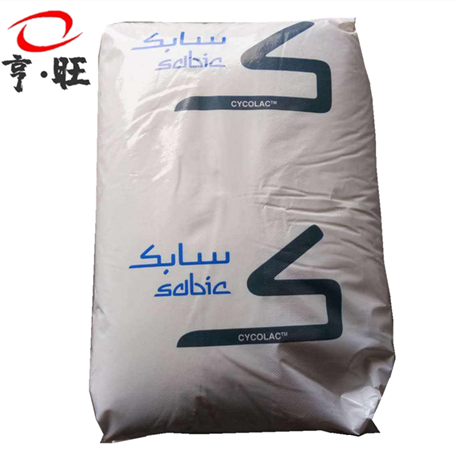

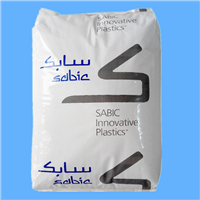
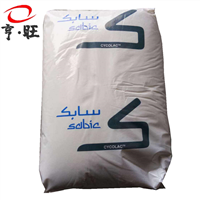


Conductive ABS SABIC Innovation&# 40; United States&# 41; AE003 Carbon Fiber Reinforced 15%
Category:
Rubber and plastic/General plastic/ABS
Model:
Brand:
SABIC Fundamentals/SABIC
Retail Price
24.80USD
重量
kg
- Product Description
-
Description :
Conductive ABS SABIC Innovation (USA) AE003 Carbon Fiber Reinforced 15%
Our company supplies raw materials such as SABIC PC, ABS, PA66, PBT, PEI, etc., with original factory packaging and affordable prices. You can directly contact Ms. He.
LNP? STAT-KON? AE003 compound property table
Basic Information
Filler/reinforcement material Carbon fiber reinforcement material, 15% filler by weight
Characteristic conductivity
Processing method: Injection molding
ABS resin is a thermoplastic that was successfully developed in the late 1940s and put into industrial production in the 1950s. It is a thermoplastic engineering plastic developed on the basis of polystyrene modification. It is mainly a high polymer formed by ternary copolymerization of acrylonitrile (A), butadiene (B), styrene (S), and therefore has excellent impact resistance and comprehensive performance.
ABS resin is a material with low molding shrinkage, high surface smoothness, good electrical and mechanical properties, hard and tough quality, and is one of the easiest varieties to process in engineering plastics. Various molding methods of thermoplastic materials can be used for processing. Its injection molding can produce industrial products with high impact strength and relatively stable dimensions, such as mechanical and electrical products, gears, blades, bearings, instrument casings in the transportation industry, TV casings, refrigerator liners, various textile pipes, and automotive parts. Its products have the advantages of high strength, light weight, and high smoothness. It can save a lot of metal materials, reduce costs, and achieve the replacement of steel and wood with plastic. Thus, it can save a lot of energy and have an environmentally friendly effect.
In summary, the ABS injection molding process has broad development prospects. The following discusses the performance, processing characteristics, molding process, and possible abnormal phenomena that may occur during production of ABS, as well as their solutions.

Performance of ABS:
1. Physical properties: ABS is a light white, opaque, non-toxic, and odorless amorphous material. It can burn slowly, with a yellow flame and black smoke. It has a special odor but no dripping. Its density is 1.02-1.06g/c ㎡, thermal deformation temperature is 93-124 ℃, flow temperature is 110-120 ℃, operating temperature is -40~100 ℃, and water absorption rate is 0.2~0.4%.
2. Chemical properties: It can resist water, inorganic acids, bases, salts, and most hydrocarbons and alcohols, but is soluble in ketones, aldehydes, and certain halogenated hydrocarbons. It can be corroded by concentrated sulfuric acid and nitric acid, and swollen by aromatic solvents.
3. Electrical performance: ABS has good electrical performance, and changes in temperature and humidity have little effect on electrical performance.
4. Mechanical performance: It has excellent impact resistance, wear resistance, and good dimensional stability, as well as excellent coloring properties. ABS is known as the alloy material in plastics due to its comprehensive properties of toughness, steel, and hardness.

AfterSalesService :
Key words:- Conductive ABS Sabah Foundation Innovation