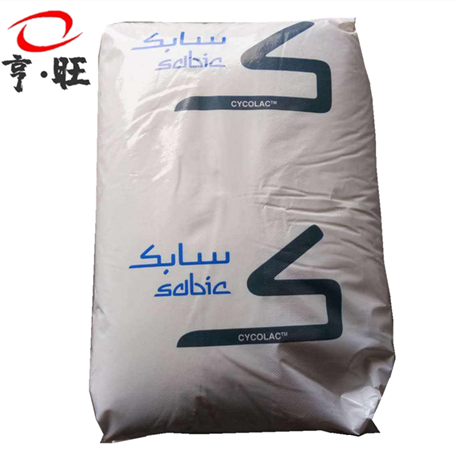

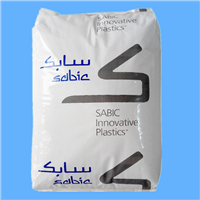
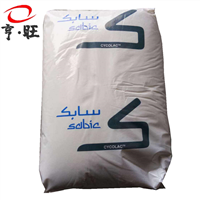


Medical grade ABS basic innovative plastics; United States&# 41; HMG47MD-1H1000
Category:
Rubber and plastic/General plastic/ABS
Model:
Brand:
SABIC Fundamentals/SABIC
Retail Price
45.00USD
重量
kg
- Product Description
-
Description :
Medical grade ABS basic innovative plastic (USA) HMG47MD-1H1000
Our company supplies raw materials such as PC, ABS, PEI, PBT, PA6, PA66, PPO, etc. for SABIC, with original factory packaging and favorable prices. You can directly contact Ms. He.
CYCOLAC? Property Table of HMG47MD Resin
Basic Information feature Radiation disinfection
Ethylene oxide disinfection
biocompatibility
Compliance of food contact
General
purpose General
Medical/nursing supplies
institutional rating FDA not rated
ISO 10993
RoHS compliance RoHS compliance
processing method injection molding

Processing characteristics of ABS:
1. ABS belongs to amorphous polymers. Due to the presence of hydrogen groups (- CN) in its molecules, it has high water absorption, with a water absorption rate of up to 0.45%. However, during plastic processing, the moisture content is required to be less than 0.3%. Therefore, before processing, the material needs to be dried in an oven at 70-80 degrees Celsius for 2-4 hours (with a layer thickness of 2.5-4cm).
2. ABS resin has a wide temperature range for flow, but its melt viscosity is high, making it difficult to flow. The molding temperature needs to be high, the pressure needs to be high, and the speed needs to be fast. The runner and gate of the molding mold should be appropriately large. However, due to the rubber component (butadiene) contained in ABS resin, excessive processing temperature will not increase its flowability, but instead will cause rubber decomposition and decrease its flowability. Therefore, the temperature should be strictly controlled within the allowable range during processing. The molding temperature of the screw injection molding machine is generally controlled at 150-170 ℃ for the rear end, 165-180 ℃ for the middle, 180-200 ℃ for the front end, and 170-180 ℃ for the nozzle.
3. ABS has lower thermal stability than PO, and the screw barrel should be cleaned after molding. The molding shrinkage rate of ABS is relatively small, generally 0.4-0.7%, but it is prone to internal stress. After the molded parts are formed, annealing treatment should be carried out. Generally, it is left to stand in hot air at 70 ℃ for 2-4 hours.
4. ABS exhibits pseudoplastic rheological behavior in a molten state. The sensitivity of apparent viscosity to shear stress, shear rate, and temperature during processing is not consistent. Experiments have shown that apparent viscosity decreases rapidly with increasing shear stress. Similarly, apparent viscosity affects shear rate
The rate is also sensitive, and as the shear rate increases, the apparent viscosity decreases rapidly. On the contrary, apparent viscosity is not sensitive to temperature changes. From this, it can be seen that ABS molding processing should pay attention to the influence of shear stress and shear rate on fluidity, with a focus on controlling screw speed and injection speed.
AfterSalesService :
Key words:- Medical grade ABS