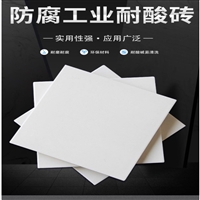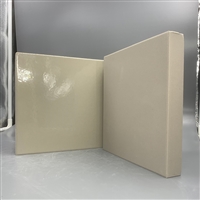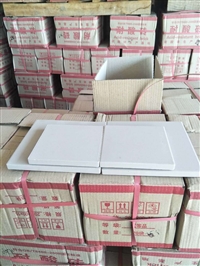


Acid and temperature resistant ceramic tiles
Category:
building materials/ceramic tile/Ceramic floor tiles
Model:
thirty thousand and fifteen
Brand:
Zhongguang Porcelain Industry
Retail Price
4.00USD
重量
kg
- Product Description
-
Description :
Acid resistant brickEpoxy resin adhesive is made up of four materials: epoxy resin, curing agent, diluent, and powder. It is suitable for acid and alkali resistance in ponds and ditches,Find Zhongguang for acid resistant brick construction issues
Acid and alkalinity resistance: ≥ 99.80%
Water absorption rate: ≤ 0.5%
Bending strength: ≥ 58.80MPA
Corrosion resistance: not lower than UB level
Pollution resistance: not less than level 4
Frost resistance: No cracks or peeling after 100 cycles
Resistance to rapid cooling and heating: After one test, there are no cracks, peeling, or damage phenomena
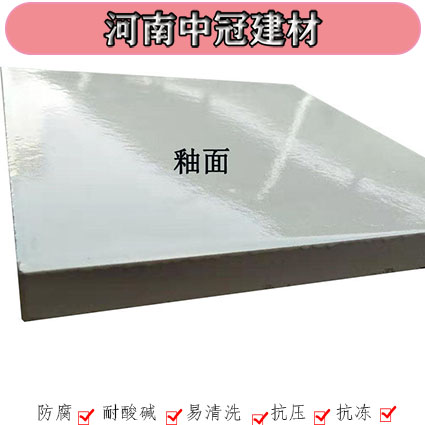
· feature
1. High acid resistance, low water absorption, and good flatness; Beautiful and elegant, with a refined style.
2. It has the properties of impermeability, frost resistance, salt resistance, alkali resistance, and weak acid corrosion resistance, and has strong adhesion with various materials.
3. Can be applied on damp substrate surfaces without drying, and can harden in damp environments or underwater.
4. Easy to operate and construct, similar to ordinary cement mortar construction, easy to clean, and can be cleaned with water.
5. We can produce according to the product drawings and technical information provided by the customer.
· performance
The product quality is characterized by low water absorption, strong frost resistance, wear resistance, acid and alkali resistance, beautiful and elegant color, elegant style, and complete variety; conventionalAcid resistant ceramic tilesMainly used in the application fields of chemical biology such as chemical engineering, petroleum, and medicine. With the intensification of climate pollution, outdoor tiles and square tiles in some cities have gradually developed the performance of acid resistant tiles. Therefore, the prospect of acid resistant tiles is also quite broad, and customized acid resistant tiles are needed in certain specific fields to meet the needs of special environments.
· production process
1. Raw material grinding and aging
The raw materials used are porcelain stone, black gangue, black gangue, wood knot soil, and feldspar. The raw materials are sent by shovel to the feeder for measurement and then fall into the belt conveyor. The raw materials and water enter the wet ball mill through the feed inlet and are ground into a slurry with a moisture content of about 30%. The slurry material is sent through the pipeline to the wet vibrating screen for screening. Qualified particle size materials are pumped into the aging tank for 3 days of aging, while unqualified particle size materials are returned to the ball mill through pipelines for further grinding.
2. Material drying
The aged mixed materials are pumped into the spray drying tower for drying. The heat source is the hot flue gas from the gas fired hot air furnace, the temperature is controlled at about 700 ℃, the moisture content of the dried materials is 3-4%, and the dried materials are screened by the vibrating screen. Qualified particle size materials are transported by belt conveyors and bucket elevators to the storage bin for backup, while unqualified particle size materials are transported by material transfer vehicles to the ball milling workshop and sent by belt conveyors to the ball mill for regrinding.

3. Brick making
The dried material falls into the belt conveyor from the bottom of the silo, and is transported to the buffer bin of the brick making machine by the bucket elevator. The brick making machine directly presses it into qualified sized billets, which are automatically sent to the drying kiln by the track.
4. Drying and sintering
The drying kiln uses the waste heat from the firing kiln to dry the billet. The drying kiln track speed is about 1.5m/min, and the temperature is controlled at 50-120 ℃ After drying, it is sent into the firing kiln by the track. During sintering, the heat source is the hot flue gas generated by natural gas combustion. The firing kiln track speed is about 1.5m/min, and the temperature is controlled at 100-1190 ℃. The finished product is obtained after sintering.
AfterSalesService :
Key words:- Acid resistant brick
More Products