




Shenzhen AG Glass Manufacturer
Category:
building materials/Architectural glass/Frosted glass
Model:
JH-135
Brand:
Jianhong
Retail Price
65.00USD
重量
kg
- Product Description
-
Description :
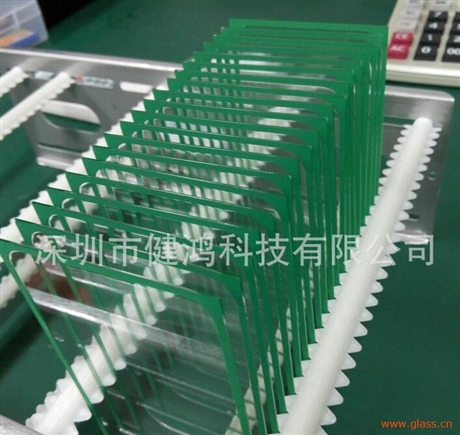
0.33mm tempered glass film AG glass raw material long-term large inventory!!
1、 Product Description:
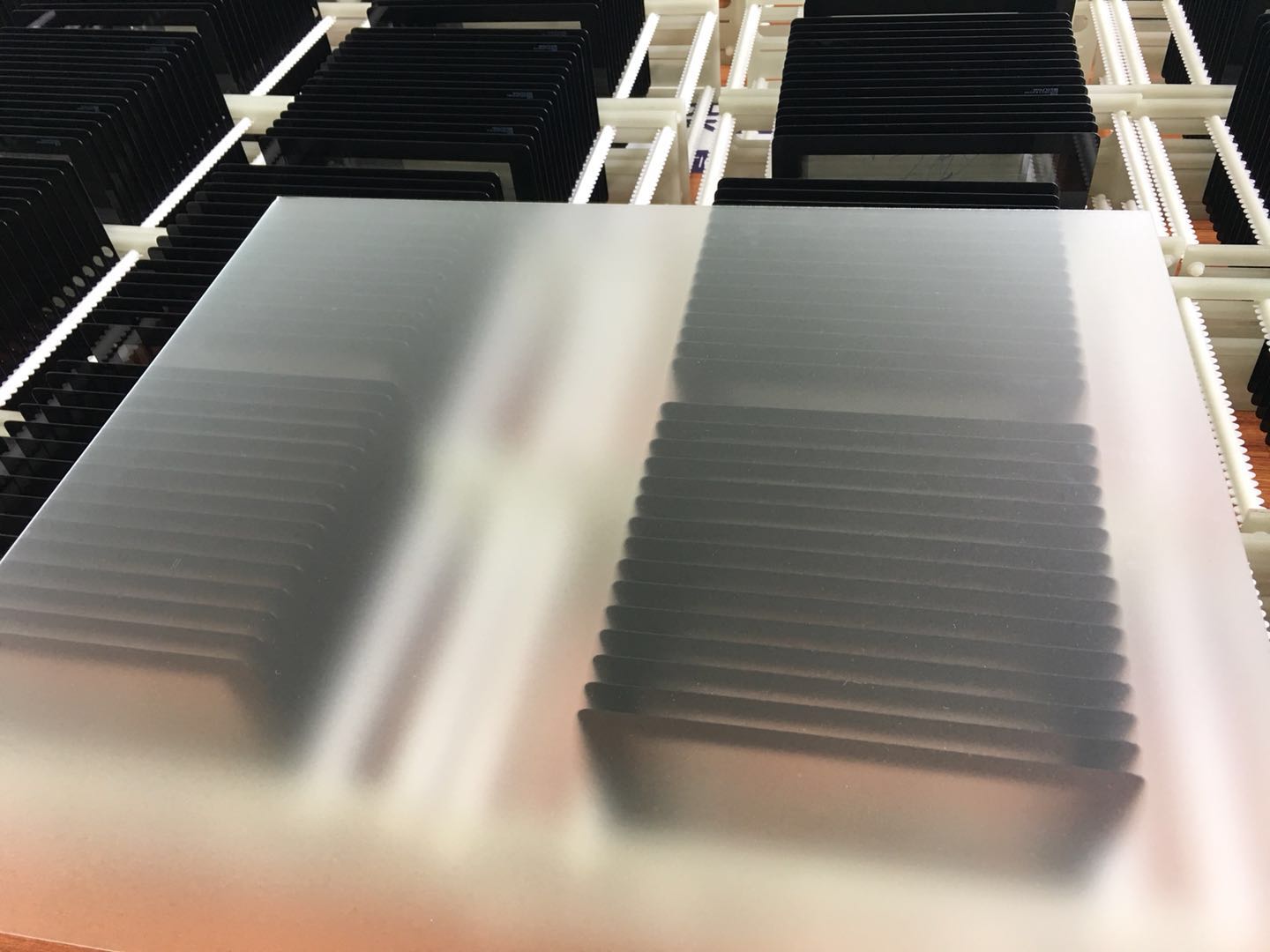
Anti glare glass (AG glass): It is made by chemically treating the surface of glass to change the microscopic particle structure of the glass surface into uneven particles, thereby artificially converting the mirror reflection of the glass into diffuse reflection. At the same time, by enhancing the chemical process of light transmittance, the rough particles on the surface of the glass can be turned into smooth particles, which can greatly improve the light transmittance of anti glare glass and make the light transmittance ≥ 90%. Achieve a fresh and transparent anti glare effect, allowing viewers to experience a more comfortable visual experience.
2、 Anti glare glass parameters:
[Product Name] Anti glare Glass
[Product thickness] 0.2mm-10mm
[Product Description] Glossiness 8 ° -130 °; The transmittance can reach 91%; Roughness ranging from 0.05um to 3.5um; Fog degree 1 ° -40 °
[Product Usage] TV splicing wall, flat screen TV, rear projection TV, LCD display, touch screen, tablet computer glass cover, tempered glass film, projection screen, industrial instruments and meters, computers, electronic devices, high-end photo frames, etc
【 Maintenance Instructions 】 Gently wipe with a damp cloth
Function: Reduce the interference of environmental reflection, improve the viewing angle and brightness of the display screen, reduce screen reflection, enhance the visual effect of images and numbers for people, especially suitable for large screens inside and outside the home. Make the image clearer and more realistic Allowing you to enjoy better visual effects, anti glare, non glaring, eliminating eye fatigue, and carefully caring for eye health.
Usage: Anti glare glass is widely used in LED large screens, TV splicing wall DLP, flat screen TV CRT, rear projection TV PTV, laptops, LCD displays, touch screens, mobile phone screens, mobile phone tempered glass film, medical equipment, industrial instruments, and high-end image frames. It can be installed in any regular glass frame structure and system.
AG glass, also known as anti glare glass, is a type of glass that undergoes special processing on its surface. Its characteristic is to turn the original glass reflective surface into a matte non reflective surface (with uneven surface). The principle is to perform special processing on both sides or one side of the glass sheet. Compared with ordinary glass, it has a lower reflectivity, reducing the reflectivity of light from 8% to below 1%. By using technology, a clear and transparent visual effect is created, allowing viewers to experience a better sensory visual experience.
Anti-reflection glass
Optical index requirements: 1. Light transmittance: 88% Min. (380-700nm visible light wavelength range), measured by a spectrophotometer. 2. Gloss: 1) Testing Instrument: WGG-60 Gloss Meter 2) Testing Method: As shown in the following figure, select 5 points on the original sheet for glossiness testing. At each point, the instrument will read once every 90 degrees of rotation, for a total of 2 times. Then, take the average of the 10 test data to obtain the glossiness value of the original sheet. Note that for single-sided anti glare glass, the anti glare treatment surface must be tested. 3) Glossiness standard: a. There are two purchasing specifications for glossiness of anti glare glass: 100 ± 10 and 80 ± 10. IQC conducts incoming inspection according to the standards of 100 ± 13 and 80 ± 15, respectively. b. Conventional size glass with a size of ≤ 20 "requires that the difference between the maximum and minimum glossiness values of the same piece of glass be ≤ 10; Large glass with a size>20 "requires the difference between the maximum and minimum glossiness values of the same piece of glass to be ≤ 20. Definition of Appearance Defects 1) Circular Defects: Refers to circular appearance defects, such as bubbles, white spots, scratches, pits, foreign objects, and circular defects that have undergone anti glare treatment or cannot be treated with anti glare treatment. 2) Linear defect: manifested as a linear appearance defect, such as scratches, scrapes, foreign objects, anti glare treated or non glare treated linear defects, etc. 3) Convex defect: Impurities or other defects protruding from the surface of glass. The specific inspection method for appearance is shown in the figure: first, hold the two short sides of the glass with both hands and inspect the long direction; Grasp the two long sides of the glass again and check the width direction; Generally, it is oriented in the long direction. (Or place the glass horizontally on a shelf with the light source under the glass) Conduct a vertical inspection according to the appearance inspection standards, with an inspection time of 20-30 seconds. Dimensional Inspection 1. Length and Width Dimensional Inspection 1) Allowable Deviation: The allowable deviation for the length and width dimensions of the anti glare glass is ± 0.5mm. 2) Inspection Method: Use a large vernier caliper to measure the distance between two parallel edges. 2. Thickness inspection 1) Allowable deviation: The allowable deviation for the thickness of anti glare glass is ± 0.2mm. The thickness difference of the same piece of glass is 0.2mm for a thickness of 3mm, and 0.3mm for thicknesses of 4mm and 6mm. 2) Inspection method: Use an outer diameter micrometer with an accuracy of 0.01mm to measure at the midpoint of the four sides within 15mm from the edge of the glass plate. The thickness difference of the same piece of glass is the difference between the Max value and the smaller value among the four measured values. 3. Diagonal inspection 1) Diagonal difference requirement: The length difference between two diagonals should not exceed 0.2% of the average length of the diagonals. 2) Inspection method: Use a steel tape measure with a small scale of 1mm to measure the distance between the corresponding corner vertices of the glass. Anti glare glass is suitable for various displays and protective screens, museum art protective glass, and various high-end photo frame glass

AfterSalesService :
Key words:- AG Glass Manufacturer