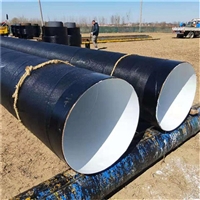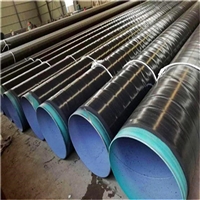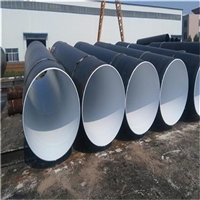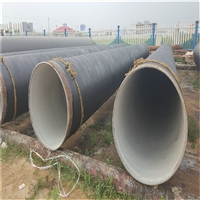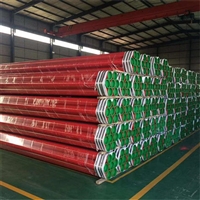


Manufacturer direct sales of coated and insulated steel pipes, high-quality coated and acid resistant coated steel pipes
Category:
building materials/Construction and building materials pipes/Composite tube
Model:
dn20-3000mm
Brand:
Guanghui
Retail Price
265.00USD
重量
kg
- Product Description
-
Description :
The inner and outer plastic coated steel pipe is a steel plastic composite pipe material composed of a layer of 0.5-1.0mm thick polyethylene (PE) resin, ethylene acrylic acid copolymer (EAA), epoxy (EP) powder, non-toxic polypropylene (PP) or non-toxic polyvinyl chloride (PVC) and other organic compounds melted on the inner wall of the steel pipe. It not only has the advantages of high strength, easy connection, and water flow resistance of steel pipes, but also overcomes the disadvantages of steel pipes being prone to corrosion, pollution, scaling, low strength of plastic pipes, and poor fire performance when exposed to water. Its design life can reach 50 years. The main disadvantage is that bending is not allowed during installation, and during hot processing and electric welding cutting operations, the cutting surface should be coated with non-toxic room temperature curing adhesive provided by the manufacturer for spiral welded pipes, straight seam welded pipes, and seamless steel pipes.

The properties and characteristics of epoxy resin are diverse. Various resin, curing agent, and modifier systems can almost meet the form requirements of various applications, ranging from extremely low viscosity to high melting point solids. 2. Curing is convenient. By using various curing agents, the epoxy resin system can be cured almost within the temperature range of 0-180 ℃. 3. Strong adhesion. The inherent polar hydroxyl and ether bonds in the molecular chain of epoxy resin give it high adhesion to various substances. The shrinkage of epoxy resin during curing is low, and the generated internal stress is small, which also helps to improve the adhesion strength. 4. Low contractility. The reaction between epoxy resin and the curing agent used is carried out through direct addition reaction or ring opening polymerization reaction of epoxy groups in resin molecules, without the release of water or other volatile by-products. Compared with unsaturated polyester resin and phenolic resin, they exhibit very low shrinkage (less than 2%) during the curing process. 5. Mechanical properties. The cured epoxy resin system has excellent mechanical properties. 6. Electrical performance. The cured epoxy resin system is an excellent insulation material with high dielectric properties, surface leakage resistance, and arc resistance. 7. Chemical stability. Generally, cured epoxy resin systems have excellent alkali resistance, acid resistance, and solvent resistance. Like other properties of cured epoxy systems, chemical stability also depends on the resin and curing agent selected. Proper selection of epoxy resin and curing agent can give it special chemical stability properties. 8. Dimensional stability. The combination of many of the aforementioned properties gives the epoxy resin system outstanding dimensional stability and durability. 9. Resistant to mold. The cured epoxy resin system is resistant to most molds and can be used under harsh tropical conditions. Epoxy resin and epoxy resin adhesive themselves are non-toxic, but due to the addition of solvents and other toxic substances during the preparation process, many epoxy resins are "toxic". In recent years, the domestic epoxy resin industry has been using water-based modification and avoiding additives to maintain the "non-toxic" nature of epoxy resin. At present, the vast majority of epoxy resin coatings are solvent based coatings containing a large amount of volatile organic compounds (VOCs), which are toxic and flammable, thus posing a threat to the environment and human health. The main disadvantage is that bending is not allowed during installation, and during hot processing and electric welding cutting operations, the cutting surface should be coated with non-toxic room temperature curing adhesive provided by the manufacturer. The specifications, types, and connection methods of spiral welded pipes, straight seam welded pipes, and seamless steel pipes with a diameter range of DN15- DN2000 coated plastic steel pipes have been diversified. The specifications can be produced up to 15mm without any restrictions. Its types include external galvanizing and internal coating, internal and external coating, etc. It belongs to the multi-purpose type and can be used in any other field. The connection method adopts welding, groove, flange and wire connection, among which welding can use bimetallic or non-destructive welding methods.
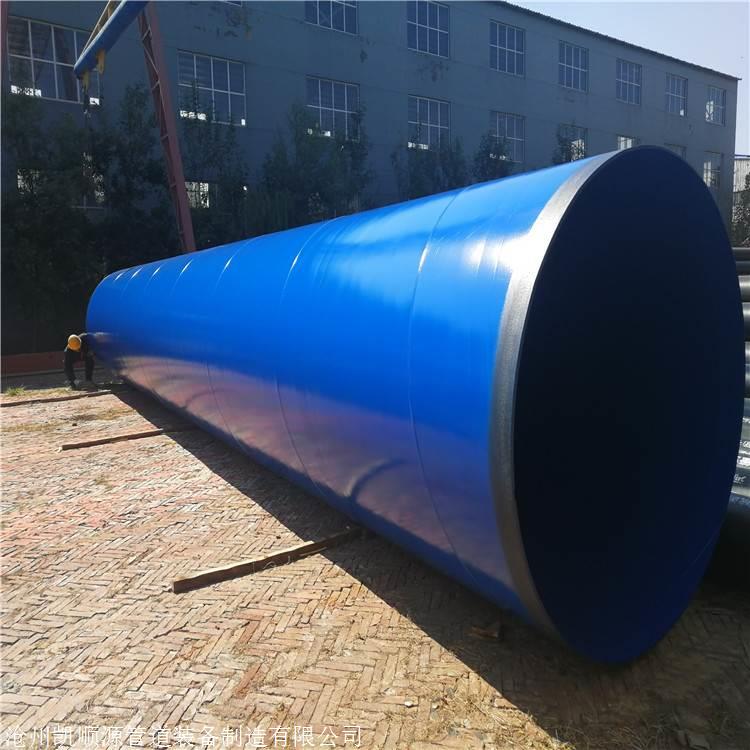
Epoxy resin coated steel pipes are suitable for working environments ranging from -30 ℃ to 120 ℃. Compared with other metal pipes, plastic pipes, and composite pipes, it combines the characteristics of various pipelines, including the strength of steel pipes and the corrosion resistance, wear resistance, and low fluid resistance of plastic pipes. It is a green pipeline with high safety and hygiene strength and good bonding strength. Coated steel pipes are widely used in high-rise building water supply and drainage, fire sprinkler, HVAC, cable internal and external anti-corrosion, heat resistance and anti-corrosion of natural gas, cold and hot circulating water pipelines, seawater circulation systems, industrial systems, circulating water systems, deionized purified water systems, wear-resistant and anti-corrosion systems, anti scaling and antibacterial and anti-corrosion systems, internal and external anti-corrosion systems, cable sheaths, fire sprinkler systems, insulation and anti-corrosion systems, chemical heavy anti-corrosion systems, etc. Internally and externally coated composite steel pipes are steel plastic composite pipes made from welded steel pipes as the base material, using sandblasting chemical dual pretreatment, preheating, internal and external coating, curing, post-treatment and other processes. It has excellent comprehensive performance, strong corrosion resistance and mechanical properties, good chemical stability and water resistance, and has functions such as drag reduction, anti-corrosion, compression resistance, and antibacterial. It is generally not restricted by the conveying medium, and the coating layer has a strong bonding force with steel. Coating material: Epoxy resin (EP) is suitable for working environments below 80 ℃. The steel pipe coating has extremely high adhesion, high coating hardness, good impact resistance, and good chemical corrosion resistance.
Internally and externally coated composite pipes are steel plastic composite pipes composed of a layer of 0.5-1.0mm thick polyethylene (PE) resin, ethylene acrylic acid copolymer (EAA), epoxy (EP) powder, non-toxic polypropylene (PP) or non-toxic polyvinyl chloride (PVC) and other organic compounds melted on the inner wall of the steel pipe.
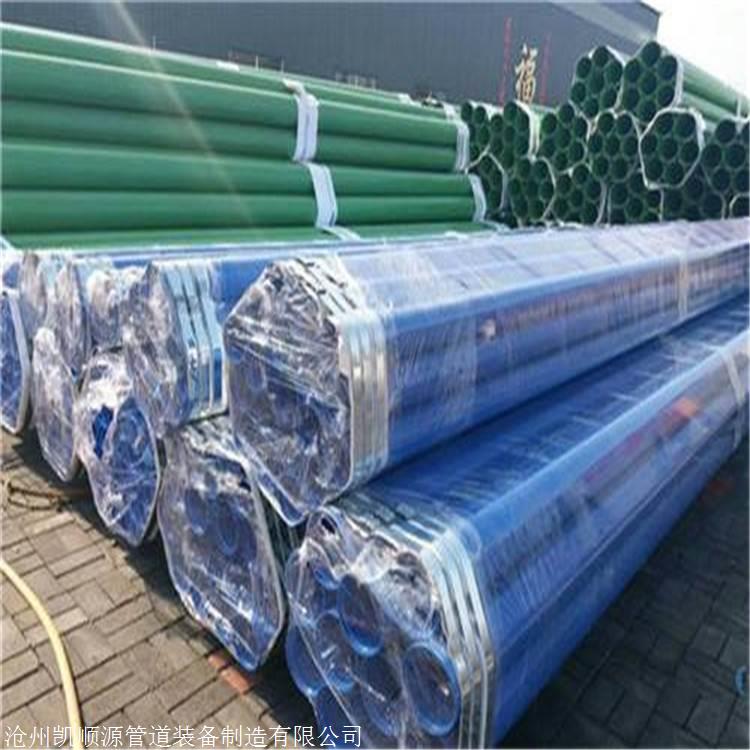

Caliber range DN15-- DN2000
Pre treatment chemical immersion tank method, physical sandblasting method
Coating varieties include modified epoxy resin powder coating or high-density polyethylene powder
Coating thickness: One side of the inner coating is ≥ 0.4mm
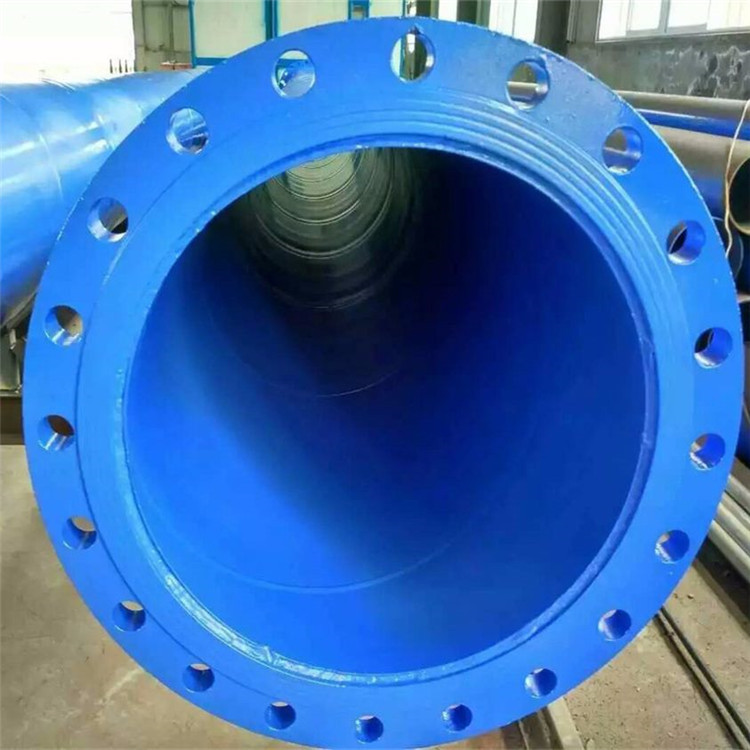
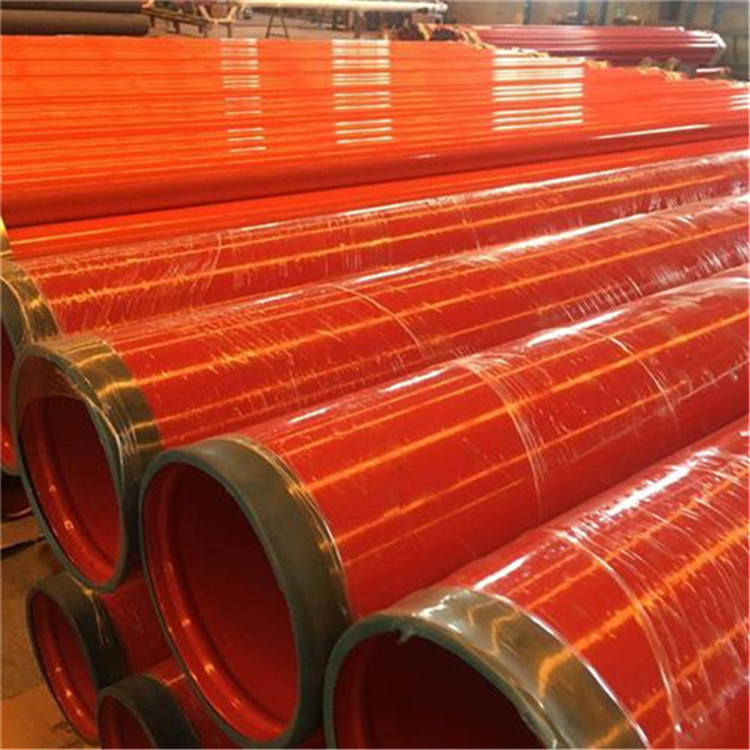
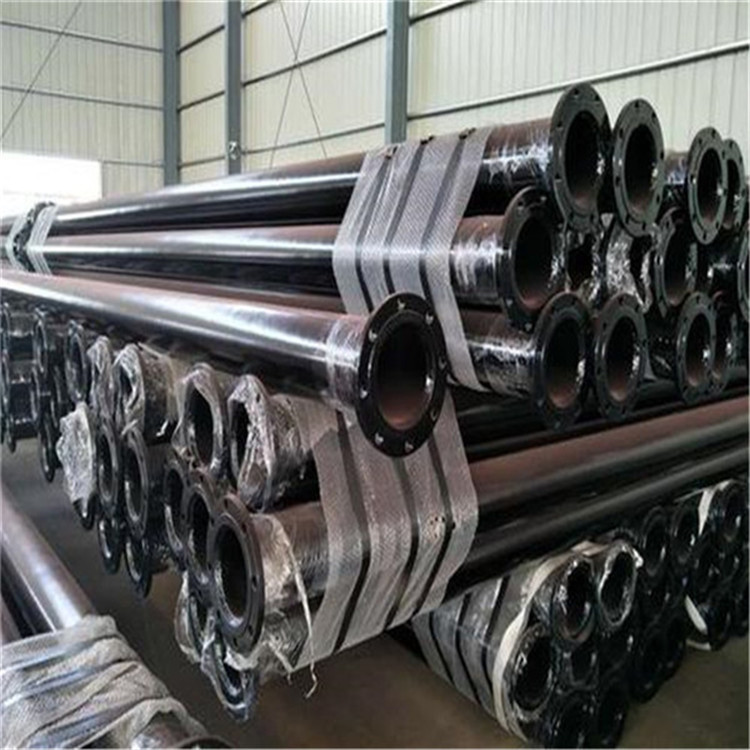
Common colors: black, gray, blue, red, white, green Coating thickness: PE (modified polyethylene) Coating thickness is 400um -1000um EP (epoxy resin) Spray thickness is 100um -400um Coating method: PE (polyethylene) is hot-dip EP; (epoxy resin) is internal and external spray Product specifications: DN15- DN500 Environmental temperature: -30 ℃ to 120 ℃ Connection methods: thread (DN15- DN100), groove (DN65- DN400), flange (applicable to any diameter), welding type, bimetallic connection, socket, pipe joint, sealing connection, etc.



AfterSalesService :
Key words:- Plastic coated insulated steel pipe


More Products