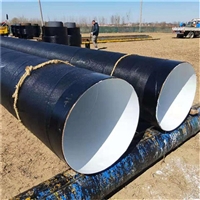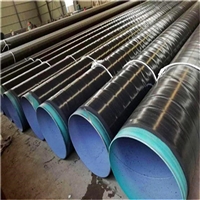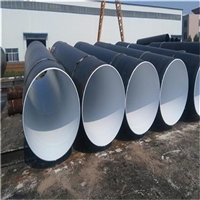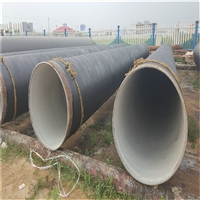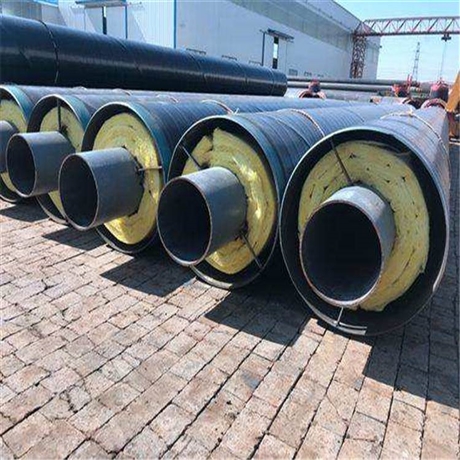



Processing customized insulation pipes, steel pipes, polyurethane insulation pipes, steel sleeves, steel insulation pipes
Category:
metallurgy/tubing/Spiral tube
Model:
Brand:
Guanghui
Retail Price
3,800.00USD
重量
kg
- Product Description
-
Description :
Heat preservation pipe is a steel pipeline that is processed through insulation technology to ensure that the temperature inside and on the surface of the working steel pipe meet or meet the requirements of use under different working environments and external media.
Insulated pipelines are widely used in the transportation network of liquids and gases, chemical pipeline insulation engineering, petroleum, chemical, centralized heating networks, central air conditioning ventilation pipelines, municipal engineering, etc.
Steel sleeve steel composite insulated steel pipe
Steel sleeve steel composite insulation steel pipe insulation structure can be divided into two categories according to different sliding modes:
1. Internal sliding type: The insulation structure consists of a working steel pipe, aluminum silicate, drag reduction layer, microporous calcium silicate, insulation layer, stainless steel fastening steel strip, aluminum foil reflective layer, polyurethane insulation layer, outer steel pipe, and external anti-corrosion layer. The inner sliding thermal insulation steel pipe is composed of steel pipe conveying medium+composite silicate or microporous calcium silicate+rigid polyurethane foam+outer steel pipe+anti-corrosion protective layer of glass fiber reinforced plastic shell. The insulation treatment technology for various pipe fittings nodes is mature and reliable in quality.

2. External sliding type: The insulation structure consists of a working steel pipe, a glass wool insulation layer, an aluminum foil reflective layer, a stainless steel fastening steel strip, a sliding guide bracket, an air insulation layer, an external protective steel pipe, and an external anti-corrosion layer.
External sliding insulation steel pipe structure form
1. Inner steel pipe
2. Zinc rich primer
3. Sliding guide bracket
4. High temperature resistant glass wool
5. Aluminum foil reflective layer
6. Air insulation layer
7. Coat steel pipe
8. Coat steel pipe anti-corrosion layer

Steel sleeve steel composite insulated steel pipe is a type of underground buried pipeline that can be directly buried without concrete structure. The thermal expansion of the working steel pipe is carried out inside the outer pipe, thereby reducing material costs, shortening construction dates, and ensuring the safety of heating pipelines. It can be widely used safely in different temperature environments, especially for high-temperature steam pipeline projects. The operating temperature can reach 150 ℃ -450 ℃. Pipeline ports are generally sealed with polyethylene film or three-layer PE cold wrapping tape to prevent moisture or water from entering before installation or during construction. The insulation material is wrapped with multiple layers of staggered seams, effectively reducing heat loss. At the same time, control measures are taken on the surface of the jacket to prevent the formation of cold bridges, thereby ensuring the temperature control of the anti-corrosion layer of the jacket. Wrapping multiple layers of aluminum foil reflective layer with insulation material effectively reduces heat loss and makes the steam pipeline more economical and reasonable. The drainage system adopts a fully enclosed form, with flexible layout, reasonable structure, and safety and reliability. The moisture discharge pipe on the steel casing can not only timely discharge humid gases, but also serve as an alarm signal pipe for daily operation. The thermal compensation of the pipeline adopts a corrugated pipe compensator, which is installed inside the casing and made in a direct burial form, without the need for an observation well. The construction operation is convenient and the construction period is short. Suitable for transporting steam or other media below 2.5MPa and 350 degrees Celsius, this product uses steel pipes as the outer protective layer, which has the advantages of high strength, low damage, easy construction and maintenance, and long service life.

Polyurethane insulated steel pipe
In order to reduce heat dissipation from pipelines to soil during the transportation of crude oil or heating pipelines, an insulation composite layer is added to the outside of the pipeline. The commonly used thermal insulation material is rigid polyurethane foam, and the applicable temperature is -185~120 ℃. This material has a soft texture. To improve its strength, a high-density polyethylene layer is added outside the insulation layer to form a composite structure to prevent groundwater from seeping into the insulation layer. The high-pressure polyurethane foaming equipment is used to perform shot blasting and rust removal treatment on the outer surface of the steel pipe, as well as corona treatment on the inner surface of the outer protective pipe, in order to improve the adhesion performance of the insulation pipe. The insulation layer is made of rigid polyurethane foam with a density of 60kg/m3 to 80kg/m3, which can fully fill the gap between the steel pipe and the casing, and has a certain bonding strength, so that the steel pipe, the casing and the insulation layer form a solid whole. Polyurethane foam has good mechanical properties and thermal insulation properties. Generally, it can withstand 120 ℃, and can withstand 180 ℃ through modification or combination with other thermal insulation materials.
Prefabricated polyurethane insulated steel pipes have a three-layer structure from the inside out:
Layer: Working steel pipe layer
According to the design and customer requirements, seamless steel pipes, spiral steel pipes, and straight seam steel pipes are generally selected. After advanced shot blasting and rust removal process, the rust removal grade of the steel pipe can reach Sa2 level in GB/T8923-1988 standard, and the surface roughness can reach R=12.5 microns in GB6060.5-88 standard.
Second layer: Polyurethane insulation layer:
It is made by injecting the original liquid of rigid polyurethane foam into the cavity formed between the steel pipe and the outer protective layer with a high-pressure foaming machine, which is commonly known as "pipe in pipe foaming".
Third layer: High density polyethylene protective layer:
Prefabricated black or yellow polyethylene plastic pipes with a certain wall thickness. Polyethylene is odorless, non-toxic, and feels like wax. It has excellent low-temperature resistance and can be used at temperatures ranging from -70 to -100 ℃. It has good chemical stability and can withstand most acid and alkali attacks (not acids with oxidizing properties). It is insoluble in general solvents at room temperature and has low water absorption. However, as a linear molecule, it can slowly dissolve in certain organic solvents without swelling, and has excellent electrical insulation properties. Its functions are twofold: firstly, to protect the polyurethane insulation layer from mechanical damage caused by hard objects; secondly, to prevent corrosion and waterproofing. High density polyethylene polyurethane foam insulation steel pipes shall comply with the SY/T114-2000 and SY/T115-2001 standards.
AfterSalesService :
Key words:- Polyurethane insulation pipe
More Products