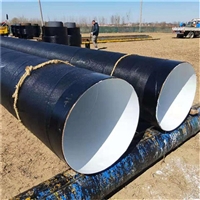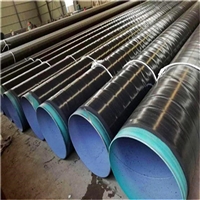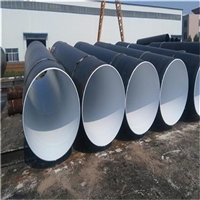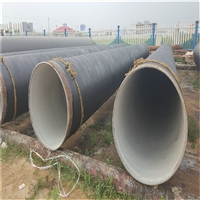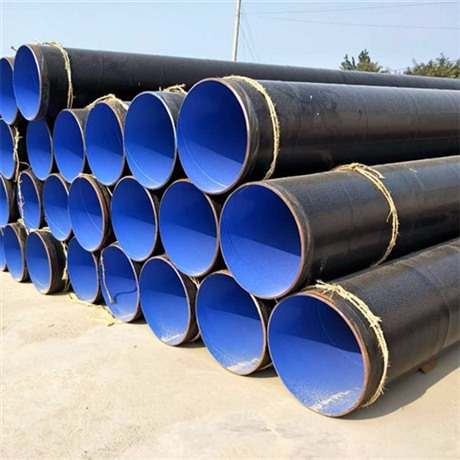



Manufacturer of reinforced TPEP anti-corrosion steel pipes for water transportation
Category:
building materials/Construction and building materials pipes/Composite tube
Model:
Complete and customizable
Brand:
other
Retail Price
3,650.00USD
重量
kg
- Product Description
-
Description :
Reinforced TPEP anti-corrosion steel pipe manufacturer for water transmission and TPEP anti-corrosion steel pipe for natural gas output: TPEP anti-corrosion steel pipe - the fourth generation product of large-diameter long-distance water transmission steel pipe. The steel pipe has superior ductility, integrity, and convenient construction operability, suitable for underground laying, and can be used for crossing overhead, crossing river inverted siphon, and ding pipe construction. The steel pipe and its accessories are shielded by anti-corrosion coating on their inner and outer wall surfaces, which is the most convenient and commonly used protective measure. The steel plastic composite pipe, after internal and external protection, has a high cost performance ratio. It is a combination of excellent performance of steel pipe and plastic pipe. It not only has the strength and rigidity of steel pipe, but also has the advantages of chemical corrosion resistance, no pollution, smooth inner wall, no scale accumulation, and low fluid resistance of plastic. It can effectively prevent secondary pollution of water quality and has a significant effect on improving water quality. Developed countries such as the United States and Japan have used it for more than 50 years. The upgrading and replacement of coated steel pipes in the water supply network is the lifeline of urban operation, and pipe bursts, water outages, and low pressures can all threaten water supply safety. Ensuring the safety and hygiene of water quality during transportation is very important for pipelines. The transportation of water output from water plants through poor pipelines will seriously threaten water quality. Therefore, the country requires water supply enterprises to continuously ensure the safe, effective, and reliable transportation of tap water from the factory to every user through the pipeline network.


The first letter of Three in English, PE refers to polyethylene, and EP refers to epoxy resin. Greatly improved coating adhesion and thickness, enhanced resistance to bumps and corrosion. TPEP steel pipes have filled the gap in domestic steel pipe anti-corrosion, and their corrosion resistance has been improved by 3-5 times. The composite process of TPEP steel plastic pipe base pipe and coating mainly involves preheating the base pipe to ensure that the surface temperature meets the temperature range required for plastic powder, and controlling the temperature before coating with plastic powder. Powder coating, also known as dispersion method, can be divided into: spraying: using compressed air to spray plastic powder; Suction coating: Use a vacuum pump to create negative pressure inside the tube and suck in plastic powder; Immersion: Store plastic powder in a container and immerse the preheated base tube in the powder; Rolling molding: Plastic powder is stored on the wall of the base pipe, and the rotating rolling base pipe evenly distributes the powder. Due to the surface of the base pipe reaching a certain temperature, the plastic powder melts and coats the pipe wall, forming a coating and an anti-corrosion layer. The degree of adhesion between the inner coating and the base pipe is related to various factors, such as the type of heating equipment, heating method, fuel type, heating temperature, fineness of plastic powder, and composition of additives, but the most critical factor is still surface pretreatment. On the premise of meeting the surface pre-treatment standards, the comprehensive index is based on adhesion assessment. In China, the original standard for adhesion index was too low, but it has now been raised (polyethylene coating ≥ 30N/10mm, epoxy resin coating is 1-3 levels), which is close to developed countries.
TPEP anti-corrosion steel pipe TPEP anti-corrosion steel pipe drinking water pipeline has good reliability performance. In general, ordinary water pipelines have a large diameter. Once a pipe burst or leakage accident occurs, it will cause a lot of waste and have a significant impact on residents. Considering the quality and pressure bearing capacity of the pipe material, as well as the reliability of the connection. The standard for tap water quality has approached international standards, and residents' requirements for water supply quality are also increasing. Pipes with internal coatings of drinking water grade are preferred to prevent secondary pollution. The operating cost of water supply pipes is due to power consumption, long lines, and factors that reduce the energy consumption of pipe network operation. Therefore, pipes with low roughness coefficient are preferred. The cost of pipelines should be comprehensively considered from the perspective of the entire cycle, not only considering the cost of pipe materials, but also the installation and construction of pipe materials, subsequent operating costs, and service life. Therefore, TPEP anti-corrosion steel pipes have become. The mechanism of corrosion of TPEP anti-corrosion steel pipes is that the metal is corroded due to the difference in electrode potential. When the metal undergoes electrochemical reactions, the parts with lower electrode potential are prone to lose electrons and form anodes; The area with higher electrode potential receives electrons and becomes the cathode. In the presence of O2 and H2O, Fe (OH) 2 generates hydrated iron oxide (commonly known as rust), which is a loose substance that floats on the surface of steel and has no protective effect. The anodization reaction of the metal can continue, resulting in corrosion that continues to develop, causing cavities and even perforation on the surface of oil and gas pipelines. TPEP anti-corrosion steel pipes are coated with two-component room temperature curing type paint, which is reinforced with glass cloth on the surface of the steel pipe to prevent corrosion. It can be used for anti-corrosion of the outer walls of buried or underwater oil, gas, water, and heat pipelines, as well as for anti-corrosion of various steel structures, docks, ships, water gates, gas storage tanks, equipment in refineries and chemical plants, and for leak prevention of sewage tanks, roof waterproof layers, and basement concrete layers. In the external wall coating of pipelines, it is used in conjunction with fiberglass cloth wrapping to form a reinforced or extra reinforced coating with excellent anti-corrosion performance.


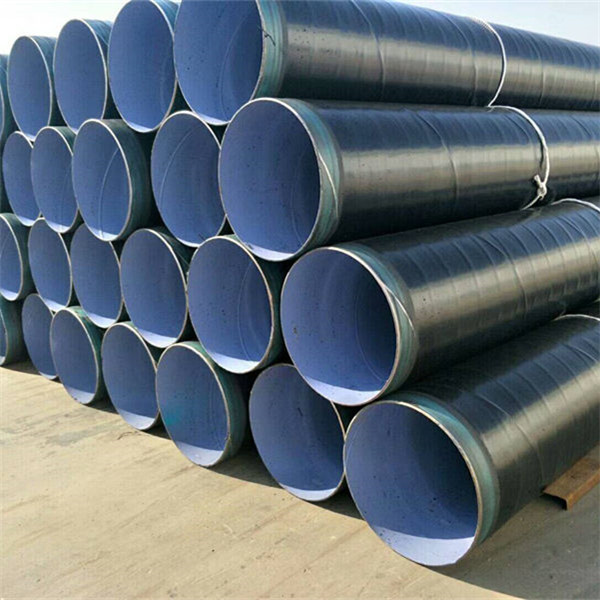


Production process: The inner wall of the product adopts thermal spraying epoxy powder anti-corrosion method. The powder is uniformly wrapped and coated on the surface of the pipe body after being heated and melted at medium frequency and high temperature, forming an inner wall anti-corrosion layer that meets the requirements of food grade anti-corrosion. The outer wall of the product is treated with 3PE anti-corrosion treatment and coated with epoxy powder; Yi layer adhesive; A three-layer anti-corrosion structure made of polyethylene. It is based on the advanced 3PE anti-corrosion technology for the outer wall, while also providing excellent anti-corrosion treatment for the inner wall, achieving good anti-corrosion effects on both the outer and inner walls, and providing good protection for the steel pipe body. This form of anti-corrosion treatment is currently the most advanced overall anti-corrosion treatment technology for steel pipes in China and even internationally. It is also the most optimal anti-corrosion treatment choice for high demand engineering projects both domestically and internationally. The product is suitable for pipeline transportation engineering under various conditions, which is a revolution for traditional pipeline products and a viable alternative to traditional products such as steel tube concrete pipes, ductile iron pipes, PE pipes, etc.
The tpep anti-corrosion process (inner EP and outer 3PE) combines thermosetting epoxy resin powder coating with the characteristics of polyethylene and processing technology, and cleverly combines the three-layer structure polyethylene coating with fusion bonded epoxy powder coating technology, providing a good solution for the corrosion protection of buried steel pipes. The inner wall fusion bonded epoxy resin powder (FBE) anti-corrosion solves the problem of internal anti-corrosion of pipelines, with low roughness, smooth inner walls, and good hydraulic performance. Through the analysis of design examples, it is concluded that compared with pipes of the same diameter, the use of inner wall fusion bonded epoxy coating can reduce pipeline losses by more than 30%; Under the same flow rate, the pipe diameter can be reduced by one level, thereby reducing costs and energy consumption. It has become a widely used main product in the market for large-diameter water transmission pipelines.
AfterSalesService :
Key words:- TPEP anti-corrosion steel pipe
More Products