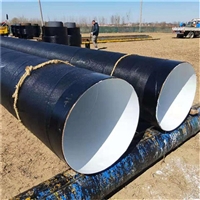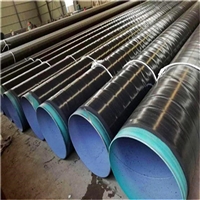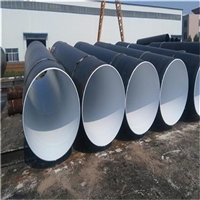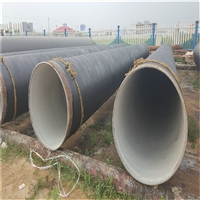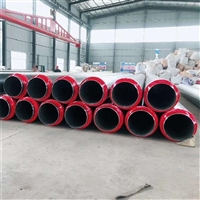
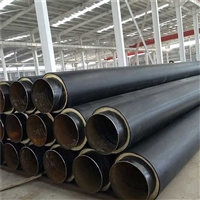


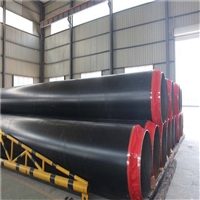
Prefabricated polyurethane insulation pipe, directly buried insulation pipe, thermal transmission insulation pipe manufacturer, production and processing
Category:
metallurgy/tubing/Spiral tube
Model:
Brand:
Guanghui
Retail Price
369.00USD
重量
kg
- Product Description
-
Description :
Polyurethane insulation, also known as "jacket pipe", is composed of "two-step method", which is composed of high-density polyethylene outer protective layer, polyurethane rigid foam plastic pipe and steel pipe. The insulation layer is made of rigid polyurethane foam with a density of 60kg/m3 to 80kg/m3, which can fully fill the gap between the steel pipe and the casing, and has a certain bonding strength, so that the steel pipe, the casing and the insulation layer form a solid whole. The polyurethane directly buried insulation pipe foam has good mechanical properties and jue thermal properties. Generally, it can withstand temperature of 120 and can withstand temperature of 180 through modification or combination with other insulation materials. Polyurethane jacket tube has become a relatively mature technology in some developed countries abroad. In the past decade, China's heating engineering technicians have been promoting the development of domestic pipeline laying technology to a higher level by digesting and absorbing this advanced technology. The practical achievements over the past decade have fully demonstrated that the polyurethane insulation buried pipe laying method has many advantages compared to traditional trench and overhead laying. The directly buried thermal insulation pipe is composed of steel pipe conveying medium, high-density polyethylene outer sleeve, and rigid polyurethane foam insulation layer between the steel pipe and the outer sleeve.


Advantages of jacket tube:
(1) Low engineering cost.
(2) Less land occupation, faster construction, and favorable environmental protection.
(3) Jacket tubes save energy, resist corrosion, have good durability, and have a long service life.
(4) All are equipped with leakage alarm lines, all of which are complete. Once a leakage occurs in a certain part of the pipeline, the accurate location and degree of leakage of the insulation pipeline can be displayed on the dedicated detection instrument through the transmission of the alarm line, in order to notify the leak detection personnel to quickly deal with the leaking pipe section and ensure the full operation of the heating pipeline network.
Explanation:
A. The wall thickness of the pipe can be adjusted, and the wall thickness and color can be produced according to user requirements. Due to the different wall thicknesses of the pipe, the thickness of the insulation layer is approximate and should be calculated based on the actual thickness.
B. Complete sets of wooden supports, plastic plugs, flange plates at both ends, welding rods, welding guns, heat shrink tapes, etc. are provided to match the pipes.
C. Pipes should not be exposed to sunlight, and outdoor storage should be covered with tarpaulins. The stacking area should be away from heat and fire sources.
D. Avoid scratches during transportation and use.
Polyurethane prefabricated directly buried insulation pipe is a prefabricated pipe closely combined by steel pipe, polyurethane rigid foam insulation layer and glass avant-garde reinforced plastic (i.e. glass fiber reinforced plastic) outer sheath. Polyurethane insulation pipes have excellent characteristics such as light capacity, high strength, thermal insulation, sound insulation, flame retardancy, cold resistance, corrosion resistance, non water absorption, and easy and fast construction. They have become an indispensable material for thermal insulation, waterproofing, sealing, and other industrial sectors such as construction, transportation, petroleum, chemical, power, and refrigeration. Polyurethane insulation pipes are used for insulation and cooling engineering of various indoor and outdoor pipelines, centralized heating, cooling, oil and gas pipelines, air conditioning pipelines, chemical, pharmaceutical and other industrial pipelines.


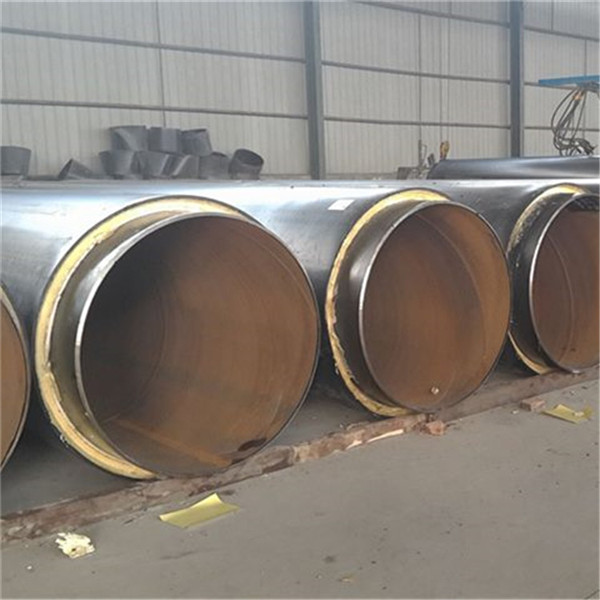
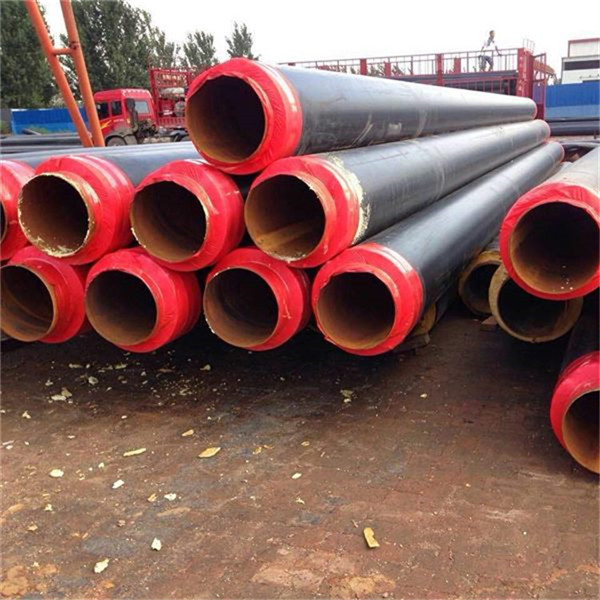
Polyurethane direct buried insulation pipes have outstanding advantages over traditional insulation pipes:
1. Polyurethane direct buried insulation pipes have good insulation performance, with heat loss only 25% of traditional pipes. Long term operation can save a lot of energy and significantly reduce energy costs.
2. It has strong waterproof and corrosion-resistant capabilities, and does not require a pipe trench. Polyurethane direct buried insulation pipes can be directly buried underground or in water, with simple and fast construction and low overall cost.
3. The service life of polyurethane buried insulation pipes can reach 30 to 50 years, and correct installation and use can reduce the maintenance cost of the pipeline network.
4. Polyurethane direct buried insulation pipes also have good corrosion resistance and impact resistance under low temperature conditions, and can be directly buried in underground frozen soil.
5. An alarm system can be set up to automatically detect leakage faults in the pipeline network, accurately indicate the location of the fault, and automatically sound an alarm.
The vacuum layer inside the polyurethane buried pipe plays a crucial role in insulation materials. The use of vacuum layer in this large-scale insulation material is a new design technology with excellent performance. When using polyurethane buried pipes, the rational utilization of the vacuum layer inside will be reflected as a better usability mode. The treatment of the internal vacuum layer is to isolate the temperature, because the vacuum layer is a layer outside the polyurethane, and it is very difficult to penetrate the temperature from materials like polyurethane.
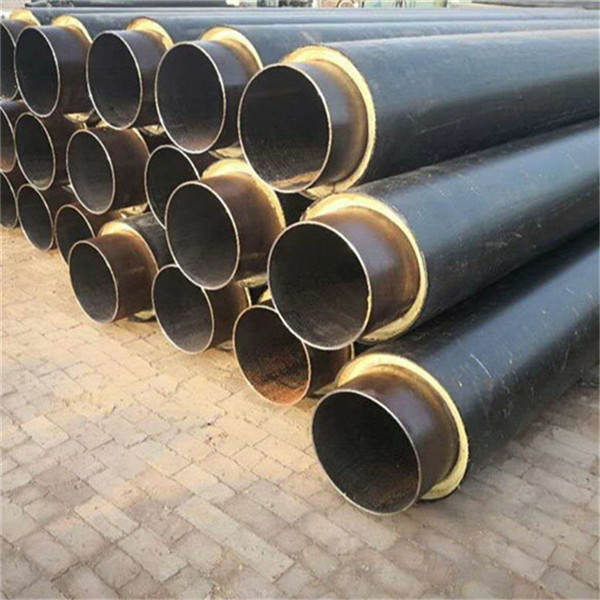


It is necessary to pay attention to the pressure of buried pipelines. Under the condition of meeting the pressure conditions, the first step is to drain the water and air, and then do it in two steps:
1) Strength test: After increasing the pressure inside the pipeline to 1.5 times the working pressure, there should be no leakage within 10 minutes of stabilizing the pressure.
2) Tightness test: When the pressure inside the pipe is reduced to the working pressure, a 1kg small hammer is used to knock and inspect each weld around it one by one. If there is no leakage within 30 minutes and the pressure drop does not exceed 0.2 atmospheres, it is considered qualified. And pressure test records should be kept in accordance with regulatory requirements.
On site joint insulation construction:
This content is unique to the construction of directly buried pipelines, and the quality of construction directly affects the service life, which must be given sufficient attention. The insulation of the on-site joint of the insulation pipe must be carried out after passing the pressure test. There are two methods for the insulation layer: on-site foaming construction and insulation tile construction. Regardless of which method is used for construction, defects such as circular space, cracking, and delamination must not occur. There are various methods for the protective layer (such as high-density polyethylene and fiberglass protective layer), but the integrity, tightness, and waterproofness of the joint must be ensured.
AfterSalesService :
Key words:- Polyurethane insulation pipe
More Products