


Cantilever shelving combined with software management system
Category:
Transportation/Warehousing equipment/Shelves
Model:
Brand:
Hengya shelves
Retail Price
1,565.00USD
重量
kg
- Product Description
-
Description :
The structural advantages of cantilever shelves:
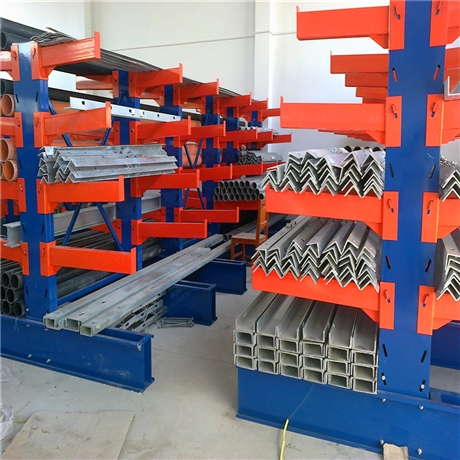
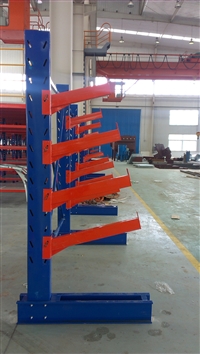
1. Cantilever shelves can be single-sided or double-sided, and they have the characteristics of structural stability, good load-bearing capacity, and high space utilization. Goods storage and retrieval are carried out by forklifts, cranes, or manual labor;
2. The height of cantilever shelves is usually within 2.0 meters (up to 6 meters if accessed by forklifts), the cantilever length is within 1.5 meters, and the load capacity of each arm is usually within 800KG.
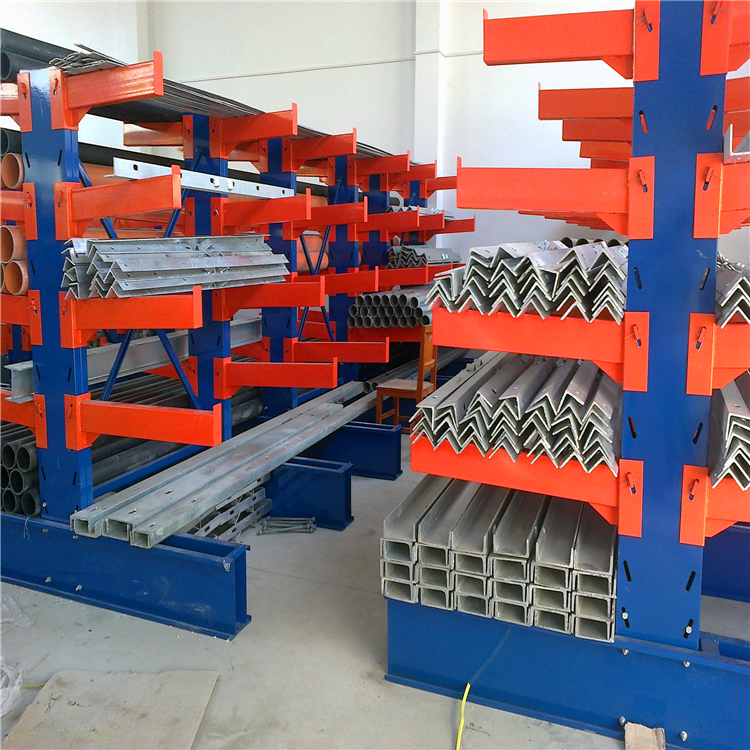
Cantilever shelves are commonly used in the mechanical manufacturing industry and building materials supermarkets. After adding shelves, it is particularly suitable for warehouses with small space and low height. It is easy to manage, has a wide view, and has a higher utilization rate than ordinary shelves. Cantilever shelves are made by installing external cantilevers on traditional shelf pillars, and are a type of long shelf.
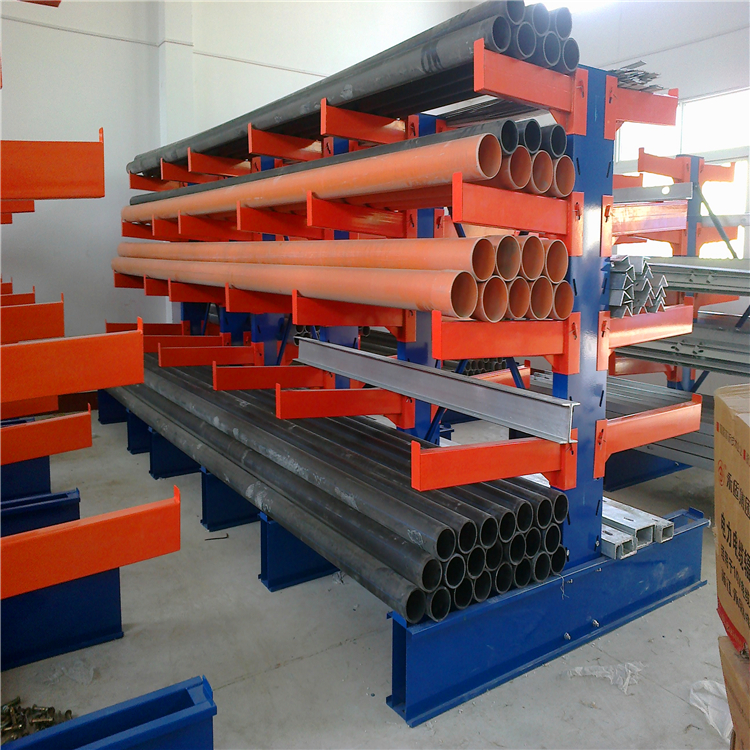
Characteristics of cantilever shelves:
1. Using square tube production: Cantilever shelves are made by selecting square tubes that meet the corresponding cantilever layer load requirements, cutting them into the required size, welding anti slip protective plates on one end, and welding U-shaped column connectors on the other end;
2. Made of C-shaped steel: Based on the corresponding cantilever layer load requirements, the specifications of the C-shaped steel are first selected for the cantilever rack. After selection, two pieces of C-shaped steel are welded together. After welding, an anti slip protective plate is welded on one end, and a U-shaped column connector is welded on the other end;
The cantilever shelf columns are connected to each other using connecting rods, which are generally made of rectangular tubes. To increase safety and stability, a flat iron back pull tab can be added to the connecting rod to tightly fix the column piece;
3. All cantilever shelf components are semi-finished products after production and will undergo a subsequent process of spray coating. Before spraying, perform shot blasting with a shot blasting machine to remove oil and rust, and then proceed with spraying. After completion, package and ship.
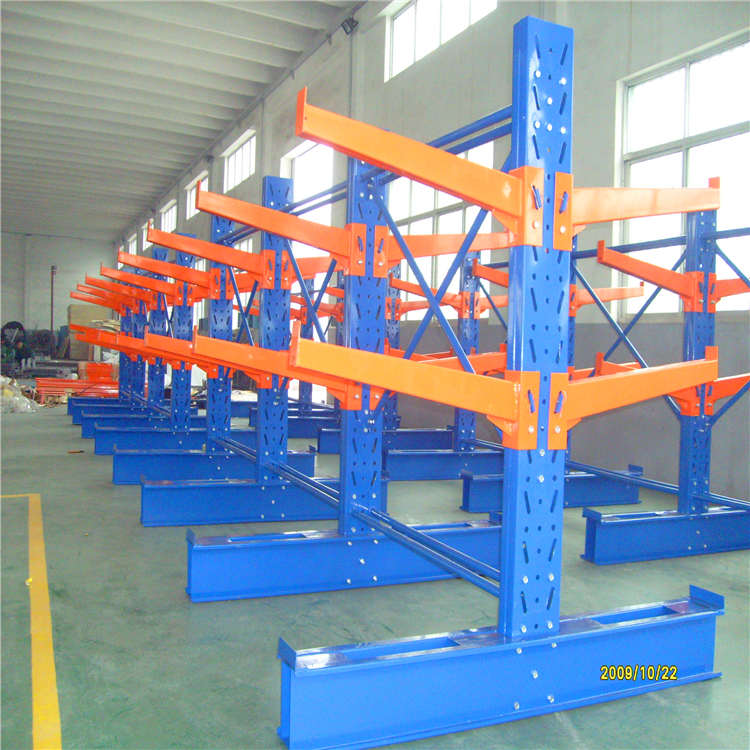
Production process of cantilever shelves:
1. The base of the cantilever rack can be made of H-shaped steel or profiles. Choose H-shaped steel according to the corresponding national standard steel based on the load-bearing requirements. Open bolt connection holes on the H-beam to facilitate connection with the column. Weld the bottom plate to connect it, and open expansion bolt holes on the top of the bottom plate to facilitate the connection of the shelf to the ground with expansion bolts. Fixed shelves;
2. Cantilever shelves use profiles as the base, and two pieces of C-shaped steel are welded back to back with connecting steel plates. The width of the connecting steel plates is the width of the columns. After welding two pieces of C-shaped steel, open bolt holes at the connection column position for easy connection with the column. Weld the bottom plate to facilitate the connection between the expansion bolt and the ground;
3. The cantilevered shelf column is welded together with two pieces of C-shaped steel. C-section steel is made of Q235 strip steel as raw material, rolled into C-section steel by a rolling mill, and then punched out with a cantilever connection control on an automatic punching machine, with a hole spacing of 140mm. If a connecting steel plate is welded to the H-beam below the column using the connection method. If the connection method with the profile is adopted, bolt connection holes will be opened at the connection part below the column.
AfterSalesService :
Key words:- Cantilever shelving combined with software management system
More Products