Characteristics of heavy-duty shelves
Category:
Transportation/Warehousing equipment/Shelves
Model:
Brand:
Hengya shelves
Retail Price
1,850.00USD
重量
kg
- Product Description
-
Description :
Beam shelves are essential storage devices in warehouses, with simple structures and easy disassembly and installation, and are highly favored by factories and enterprises for procurement. However, it is not uncommon for shelves to bend and deform. What are the reasons for this? What should I do if the shelf bends and deforms?
1. Use defective raw materials. Some unscrupulous merchants use defective steel to process and produce shelves in order to save costs. Although the thickness and size are the same, its load-bearing capacity cannot meet the requirements. Perhaps no problems can be seen in the short term, but after a period of use, the problems will be exposed, generally manifested as bending and deformation of the shelves, and in severe cases, they may even break.
2. The production process is not detailed enough. Some shelf manufacturers are not rigorous in every aspect of production, and a small detail that is not handled properly may also cause bending and deformation of the shelves. For example, if the size of the cutting and punching is not correct, pulling and pulling during installation may cause the shelves to tilt. Storing goods in such a situation may result in uneven stress, causing bending and deformation of the shelves, and even the breakage of shelf shelves and columns.
3. The goods were not stored with the required load-bearing capacity. After the design of each shelf, the shelf manufacturer will calibrate the load-bearing range of the shelf. If the actual storage of goods exceeds the maximum load-bearing capacity of the shelf or violates the principle of safe use of the shelf, it may cause the shelf to bend and deform.
4. Forklifts have collided multiple times. In some large shelving warehouses, it is normal for forklifts to transport palletized goods. However, due to the carelessness of forklift drivers, even if the shelves have been properly equipped with anti-collision pillars and protective barriers, collisions between forklifts and shelves cannot be avoided. Quality shelves may not bend or deform in the short term, but over time, they will certainly experience bending and deformation.

Cross beam shelving is a type of storage shelving that belongs to heavy-duty shelving. In fact, cross beam shelving is abbreviated as selective shelving, location shelving, pallet shelving, and so on. We can see that the application range of storage shelves is very wide, including electronics, home appliances, communications, computers, instruments, furniture, clothing, automobiles, tires, supermarkets and other industries.
In the process of using storage shelves, the effect of crossbeam shelves is very obvious. Its practical value is mainly reflected in its ability to perform special operations based on the width direction or special structure of the warehouse during operations. This indicates that its crossbeam style shelves can be more convenient for customers to access goods during actual operation, and its versatility is also relatively strong. In general, the use value of crossbeam shelves has been truly reflected in many enterprises and recognized by customers. Its flexibility and versatility have effectively improved the economic benefits of enterprises to a certain extent. Shelves have also been widely used in high-level warehouses.

Beam type shelving:
1. Beam type shelving;
2. Tray style crossbeam shelving;
3. Narrow aisle style pallet and crossbeam shelving;
4. Heavy duty storage shelves;
5. Mobile crossbeam shelving;
6. Pull out crossbeam shelves, etc.

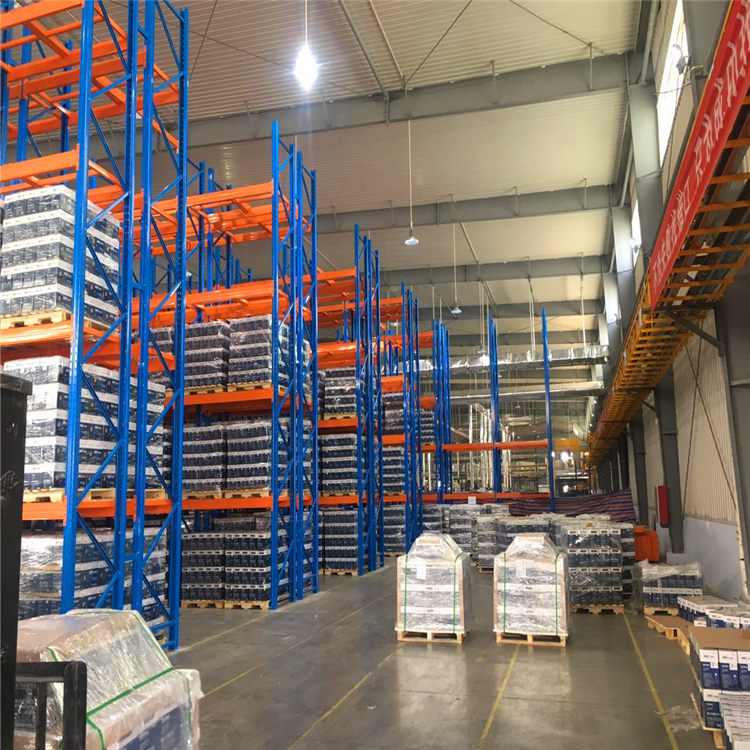
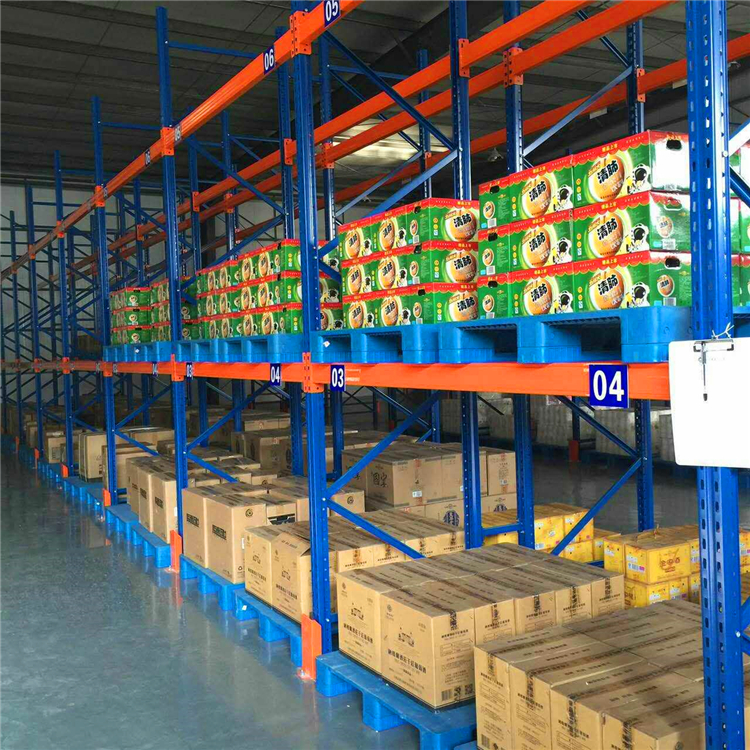
Cross beam shelving, also known as pallet shelving, is generally stored in pallet units and is suitable for various warehouses. It is a simple and widely used form of shelving. Cross beam shelving is a widely used palletized cargo storage system with strong versatility. Its structure is that the shelves are divided into several rows along the width direction of the warehouse, with a harbor passage in between for stacking cranes, forklifts, or other handling machinery to operate. Each row of shelves is divided into several columns along the longitudinal direction of the warehouse, and further divided into several layers in the vertical direction, forming a large number of storage spaces for storing goods on pallets.
AfterSalesService :
Key words:- Characteristics of heavy-duty shelves
More Products